The current moon phase is useful for everyday planning, personal reflection, cultural timing, and quick astronomy questions, because the Moon's geocentric phase angle and illuminated fraction describe a single shared sky that does not depend on where you are standing. With those numbers you can roughly gauge how much of the Moon's disc is lit, how the Moon is moving toward the next new moon or full moon, and where tonight falls inside the roughly 29.5-day synodic cycle. Knowing the current phase lets a gardener plan a sow, a stargazer pick a dark-sky night, a journal writer mark a lunar milestone, and a curious reader settle the everyday question of how the Moon looks right now, all from one piece of shared astronomical data. A free, offline tool called Moon Phase Today shows that angle, the illuminated fraction, the calculation timestamp, and your resolved browser time zone the moment you open it, without asking for your location, an account, or a remote astronomy service.
People reach for the current phase for very different reasons. Gardeners track the waxing and waning halves to time planting, harvesting, and pruning. Walkers, photographers, and amateur astronomers use the illuminated fraction to decide whether tonight's sky will offer a bright crescent, a half disc, or a near-full globe. People who follow cultural, religious, or folk traditions consult the phase to align intention-setting, fasting, or ritual work to a recognized lunar marker. And many readers simply want a quick, scientifically anchored answer to "what does the Moon look like right now" without leaving their browser tab.
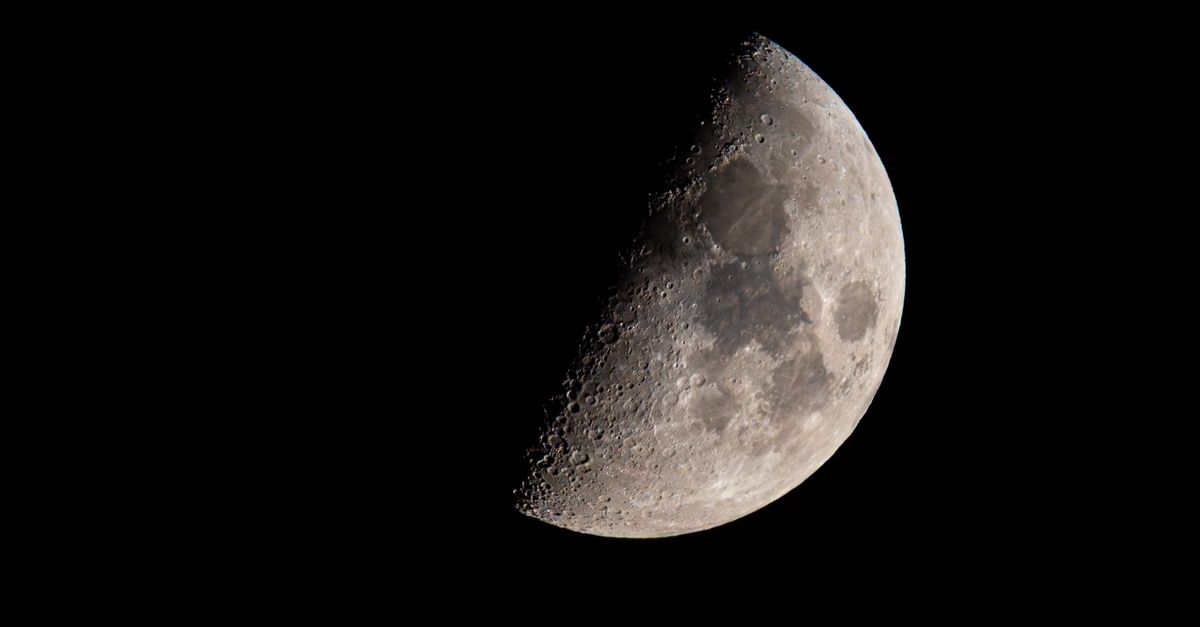
Practical Uses for Knowing the Current Moon Phase
The most common uses fall into four overlapping groups. None of them require location data, because the geocentric phase angle is the same for every observer on Earth at the same instant — only the local moonrise, moonset, and horizon appearance change.
- Everyday planning. A bright gibbous or full moon washes out deep-sky astrophotography and adds unwanted spill to nighttime portraits, while a thin crescent leaves dark-sky conditions intact. Outdoor events, stargazing nights, and even casual walks often get timed around the illuminated fraction.
- Cultural and personal timing. Many readers consult the current phase as a calendar marker for intention-setting, reflection, journaling, or ritual work that follows traditional lunar rhythms.
- Gardening and outdoor routines. Some gardeners track the waxing (light growing toward full) and waning (light shrinking toward new) halves to time sowing, transplanting, and pruning, treating the phase as a planning aid rather than a guarantee.
- Quick astronomy reference. Knowing the current angle answers "how far along the synodic cycle are we" and "which way is the Moon heading" without opening a star chart or running a planetarium app.
How the Moon Phase Today Tool Calculates Your Result
Moon Phase Today does not call an astronomy server, ask for your GPS, or store anything about your visit. The whole calculation runs inside the page, against a precisely pinned copy of the open-source Astronomy Engine 2.1.19 package, which is MIT licensed, ships with the application rather than a CDN, and has no runtime dependencies. A narrow internal adapter exposes only three operations: validate that the supported date sits inside the public input window, calculate the geocentric phase angle and illuminated fraction at the current browser instant, and search for the nearest one of the four primary phase angles (0°, 90°, 180°, 270°) around that same instant.
The tool then displays four things together: the eight-stage label, the exact phase angle, the illuminated fraction, and the timestamps of the surrounding primary-phase events (the most recent and the next New Moon, First Quarter, Full Moon, and Last Quarter). The page also shows the calculation time and the time zone your device resolved, so you can confirm at a glance that the result is for "now" and not for some stale cached value.
Reading the Angle, the Eight-Stage Label, and the Primary Events
The result combines two different ideas on purpose, and it is worth seeing how they map onto each other. The four primary phases have exact mathematical event meanings inside this product: New Moon is the instant the geocentric phase angle reaches 0°, First Quarter is 90°, Full Moon is 180°, and Last Quarter is 270°. Those are instants, not multi-day labels. The eight-stage name — Waxing Crescent, Waxing Gibbous, Waning Gibbous, Waning Crescent, and so on — is a separate, fully disclosed display convention that divides the angle circle at the half-way points between the primary angles. It is convenient for everyday reading, but it must not be read as an official United States Naval Observatory classification. Readers who want help telling the two quarter phases apart visually can also look at First Quarter vs Last Quarter Moon: How to Tell Them Apart Today.
| Eight-stage display label | Angle band (°) | Boundary rule |
|---|---|---|
| New Moon | 337.5 – 360 and 0 – 22.5 | Wraps cleanly at 360° |
| Waxing Crescent | 22.5 – 67.5 | Lower bound included, upper excluded |
| First Quarter | 67.5 – 112.5 | Lower bound included, upper excluded |
| Waxing Gibbous | 112.5 – 157.5 | Lower bound included, upper excluded |
| Full Moon | 157.5 – 202.5 | Lower bound included, upper excluded |
| Waning Gibbous | 202.5 – 247.5 | Lower bound included, upper excluded |
| Last Quarter | 247.5 – 292.5 | Lower bound included, upper excluded |
| Waning Crescent | 292.5 – 337.5 | Lower bound included, upper excluded |
For a single example, an angle of 145° lands inside the Waxing Gibbous band (112.5° – 157.5°) and means the illuminated fraction is climbing toward the next Full Moon instant at 180°. The tool shows that nearest Full Moon instant alongside the result, so you can see how many hours or days separate "right now" from the next primary event.
How to Read the Current Phase in Three Steps
Open the tool and treat the result as a four-part readout: angle, label, illuminated fraction, and surrounding primary events. You can refresh the calculation any time you want a fresh browser instant.
- Open the tool and wait for the local calculation. The page resolves your browser time zone, runs the calculation against the current instant, and displays the eight-stage label, the phase angle, the illuminated fraction, and the nearest primary-phase events on either side of now.
- Read the timestamp and time zone, and use Recalculate when needed. The result card shows the exact calculation time and your resolved browser time zone. Click Recalculate whenever you want to sample a fresh browser instant; the page also refreshes once per minute while the widget is mounted.
- Cross-check the label with the angle-band table. Use the disclosed bands above to confirm that the eight-stage label really matches the displayed phase angle, and look at the surrounding primary events to see where "now" sits between the last and the next New Moon, First Quarter, Full Moon, or Last Quarter.
Where the Current Phase Is and Isn't Useful
Knowing the current phase is useful whenever a shared, location-independent lunar marker is enough. It tells you what fraction of the disc is lit, which way the cycle is moving, and roughly how long until the next primary event. It is not useful — and the tool does not claim to be useful — for questions that depend on where you actually are.
| Question | Useful with geocentric phase only? | What you actually need |
|---|---|---|
| How much of the Moon is lit right now? | Yes | Phase angle and illuminated fraction |
| Which way is the cycle heading? | Yes | Angle band and the next primary event |
| Will tonight be a dark-sky night? | Yes, roughly | Illuminated fraction as a planning hint |
| What time does the Moon rise here? | No | Local horizon, latitude, longitude |
| Is the Moon above my horizon right now? | No | Observer location and local time |
| Tide timing for this beach | No | Tide tables for the specific coast |
| Religious or ritual timing | Outside scope | The tradition's own calendar rules |
| Navigation-grade ephemeris precision | No | Professional ephemeris service |
That second column is the honest boundary of the tool. Moonrise, moonset, atmospheric visibility, local horizon, weather, and tides are all location-specific questions that require data this tool intentionally does not collect. The page is built so a geocentric phase does not depend on your city, which is also why it never asks for GPS or a location permission.
Accuracy, Testing, and What to Treat as Educational
The tool's accuracy is bounded and testable rather than merely claimed. Twelve literal primary-phase timestamps were frozen from the official USNO Astronomical Applications Moon Phases service, including all four event types, dates near the 1700 and 2100 limits, a February 2020 leap-year case, and events that cross from December into January. Each test searches the same phase with Astronomy Engine and requires the result to differ from the minute-resolution USNO timestamp by no more than two minutes. USNO is used only to build research and test fixtures; it is never called when a visitor opens or recalculates the widget.
Three honest limits follow from that design. First, the public input and output boundary is 1700 through 2100, which is the range covered by the USNO service used for the independent comparison; the current-time interface normally sits comfortably inside that window. Second, the result is presented as an educational astronomical estimate. The page does not claim second-level precision, observational-apparent timing for a particular site, professional ephemeris status, or suitability for navigation, photography safety, tides, religious observance, or other time-critical decisions. Third, moonrise, moonset, atmospheric visibility, local horizon, and weather remain different questions that need location-specific data, which the tool deliberately does not collect.
That mix — geocentric phase and illuminated fraction for now, no location, no runtime network call, and a two-minute test tolerance against a national observatory — is what makes a current-moon-phase readout broadly useful for planning, reflection, and quick astronomy reference, while still leaving location-dependent questions to tools built for them.
If you're weighing options, How Do Moon Aspects Change a Chart Reading covers this in detail.