Moon aspects change a chart reading by revealing how the emotional nature shown by your natal Moon blends, conflicts with, or supports the other planets in the chart, and every aspect is measured by exact degree, not by sign membership alone. In astrology, an "aspect" is a specific angular relationship — 0°, 60°, 90°, 120°, 180°, and a few minor orbs — between two planetary positions in the same chart wheel. When the Moon aspects another planet, it modifies how that planet's energy gets filtered through your instinctive, emotional, and security-seeking responses. A Moon in Taurus trine Venus reads very differently from a Moon in Taurus square Mars, even though the Moon's sign placement is identical in both examples. Without the Moon's exact degree, you cannot tell which other planets it aspects, what kind of aspect forms, or how tight the orb is. That is why any chart-reading of Moon aspects starts with one calculation: the Moon's geocentric longitude and its position in the Western tropical zodiac, expressed as a sign and a degree within that sign. The Moon Sign Calculator does exactly that step from a birth date, a clock time, and a documented UTC offset, without asking for a city or birthplace.
What Counts as a Moon Aspect in a Chart Reading
An aspect is a measured angle between two points in a chart. For the Moon, the relevant angles are the same five used for any other planet: conjunction (0°), sextile (60°), square (90°), trine (120°), and opposition (180°). Minor aspects such as the quincunx (150°), semisextile (30°), and semisquare (45°) appear in some chart-reading traditions, but most readers begin with the five major aspects. What makes the Moon's aspects different from, say, Mars's aspects is the speed at which the Moon moves: it changes sign roughly every 2.5 days and can cross several major aspects to slower planets in a single day. That speed means the Moon's aspects are unusually sensitive to the exact birth time and to the documented UTC offset used to compute them.
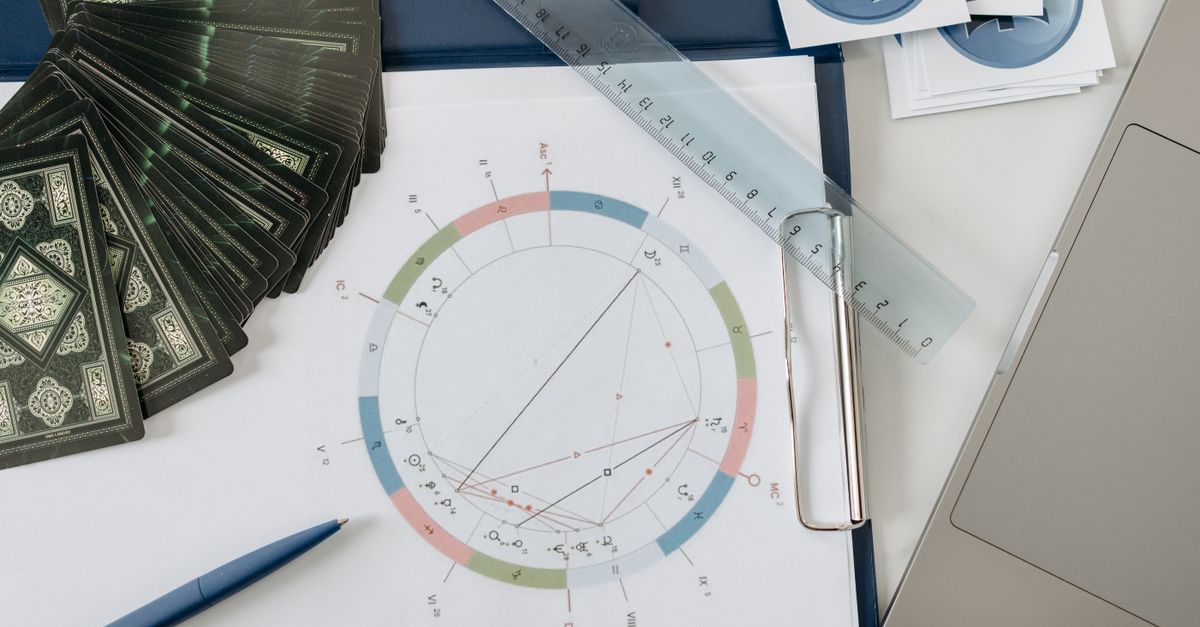
In a practical chart reading, the Moon's aspects are usually listed at the bottom of the chart wheel or in a small aspect grid. Each row shows the planet being aspected, the angle in degrees, whether the aspect is applying or separating, and the orb — how many degrees the actual angle deviates from the exact aspect. A 3° orb on a Sun-Moon opposition is read more strongly than a 9° orb on the same opposition, and an aspect outside the accepted orb is generally not counted. The orb rule is not standardized across traditions, so two readers can disagree about whether a 7° Moon-Saturn square is "in" or "out."
How Moon Aspects Shift the Emotional Reading of a Chart
The sign of the Moon describes what you need emotionally; its aspects describe how those needs interact with other parts of your personality. A natal Moon in Cancer, for example, signals a deep need for emotional safety and home connection. Add a Moon trine Neptune in Scorpio, and that safety-seeking energy flows easily into intuition, dreams, and empathy. Change that same Cancer Moon to a square Neptune, and the same need for safety gets tangled with confusion, escapism, or porous boundaries. The sign has not changed; the aspect has, and the chart reading changes with it.
The same logic applies to Moon-Mars aspects (how emotional needs meet assertion or anger), Moon-Saturn aspects (how emotional needs meet restriction or maturity), Moon-Venus aspects (how emotional needs meet affection and harmony), and Moon-Pluto aspects (how emotional needs meet intensity and transformation). In each case, the aspect describes the wiring between the Moon and another planet — supportive (trine, sextile), tense (square, opposition), or fused (conjunction). A reader who knows only the Moon's sign is reading the chart with roughly half of the available emotional information, because the aspect list is what connects the Moon to the rest of the chart's themes.
Why the Moon's Exact Position Comes Before the Aspect Grid
A natal chart is a map of planetary positions at one instant. To know which planets your Moon aspects, you need the Moon's longitude in degrees, not just its sign label. Two charts with the same Moon sign can have completely different aspect lists if the Moon is at 2° versus 28° of that sign. That is why any chart reading that lists Moon aspects begins with a precise ephemeris calculation of the Moon's position, normalized to a single instant, and mapped into the chosen zodiac convention.
The Moon Sign Calculator does that single calculation step: it takes a local birth date, a clock time, and a documented UTC or UTC-equivalent offset, normalizes them into a proleptic UTC-like instant, and reports the Moon center's geocentric true-ecliptic-of-date longitude together with the Western tropical sign sector that longitude falls in. Because it works from a UTC offset rather than a city or coordinates, it does not need a birthplace, does not ask for location permission, and does not require a network request once its assets are loaded. The result is one reproducible number: the Moon's longitude in degrees and the sign sector it occupies. The coordinate convention is frozen as true ecliptic of date, Earth-center Moon position, and Western tropical sectors, and longitude is normalized to zero through less than 360 degrees.
Get the Moon Sign and Degree for Your Birth Moment
To read Moon aspects later, you first need the Moon's exact sign and degree for the birth moment. The Moon Sign Calculator is built for that single step. Use it as follows.
- Enter the local birth date, the local clock time, and the documented UTC or UTC-equivalent offset for that moment. The offset can be a whole hour (for example, +01:00), a 45-minute offset such as +05:30, or any other signed value you can verify from a historical source.
- Calculate to see the normalized UTC instant, the Moon center's geocentric true-ecliptic-of-date longitude, and the Western tropical 30-degree sector the longitude falls in. The displayed sign label is the one to use in your chart reading, and the normalized instant is shown so you can audit the conversion.
- If the longitude is within 0.05 degrees of a 30-degree boundary, a warning appears. Verify the birth time and the historical offset before treating the cultural sign label as stable, because a small error in either input can flip the Moon from one sign to the next and therefore change every aspect the Moon forms.
For dates before standard time zones were adopted, the offset you enter is a documented historical offset, not a promise that modern UTC existed. The tool treats early-date output as a proleptic UTC-like estimate and shows the resolved calculation instant so you can audit it. Impossible calendar values, invalid offsets, and resolved instants outside the 1700 through 2100 range are rejected, and the astronomy result is independently checked against NASA JPL Horizons and an independent IMCCE/INPOP ephemeris to within 0.03 degrees.
From Moon Sign to Moon Aspects — What Each Angle Means
Once the calculator has given you the Moon's longitude and sign sector, you can read its aspects against any chart of planetary positions for the same instant. The table below summarizes the five major aspects and how they typically read when the Moon is the planet casting them.
| Aspect | Angle | Typical chart-reading effect when the Moon casts the aspect |
|---|---|---|
| Conjunction | 0° | Fuses the Moon's emotional needs with the aspected planet's energy; the two planets read as one combined drive. |
| Sextile | 60° | Supportive, low-friction link between emotional needs and the aspected planet; talents and easy cooperation. |
| Square | 90° | Tense friction; emotional needs push against the aspected planet and create internal pressure that motivates action. |
| Trine | 120° | Harmonious flow; emotional needs and the aspected planet work together naturally and often go unnoticed. |
| Opposition | 180° | Polarity; emotional needs and the aspected planet pull in opposite directions, often visible through relationships. |
The orb you allow around each angle changes how strong the aspect reads. A 1° orb Moon-Pluto conjunction reads much louder than an 8° orb Moon-Pluto sextile. Most readers use wider orbs for the conjunction and opposition and tighter orbs for the square and trine, but the exact rule depends on the reading tradition. The aspect itself, however, is always defined by the angle, not by the orb — the orb only controls whether the aspect is in or out for the reading.
Reading the Chart With and Without the Moon's Aspects
A chart reading that lists the Moon's sign but skips its aspects reads only the Moon in isolation. The sign tells you the flavour of emotional need; the aspects tell you how that need is wired into the rest of the chart. Two charts with identical Moon signs can read very differently because of one Moon aspect to a slow planet such as Saturn or Pluto. For this reason, any chart reading that treats Moon aspects as central needs the Moon's exact degree, not just its sign.
That is the practical link between the question of how Moon aspects change a chart reading and the Moon Sign Calculator: the tool does not draw an aspect grid, and it does not calculate houses or the Ascendant, but it gives you the one input — the Moon's exact longitude — that no aspect reading can do without. Once that number is in hand, you can compare it against a full natal chart for the same instant and read every Moon aspect by angle and orb. The same input pattern is used for the Sun's position in a chart reading, which is covered in Moon Sign vs Sun Sign: What Each Calculation Reveals. The Moon Sign Calculator is designed for entertainment and cultural interest; astrology is not a scientific personality or relationship assessment, and the calculator does not return predictions, diagnoses, or advice.
If you're weighing options, Documenting the Steps Behind a Numerology Chart Calculator covers this in detail.