For a Venus sign boundary birth time check, the local date, clock time, and documented UTC or UTC-equivalent offset are resolved to one proleptic UTC-like instant before Venus's longitude is mapped to one of twelve 30-degree sectors.
Venus does not change sign on a fixed calendar date in this calculation. It changes when its apparent geocentric longitude crosses a sector boundary, which is why an imprecise birth time can matter near that edge. The Venus Sign Calculator performs this narrow position-and-timing check without making relationship predictions.
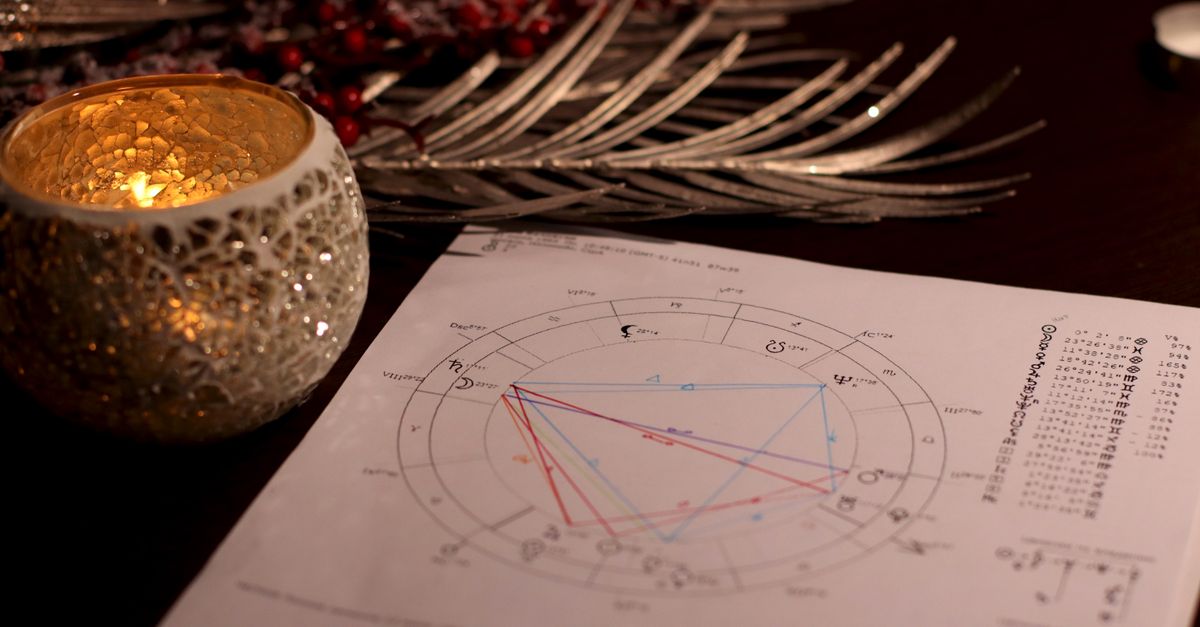
What a Venus sign boundary means
The result uses the Western tropical zodiac, not IAU constellations or the monthly date ranges commonly printed for Sun signs. Its underlying value is Venus's apparent geocentric longitude on the true ecliptic of date. Earth is the observer center, and the position calculation accounts for light-travel time and aberration before converting the Venus vector to ecliptic longitude.
| Western tropical sign | Longitude interval |
|---|---|
| Aries | [0°, 30°) |
| Taurus | [30°, 60°) |
| Gemini | [60°, 90°) |
| Cancer | [90°, 120°) |
| Leo | [120°, 150°) |
| Virgo | [150°, 180°) |
| Libra | [180°, 210°) |
| Scorpio | [210°, 240°) |
| Sagittarius | [240°, 270°) |
| Capricorn | [270°, 300°) |
| Aquarius | [300°, 330°) |
| Pisces | [330°, 360°) |
These are half-open intervals: the starting degree is included and the ending degree is excluded. Thus, exactly 30° maps to Taurus, while a longitude just below 30° remains in Aries. That defined mapping explains why the calculator reports the degree inside the selected sector and the distance to the nearest 30-degree boundary rather than returning only a name.
A result comfortably inside its sector is less sensitive to small timing errors. When the computed longitude is within 0.05° of a boundary, the calculator displays a near-boundary warning because an imprecise birth time, an incorrect documented offset, or a different ephemeris convention could alter the label.
Why the time and offset must agree
A local wall-clock reading alone does not identify a unique instant. The UTC or UTC-equivalent offset connects that clock reading to the calculation timeline, and the calculator accepts non-whole-hour offsets as well. Its result displays the normalized calculation instant and keeps the entered convention visible instead of silently treating the browser's current offset as historical truth.
Because the position is geocentric, the tool does not request a birthplace, coordinates, GPS, an account, or a file upload. That also means it cannot infer a disputed historical offset on your behalf. You need a reliable clock time and a documented offset before beginning the lookup.
Calculate a boundary result
- Enter the birth information. Provide the local birth date, clock time, and signed documented UTC or UTC-equivalent offset. These fields must represent one valid civil moment, and the normalized instant must fall from 1700 through 2100.
- Run the calculation. Select Calculate. The tool resolves the local fields and offset into the normalized calculation instant used by the astronomy engine.
- Verify the resolved instant. Read the displayed normalized UTC-like time and confirm that it corresponds to the intended birth moment. If it does not, return to the inputs and recheck the date, clock time, and offset.
- Inspect every position output. Review Venus's apparent geocentric longitude, the Western tropical sector, the degree within that sector, and the distance to the nearest 30-degree boundary. Use the longitude—not a generic calendar sign date—to understand the result.
- Respond to a boundary warning. If a warning appears, verify the historical time and documented offset before relying on the label. The warning is advisory rather than a blocked calculation, but the result should remain cultural information rather than relationship guidance.
Read a near-boundary warning
The 0.05° threshold identifies a narrow area around every sector edge. It does not declare the entered time wrong, and it does not prevent the result from appearing. It signals that small changes to the birth-time record, offset, or ephemeris convention may place Venus in the neighboring sector.
| Calculation state | Displayed behavior | Appropriate response |
|---|---|---|
| Longitude is within 0.05° of the nearest edge | Near-boundary warning appears | Verify the recorded time and documented offset, then recalculate and inspect the longitude again. |
| Longitude is more than 0.05° from the nearest edge | No near-boundary warning appears | Read the longitude and sector normally; the absence of a warning only addresses proximity to an edge. |
| Civil date or time is invalid | The request is rejected before the astronomy engine loads | Correct the civil fields and submit the supported values again. |
| Normalized instant falls outside 1700–2100 | The request is rejected before the astronomy engine loads | No astronomy result is produced for that instant. |
If the result is close to an edge, keep the source record for the birth time and the note explaining the offset together. Recalculation cannot repair an uncertain source; it only makes the supplied convention and resulting longitude visible.
Handle early dates and the supported range
Invalid civil values and normalized calculation instants outside 1700 through 2100 are rejected before the astronomy engine is loaded. The range edges are included, but a valid date alone does not settle the historical time convention.
Before standard time zones, local mean time may not map reliably to a modern offset. An entered UTC-equivalent offset is therefore a documented calculation convention, not proof that modern UTC or a standard civil time zone existed on that date. Early-date output remains a proleptic UTC-like estimate, and the calculator keeps the convention visible so it is not mistaken for a recovered historical clock standard.
Separate the lookup from a full birth chart
This calculator is intentionally narrower than a natal chart. It does not calculate houses, aspects, returns, synastry, an Ascendant, or a topocentric Venus position. In larger astrology products, a birthplace commonly helps resolve historical local time and calculate location-dependent features; here, the observer remains Earth's center and the visitor supplies the documented offset directly.
For the distinction between a sign sector and a location-dependent house placement, see how Venus sign and Venus house calculations differ. Neither houses nor relationship compatibility should be inferred from the longitude output of this boundary tool.
How the astronomy calculation is verified
The offline engine is based on a pinned Astronomy Engine 2.1.19 adapter. It obtains an apparent Earth-center Venus vector, including light-travel time and aberration, and converts it to true-ecliptic-of-date longitude. The disclosed evidence set contains fourteen literal cases on opposite sides of six tropical boundaries, including the 1700 and 2100 range edges.
Those fixtures compare the calculation with NASA JPL Horizons and IMCCE reference longitudes based on the INPOP ephemeris. The pinned output is required to stay within 0.005° of each official source and map to every expected label. JPL and IMCCE are research and fixture sources only; the browser does not call them at runtime. The browser calculation also makes no network or location request and uses the pinned Astronomy Engine 2.1.19 source release.
Use the sign label within its stated limits
The astronomical longitude is the calculated quantity; the sign name is a cultural and product convention, not an IAU constellation or a scientific relationship category. Claims about love style, attraction, beauty, compatibility, personality, or future outcomes are outside this tool. It is a transparent position lookup for entertainment and cultural interest, not a professional chart or a relationship assessment, and the result should not guide medical, legal, financial, safety, employment, or relationship decisions.
Related reading: How Do I Make Sure I Use Birth Flower by Month Correctly?.