A genuinely free tarot card reading uses all 78 Major and Minor Arcana cards, requires no account or payment, and never asks for a personal question, email, or birth date. Tarot Card Reading delivers that scope: the page draws three upright cards locally in your browser from the complete traditional deck of 22 Major Arcana and 56 Minor Arcana across Wands, Cups, Swords, and Pentacles. The only input is a short, non-sensitive seed that you can type yourself or generate with Web Crypto, and the draw itself never leaves your current tab. No fetch request is made, no cookies are set, and nothing is written to localStorage, sessionStorage, or IndexedDB.
The reason that scope matters is that "tarot card reading for free" can mean very different things in practice. Some sites bundle the reading with an email signup, push a daily-credit model, or trim the deck down to a handful of cards while still calling it a "full tarot draw." The tool described in this article is built around the opposite idea: a free tarot reading is one where the user pays nothing, gives nothing up, and still receives a draw from the same 78-card scope that a physical deck provides. The rest of this article walks through what that means in concrete terms, why the catalogue matters, and how the reading is actually prepared and revealed.
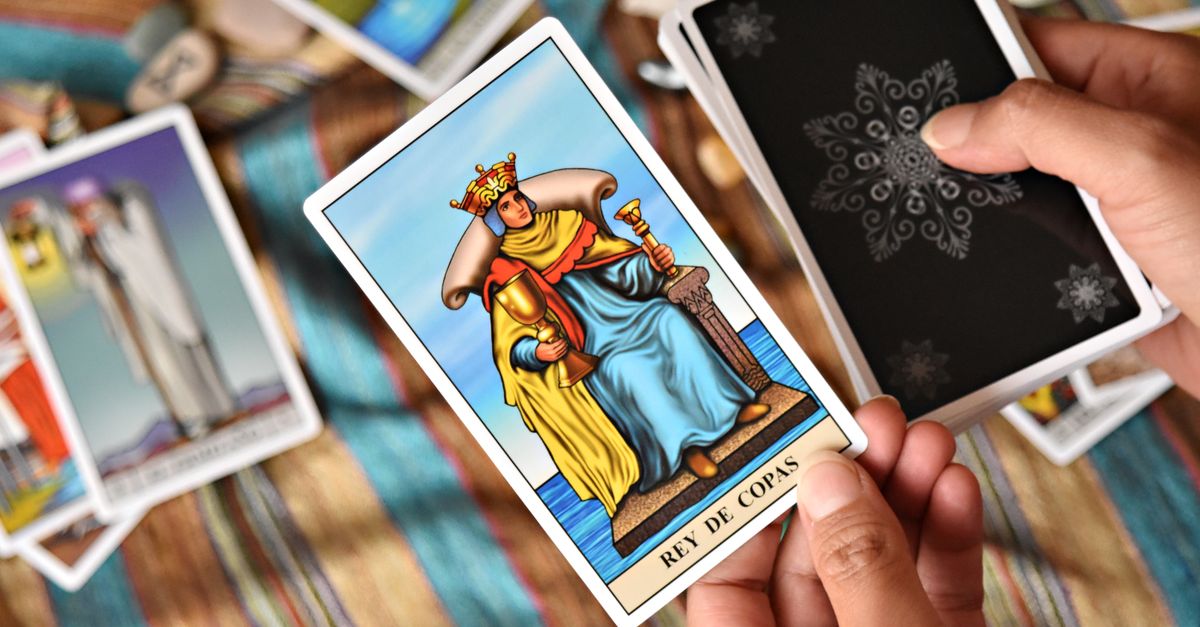
What a free tarot reading should actually include
When a tarot card reading is genuinely free, every part of the experience should match what a person would get if they sat down with a physical deck at home. That means no trimmed-down card list, no image-heavy interface that hides the actual draw, and no mandatory questions to "focus" the reading before the cards are shown.
On this tool, the only thing the user provides is a seed. A seed is a short text label, such as a word, phrase, or random hex string, that the page normalizes and then uses as the starting point for a deterministic card selection. The page normalizes the seed with Unicode NFKC, trims surrounding space, collapses repeated Unicode whitespace into one ASCII space, and lowercases the result, so equivalent compatible forms always produce the same draw. There is no signup form, no payment prompt, no pop-up asking for a yes/no question, and no third-party widget. Every action happens in the current tab, and closing the tab clears everything that was prepared.
The contrast matters because the word "free" is often used to describe a freemium wrapper that quietly trades a reading for personal data or a future upsell. A free tarot card reading in the strict sense should not require any of those trade-offs, and the page's design choices make that explicit at every step.
Why the full 78-card catalogue matters
Many online tarot sites present themselves as a "general tarot draw" while quietly using only the 22 Major Arcana. That shortcut makes the maths easier, but it changes the meaning of the reading. The Minor Arcana cover everyday concerns such as work, money, emotions, and conflict, while the Major Arcana describe longer life themes. Removing either side leaves the reader with only part of the picture.
Tarot Card Reading uses the complete traditional 78-card scope, organized in a fixed canonical order. The Major Arcana appear first in numerical order from 0 through 21, followed by the four suits. Each Minor suit contains an Ace, the numbered cards Two through Ten, and the four court cards Page, Knight, Queen, and King.
| Group | Count | Cards |
|---|---|---|
| Major Arcana | 22 | 0 through 21 |
| Wands | 14 | Ace, Two–Ten, Page, Knight, Queen, King |
| Cups | 14 | Ace, Two–Ten, Page, Knight, Queen, King |
| Swords | 14 | Ace, Two–Ten, Page, Knight, Queen, King |
| Pentacles | 14 | Ace, Two–Ten, Page, Knight, Queen, King |
| Total | 78 | — |
Because every card is in scope, the draw reflects the same mix a real deck would. A reader who receives only Major Arcana repeatedly would have a very different reading from one who is dealing with day-to-day concerns, and that difference is exactly what the Minor Arcana are designed to surface. Keeping the full catalogue in the draw is part of treating the reading seriously even though the page frames the outcome as entertainment and self-reflection.
How to draw three free tarot cards online
The actual mechanics of preparing a reading are deliberately small. There is no account to create, no spread to choose from a dropdown, and no question to type in. The whole flow has three parts: a seed, a preparation step, and a sequence of three reveals.
- Enter a short, non-sensitive seed in the input field, or use the button to generate a fresh 128-bit hexadecimal seed locally with Web Crypto. A seed can be a word, a phrase, or a random hex string; it is normalized before use so equivalent forms produce the same draw.
- Choose Prepare reading. The browser normalizes the seed and ranks all 78 cards with native SHA-256, then selects the first three unique entries as Past, Present, and Future. The three selected card IDs are stored in the current tab only and the cards stay face down in the rendered page.
- Choose Reveal three times in order. Each click shows one card, moves keyboard focus to the newly visible panel, and reveals that card's title, suit or arcana, and the conditional reflection sentence for its position. The other cards remain face down until their turn.
- Read each prompt as a self-reflection question. Past asks how the card's themes shaped what came before; Present asks where those themes are appearing now; Future asks how those themes might develop if current patterns continue.
- Copy the displayed seed if you want to reproduce the same draw later, or choose Start over to clear the seed, the selected cards, the reveal count, and any messages.
The reading is fully local, which means closing the tab is the same as choosing Start over. There is no server history to log into and the seed you typed is never transmitted.
How the Past, Present, and Future reveal works
The three positions in this spread are not predictions. Each one is a conditional reflection prompt tied to a single upright card, and the language stays conditional throughout. The page calls the experience a "reflection" rather than a forecast and does not state that an event will happen, is guaranteed, or is fixed by fate.
| Position | Prompt framing | What it asks of the reader |
|---|---|---|
| Past | Conditional reflection on prior patterns | Notice how this card's themes shaped what came before |
| Present | Conditional reflection on current themes | Notice where these themes are appearing right now |
| Future | Explicitly conditional: "if current patterns continue" | Notice how these themes might develop if current patterns hold |
The reveal sequence is fixed. Past reveals first, Present second, Future third, and each reveal moves keyboard focus to the visible card. Until the user clicks Reveal, that card is not resolved for rendering: its title, ID, index, suit, rank, and themes are kept out of the DOM, ARIA labels, data attributes, class names, and inline styles. That is a deliberate safeguard against accidental disclosure, for example a curious onlooker glancing at the page, even though a determined user who inspects the client bundle could still see what is in memory. The point is to make the reveal a deliberate act rather than a side effect of page load.
Each revealed panel shows the position name, the suit or arcana group and rank, the card title, the conditional reflection sentence, and a short themes list informed by A. E. Waite's public-domain The Pictorial Key to the Tarot, summarized in original wording rather than copied. On mobile the three cards stack vertically; on a sufficiently wide viewport they move into three columns, and every control keeps a visible focus state with at least a 44-pixel target.
Why a reproducible seed is part of being free
Most online tarot shuffles hide their randomness behind a button. The reader cannot check that the deck was not biased, cannot share a specific draw with a friend, and cannot verify that the same draw could ever happen again. Tarot Card Reading takes a different approach: every draw is driven by a single short seed, and the same seed will always produce the same three cards in the same order.
The selection algorithm is documented and uses standards-grade primitives. For each of the 78 canonical card IDs, the browser computes native SHA-256 over the UTF-8 string "tarot-v1", followed by a NUL separator, the normalized seed, another NUL separator, and the card ID. The 78 resulting digests are sorted ascending by their byte sequence, with the canonical index used as a tie-breaker, and the first three unique entries become the reading. Because the catalogue has 78 entries and each one is ranked exactly once, the three selected cards are always unique. SHA-256 is the hashing primitive defined in the NIST Secure Hash Standard and exposed in browsers through the SubtleCrypto.digest Web Crypto API; both standards apply here.
Reproducibility is useful in three concrete ways. A reader can copy the seed and later come back to compare a new draw against an old one. Anyone studying the tool can verify the math by hand for a known seed and card ID. The page never needs to invent randomness on the user's behalf: if the user wants a random draw, the page offers to generate a 128-bit hex seed locally; if the user wants a specific draw, they can type any short label and reuse it. Either way the underlying mechanism is the same, and a secure random or SHA-256 API failure produces an explicit error rather than a weak fallback.
What this free reading does and does not do
A free tarot card reading is a useful reflective exercise when its scope is clear. The draw here can help a reader pause, name what is on their mind through the lens of three upright cards, and notice patterns across past, present, and potential next steps. It is built around the same canonical 78-card scope that physical tarot decks use, and the conditional wording of each prompt keeps the experience grounded.
What it does not do is at least as important as what it does. The page is explicitly labeled as entertainment and self-reflection only. It is not medical, mental-health, legal, financial, safety, crisis, or any other form of professional advice. The cards are upright only, so there are no reversed meanings, and the tool does not invent personality, relationship, or outcome claims. There is no AI interpretation, no remote image library, and no predictive engine. For readers who want to study the broader catalogue without drawing, the Tarot Card Meanings page keeps the same 78 upright cards searchable in one place.
Used with that scope in mind, a free tarot card reading becomes a simple, reproducible way to start a quiet conversation with yourself: pick a seed, reveal three cards in order, and let the prompts point to where your attention might go next. If a particular card resonates, the lookup page above will help you sit with it a little longer; if it does not, Start over clears the tab and you can draw again on your own terms.
If you're weighing options, Free I Ching Reading Online, No Sign Up Required covers this in detail.
If you're weighing options, Chinese Zodiac Compatibility for Rat: Reading Every Pair covers this in detail.