A Sun sign is the zodiac sector the Sun occupies on a birth date, while a Mercury sign is the sector the planet Mercury occupies at the exact birth moment, and the two can sit together or differ by one sign because Mercury never wanders more than about 28 degrees from the Sun as seen from Earth. Because the Sun moves at roughly one degree per day it is effectively fixed by date alone, but Mercury's apparent motion is fast enough that a wrong time or offset can land the result on the other side of a 30-degree edge, so a wall clock and a UTC offset are usually required to resolve it. A Mercury sign lookup is therefore a position calculation, not a personality verdict, and it depends on the same kind of audited apparent geocentric longitude used by solar-system ephemerides. Tools that ignore the time, or that quietly assume the device's modern browser zone, can land the answer on the wrong side of an edge near the 0, 30, 60, 90 and other sector boundaries. The Mercury Sign Calculator approaches the problem as an offline position lookup, taking only the local civil fields and a documented offset and producing a normalized longitude plus a cultural sector label you can audit and reproduce.
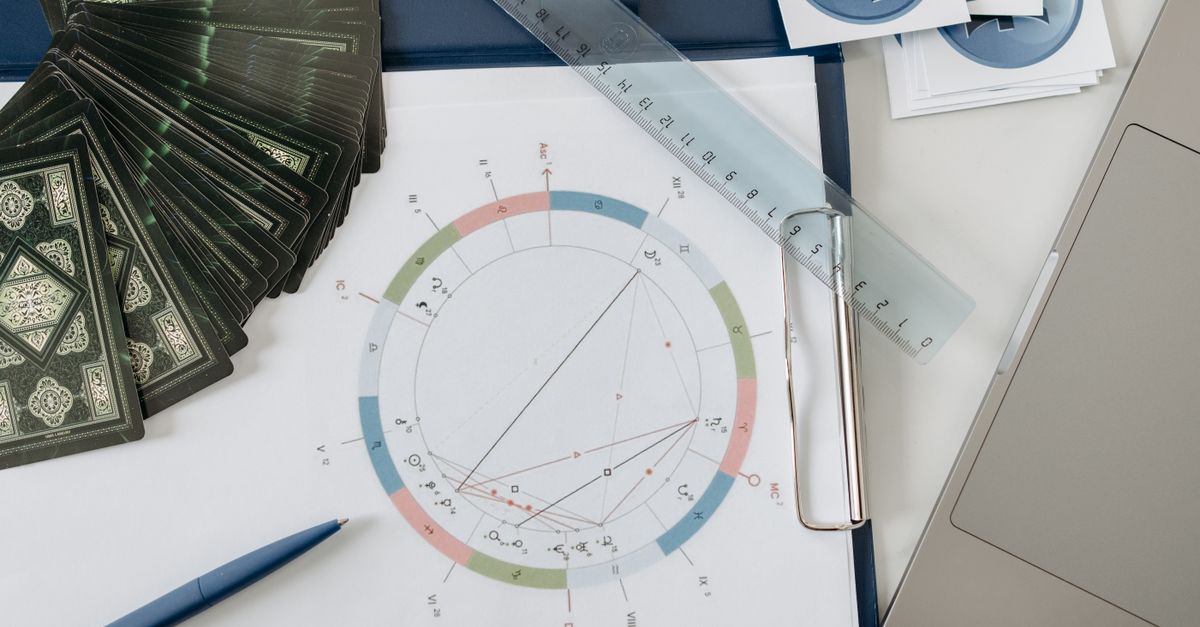
What a Sun sign represents in a Western chart
The Sun's apparent geocentric position moves through the Western tropical zodiac once a year. Because it covers roughly one degree per day along the ecliptic of date, the Sun spends close to 30 days in each of the 12 equal sectors defined by the Western tropical convention. A birth date is usually enough to resolve a Sun sign, which is why so many casual lookups answer the question with nothing more than a day and a month. The convention itself is a cultural product: Aries starts at the March equinox point, Pisces ends the cycle, and the same 30-degree slices are applied to every other planet's longitude. The underlying longitude that drives that label is the astronomical quantity the sector is mapped onto, and it is the same kind of value used by navigation systems and mission planning tools.
What a Mercury sign actually measures
Mercury is the innermost planet and the fastest, completing a full orbit in about 88 days. From Earth's surface, and therefore from a geocentric vantage point, its apparent motion along the ecliptic reaches roughly 1.4 degrees per day near greatest elongation and slows dramatically near its stations. Because Mercury never strays more than about 28 degrees east or west of the Sun as seen from Earth, the Mercury sign tends to sit in the same sector as the Sun or in the sector immediately before or after it. That makes a Mercury sign a narrower, more time-sensitive label than a Sun sign, and the only way to derive it cleanly is to compute Mercury's apparent geocentric longitude at the exact birth instant and map that longitude to a Western tropical sector through a transparent, equal 30-degree division.
Why a Mercury sign lookup needs a time and offset
The local wall clock shown on a birth certificate or in a memory is not a unique instant on its own. Two clocks that read 03:42 in different parts of the world on the same date refer to different physical moments, and an instant is the only thing a planetary longitude can be attached to. A Mercury sign calculation needs that physical moment in order to know where the planet is along its orbit, and the only unambiguous way to supply it is to combine the local civil fields with a documented UTC offset for the target moment. The Mercury Sign Calculator accepts signed offsets from -12:00 through +14:00, including half-hour and quarter-hour forms, and produces a proleptic UTC-like instant for the calculation. The calculator does not silently use today's browser zone because for older records the convention that applied on the day may differ from the one the device now lives in, and a wrong offset near a sector edge can flip the label by a full sign.
How to look up a Mercury sign with the calculator
- Open the Mercury Sign Calculator and locate the local date, clock, and offset inputs.
- Enter the local date, then enter the local clock time.
- Type the documented UTC or UTC-equivalent offset that applied at the target moment, including its sign, hours, and minutes.
- Run the calculate action and read out the resolved calculation time, the normalized longitude, the sector label, and the degree within the sector.
- If a near-boundary warning appears, recheck the source time and offset against the original record rather than treating one adjacent label as more meaningful.
- Save or note the entered time and offset together with the result so a later calculation can reproduce the same convention.
Reading the calculator output
The output is an auditable longitude and sector label rather than a personality verdict. The resolved calculation time confirms the proleptic UTC-like instant the calculator built from your entries, while the normalized longitude is the apparent geocentric true ecliptic of date value, brought into the range zero through less than 360 degrees. The degree within the sector tells you how far Mercury sits inside its current 30-degree band, and a near-boundary warning flags positions within 0.05 degrees of the next edge. Eight frozen test fixtures, covering the 1700 and 2100 range limits and paired observations across the 300, 330, and zero-degree boundaries, are checked offline against NASA JPL Horizons and the IMCCE INPOP theory, with the local result required to stay within 0.005 degrees of both oracles for every fixture. The pinned calculation runs in the browser after the page assets load, makes no runtime network or location request, and asks for no city, coordinates, GPS, account, or upload. The observer origin is Earth's center, so geographic coordinates are unnecessary for the frozen quantity.
Mercury sign vs sun sign at a glance
| Comparison field | Sun sign | Mercury sign |
|---|---|---|
| Mean apparent speed along the ecliptic | about 1 degree per day | up to about 1.4 degrees per day near greatest elongation |
| Mean time spent in each 30 degree sector | about 30 days | about 23 days |
| Inputs typically required | birth date | birth date plus clock time plus documented UTC offset |
| Maximum angular separation from the Sun | 0 degrees by definition | about 28 degrees east or west |
| Coordinate origin used | geocentric, ecliptic of date | geocentric, true ecliptic of date |
| Western tropical overlay | 12 equal 30 degree sectors from 0 to 330 degrees | 12 equal 30 degree sectors from 0 to 330 degrees |
| Accepted instant range (this tool) | not produced here | 1700 through 2100 inclusive |
| Personal claims made by the tool | none | none, sector label only |
For other planets the same approach applies, with the inputs and the offset logic staying identical while the planet changes. Other planetary calculators are out of scope here and are documented separately. To compare how a slower planet changes the inputs and the offline tests, the guide on looking up a Jupiter sign without a birthplace walks through the same offset logic for a planet that stays in each sector for much longer.
Caveats worth flagging before saving a result
Three limits deserve attention before a result is recorded. First, the Mercury Sign Calculator is a position lookup rather than a complete chart, so it does not produce local houses, an Ascendant, aspects, synastry, or any retrograde interpretation. Second, the accepted instant range is 1700 through 2100, and resolved instants outside that range are rejected along with impossible dates, invalid clocks, and invalid offsets. Third, dates before standardized time zones may translate poorly because local mean time does not always map cleanly to a modern UTC offset, and the tool documents that those outputs remain proleptic UTC-like estimates based on the convention you entered. The astronomy engine pin is recorded for reproducibility, the test fixtures are frozen, and no second-level, professional-ephemeris, navigational, or safety-grade accuracy is promised. The output is entertainment and cultural interest, not a scientific personality, learning, or communication assessment, and it should not guide medical, legal, financial, safety, employment, or relationship decisions.
For a deeper look, see Moon Sign vs Rising Sign: What Each Calculation Needs.