A Jupiter sign is the 30-degree Western tropical sector — one of the twelve equal divisions starting at Aries zero — that Jupiter's apparent geocentric true-ecliptic-of-date longitude falls into at a given instant, and a Jupiter house is a numbered 1–12 sector of an individualized birth chart whose boundaries are fixed by the local horizon and the rotation of the Earth at the moment and birthplace of the native; the two answer different questions because the sign is a uniform 360-degree circle shared by every observer on Earth, while a house system needs an exact location and an Ascendant to anchor the wheel.
When readers type "jupiter sign" or "jupiter sign without birthplace" into a search box, they usually mean one of three things. They want to know what the label actually refers to in a chart. They want to know which placement they can compute from a date and a clock time alone. Or they want a tool that can resolve their Jupiter sign honestly, without inventing a house number from a missing city. This article covers all three.
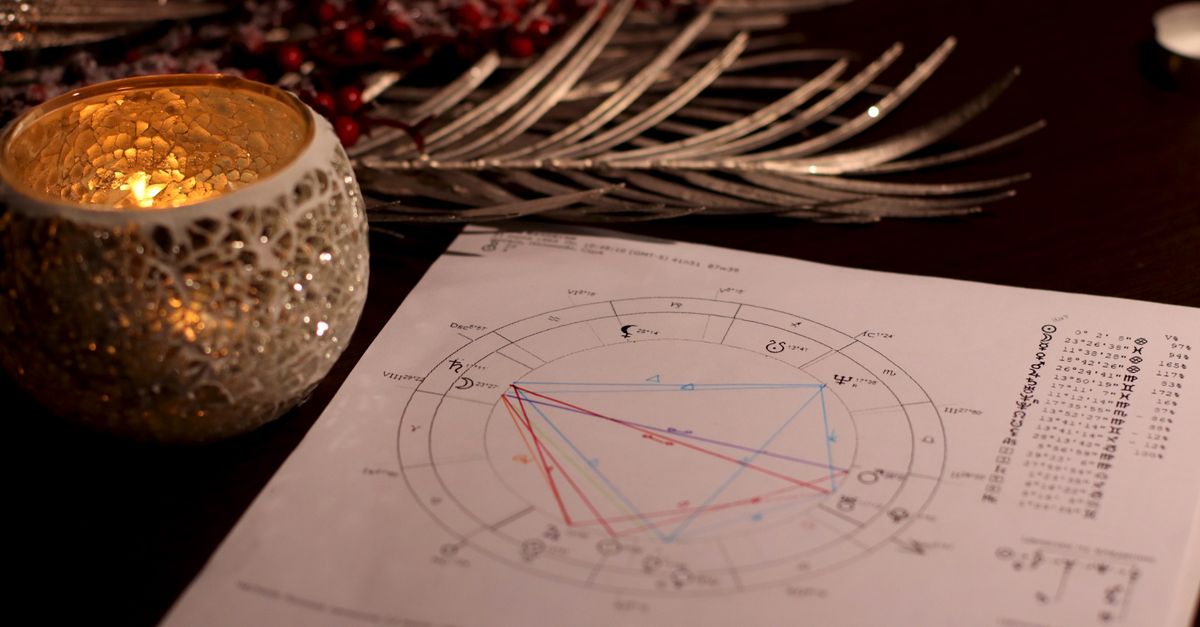
What "Jupiter Sign" Actually Refers To
A Jupiter sign is a cultural, astrological label. It is assigned by dividing the ecliptic — the plane of Earth's orbit projected onto the sky — into twelve equal 30-degree sectors that begin at the vernal equinox point, which is treated as zero degrees of Aries. Those sectors are Aries, Taurus, Gemini, Cancer, Leo, Virgo, Libra, Scorpio, Sagittarius, Capricorn, Aquarius, and Pisces. A single shared circle applies to every observer on the planet at the same instant, because the definition uses the Sun–Earth geometry, not the local horizon.
To get the sign, two numbers have to be calculated:
- Jupiter's apparent geocentric true-ecliptic-of-date longitude at the documented instant, expressed in degrees from 0 to less than 360.
- The 30-degree sector that contains that longitude, using the half-open convention [0,30), [30,60), and so on through [330,360).
The sign is reproducible. Anyone who feeds the same documented date, clock time, and UTC offset into the same ephemeris should land within a small fraction of a degree of the same longitude and the same sector. The geocentric frame places the observer at Earth's center, which is why a birthplace is not required to derive the sign.
What "Jupiter House" Actually Refers To
A Jupiter house is something else. In a Western birth chart, the wheel of the sky is divided into twelve numbered houses — commonly the Placidus, Whole Sign, Koch, Equal, or Porphyry systems — whose cusps depend on the rotation of the local horizon at the exact moment of birth. House 1 starts at the Ascendant, the sign rising over the eastern horizon at that minute and that latitude and longitude.
Two consequences follow:
- Jupiter's house cannot be derived from the longitude alone. Without a city, there is no Ascendant, and without an Ascendant there is no reliable house cusp.
- Two people born at the same instant on different continents can share a Jupiter sign but land in different Jupiter houses, because their horizons point in different directions.
This is why many online "Jupiter in the house" descriptions read like life-domain advice — "Jupiter in the 7th house expands partnerships" — rather than positional astronomy. The house label mixes a geometric coordinate with a local, time-dependent frame, and the cultural meanings attached to it are conventions, not physical facts.
Why the Distinction Matters for a Lookup
Because a sign is a position on a shared 360-degree circle, a sign can be looked up from a date and a clock time plus a documented UTC offset. Because a house is a local frame, a house cannot be looked up that way. A user who searches for a Jupiter sign without a birthplace is often surprised to learn that the same birth data is enough for one and not the other, and that any tool promising a house from just a birth date is making a hidden assumption about location.
There is a second, quieter reason the distinction matters: uncertainty behaves differently in each. Jupiter moves around 0.08 degrees per day, much slower than the Moon or Mercury, so for most dates a sign answer is stable across several hours of clock-time doubt. But Jupiter does cross sign boundaries, and at the exact edge, a one-minute difference in the recorded time or a one-minute error in the documented UTC offset can flip the label. That is why a boundary warning deserves more weight than the same warning on a faster planet.
How to Look Up Your Jupiter Sign With the Calculator
The Jupiter Sign Calculator resolves a local civil date, clock time, and a documented UTC or UTC-equivalent offset into one normalized instant, then returns Jupiter's apparent geocentric longitude and the Western tropical sector that contains it. The whole calculation runs offline in the browser using Astronomy Engine 2.1.19 as the single adapter, and the result is checked against NASA JPL Horizons and IMCCE Miriade with INPOP within 0.005 degrees at eight literal cases spanning 1700, 2100, and both sides of the 120, 150, and 180 degree boundaries.
- Open the calculator and enter the local date (year, month, day) and clock time (hour, minute) for the moment you want to label.
- Enter the documented UTC offset, such as −05:00 or +09:30. Offsets from −12:00 through +14:00 are accepted, including non-whole-hour values like +05:45.
- Click Calculate. The result panel shows the entered fields for verification, the normalized calculation instant, Jupiter's apparent geocentric longitude in degrees, and the 30-degree Western tropical sector the longitude falls into.
- If the result sits within 0.05 degrees of a sector edge, the panel raises a boundary warning. Treat that as a request to re-check the source record — the birth certificate, the timestamp, the offset — before drawing any cultural conclusion.
- Save the normalized instant alongside the displayed sector. Anyone feeding the same input convention into the same calculator should reproduce the same longitude and label.
Three limits shape what the calculator can do. It rejects impossible dates, clocks, or offsets. It rejects resolved instants outside 1700 through 2100. And it never guesses daylight-saving or political zone history — if the date predates standardized time zones, the output is labeled as a proleptic UTC-like estimate governed by the convention you entered. None of those limits are workarounds; they are the visible boundary of what an offline, no-location positional answer can honestly claim.
What the Boundary Warning Signals
The boundary warning is not a blocker and not an error. It is the calculator telling you that the longitude it computed is within 0.05 degrees of the next sector edge, which means three things could shift the label: the recorded time, the documented UTC offset, or the small residual difference between an offline approximation and the JPL or IMCCE reference value. At a sector edge, a minute of clock-time doubt can move Jupiter enough to change which 30-degree sector it falls into.
| Situation | What the calculator shows | What the reader should do |
|---|---|---|
| Comfortable middle of a sector | Longitude, sector name, no warning | Record the normalized instant with the saved result |
| Within 0.05° of the next edge | Same fields plus a boundary flag | Re-check the date, clock time, and documented offset |
| Date outside 1700–2100 | No result, validation message | Pick an instant inside the supported window |
| Offset outside −12:00 to +14:00 | No result, validation message | Re-enter a real-world civil offset |
Why This Tool Stops at the Sign
The calculator is deliberately narrow. It answers the positional question "which 30-degree Western tropical sector contains Jupiter's geocentric longitude at this documented instant?" and nothing else. It does not compute an Ascendant, a Midheaven, a house cusp, an aspect grid, a Jupiter return, a topocentric direction, or a local horizon event. It does not ask for a city, a latitude, or a longitude, and it makes no runtime request for any of those.
That is also why the same tool cannot deliver a Jupiter house answer. A house label is a local, rotated frame, and a local frame requires an observer's coordinates. The cleanest separation is to compute the sign here, where a date, a clock time, and a documented offset are the only honest inputs, and to leave the house calculation to a full chart that does have a city attached.
For readers who already know their sign and want to understand a related positional concept, the Jupiter Return vs Jupiter Sign guide on the same site walks through the difference between a sign and a return — when Jupiter crosses the exact longitude it occupied at a documented moment — using the same offline ephemeris and the same boundary discipline.
How a Sign and a House Behave Side by Side
It helps to keep the two frames visually separate. The table below summarizes the structural contrast without offering any cultural reading of either label.
| Property | Jupiter sign | Jupiter house |
|---|---|---|
| Frame | Shared 360° tropical ecliptic circle | Local 12-sector wheel anchored to the Ascendant |
| Depends on birthplace | No | Yes — latitude and longitude fix the horizon |
| Depends on UTC offset | Yes, for the exact instant | Yes, for the exact instant |
| Reproducible from inputs alone | Yes, within ephemeris tolerance | Only with city coordinates and house system |
| Computed by this calculator | Yes | No, by design |
What the Calculator Does Not Claim
It is worth stating plainly. The output is a reproducible longitude with a documented cultural label, not a forecast, a luck score, a wealth indicator, an opportunity ranking, or a personality assessment. The page does not endorse the meanings attached to Jupiter in popular astrology — expansion, abundance, the great benefic — and it does not use those meanings to guide medical, legal, financial, safety, employment, or relationship decisions. Astrology is presented here for entertainment and cultural interest, the same way a museum labels a constellation.
The narrow contract is also the source of the tool's reliability. By refusing to compute a house, an aspect, a return, or a topocentric direction, it can pin a single quantity — the apparent geocentric true-ecliptic-of-date longitude at Earth center — and check that quantity against two independent reference ephemerides within 0.005 degrees at eight literal cases. Adding a house system would require adding location, and adding location would weaken the claim that the output can be reproduced from the entered fields alone.
If the reader's real question turns out to be "in which life area does my Jupiter operate," the answer requires a full chart with a city and an Ascendant. If the reader's real question is "which 30-degree sector did Jupiter occupy at this instant, without supplying a birthplace," the Jupiter Sign Calculator answers that directly, with a documented UTC offset, an offline ephemeris, and a clear warning when the result sits close enough to a boundary that the recorded moment deserves a second look.
Related reading: Mercury Sign vs Mercury House: What Each One Measures.
Related reading: Saturn Sign vs Saturn House: Input Differences That Matter.