A three-card tarot reading in Hindi uses a local SHA-256 seed over a complete 78-card catalogue to draw one Past, one Present, and one Future card upright for self-reflection. For Hindi-speaking learners who want to understand tarot without buying a deck or memorising long guidebooks, this format keeps the scope small while still touching every suit and every Major Arcana card. The Tarot Card Reading tool displays card titles in English, but the practice underneath — draw three cards, sit with their themes, and translate the meaning into your own language — works the same way whether you write your reflections in Devanagari, Roman Hindi, or English. Because the draw is reproducible through a seed, beginners can repeat the same three cards on purpose while they learn what each title means. The page never asks for your name, birth date, or personal question, so the practice stays private and stays on your own device. What the tool offers is a structured starting point: a fixed 78-card scope, an honest conditional prompt for each position, and a clean reset whenever you want to start over.
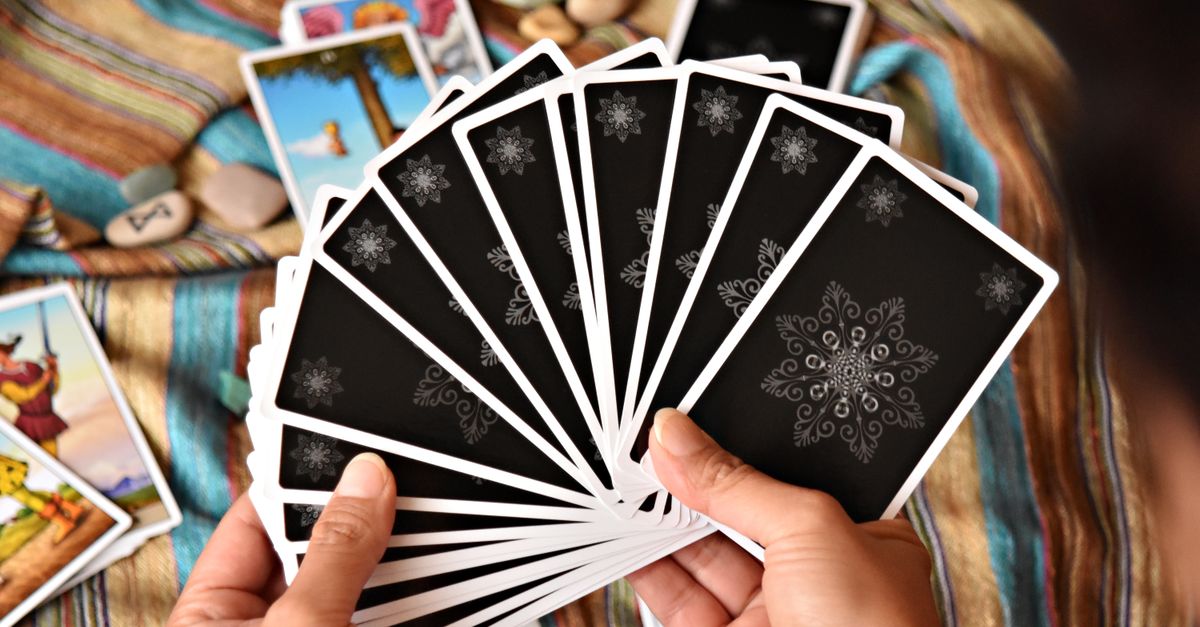
Why a Three-Card Past, Present, Future Spread Suits Hindi-Speaking Learners
Tarot has a long association with visual decks, but most of the learning actually happens in the interpretation stage — the moment you connect a card's symbol to a feeling in your own life. A three-card spread suits beginners because it gives you three short prompts instead of ten or more, and each prompt uses conditional language rather than fixed prediction. The Past position asks you to notice how a card's themes shaped what came before. The Present position asks where those themes may be appearing right now. The Future position says, in effect, "if current patterns continue, notice how the themes might develop." Because every sentence is conditional, the practice translates cleanly into Hindi. You can rephrase "if current patterns continue" as "यदि वर्तमान पैटर्न जारी रहे" without losing the spirit of the prompt, and you can describe a card's themes in everyday Hindi — ताकत for inner power when Strength appears, or छड़ी का पेज when the Page of Wands surfaces — without depending on a printed guidebook.
The 78-Card Catalogue Behind the Hindi Reflection Tool
A common beginner trap is a tarot spread that quietly drops the Minor Arcana and pretends to offer a full reading. The tool used here does not do that. The catalogue includes all 22 Major Arcana cards numbered 0 through 21, plus all 56 Minor Arcana cards spread across the four suits of Wands, Cups, Swords, and Pentacles. Each suit runs from Ace, Two, Three, Four, Five, Six, Seven, Eight, Nine, and Ten, then Page, Knight, Queen, and King — fourteen cards per suit, four suits per cycle, and the Major Arcana sitting on top. Every entry has its own unique ID, its own title, and a short theme phrase informed by A. E. Waite's public-domain 1910 text The Pictorial Key to the Tarot, with no long passages copied and no commercial card image loaded.
| Group | Count | Card range | Typical Hindi reference |
|---|---|---|---|
| Major Arcana | 22 | 0 (The Fool) through 21 (The World) | Major themes — देवी, पुजारी, मजबूती, टावर |
| Wands (छड़ियाँ) | 14 | Ace through King | Action, creativity — छड़ी का पेज, ऊर्जा |
| Cups (प्याले) | 14 | Ace through King | Emotion, relationships — प्रेम, सहानुभूति |
| Swords (तलवारें) | 14 | Ace through King | Thought, conflict — स्पष्टता, तनाव |
| Pentacles (सिक्के) | 14 | Ace through King | Work, body, resources — धन, स्थिरता |
| Total | 78 | 22 + 4 × 14 | Full traditional deck scope |
The numbers in this table are structural, taken from the standard tarot deck as documented in museum collections and as catalogued in Waite's public-domain key text. The Hindi column is a learner aid, not a translation produced by the tool itself; the page renders English titles only, and you pair them with your own Hindi vocabulary.
How to Run a Tarot Card Reading in Hindi with This Tool
- Open the Tarot Card Reading page in a browser tab and locate the seed input field at the top of the widget.
- Type a short non-sensitive seed phrase into the input, or use the button that generates a local 128-bit hexadecimal seed through Web Crypto.
- Choose the Prepare reading button. The tool stores the three selected card IDs in the current tab memory without sending them anywhere.
- The first card appears face down in the Past position. Click Reveal when you are ready, and keyboard focus will move to the newly visible card.
- Click Reveal again to show the Present card, then a third time to show the Future card. Each unrevealed card stays face down until you choose to reveal it.
- Read the conditional prompt under each revealed card. Translate the title and theme into your own Hindi vocabulary, then write a short reflection in your notebook.
- If you want to draw the same three cards again later, copy the displayed seed and reuse it on a future visit. The same seed always produces the same three cards.
- Choose Start over when you want a clean slate. The tool clears the input, the prepared seed, the selected IDs, the reveal count, the messages, and any errors in one step.
Reading the Past, Present, and Future Prompts in Hindi
Each position uses a deliberately narrow question so the reflection does not slip into prediction. Past is about history, so a Hindi learner can read it as "इस कार्ड की थीम ने पहले क्या आकार दिया." Present is about the current moment, which translates cleanly to "अभी ये थीम कहाँ दिख रही है." Future is conditional and never says an event will happen; in Hindi you can frame it as "यदि मौजूदा पैटर्न जारी रहे, तो ये थीम कैसे विकसित हो सकती है." The page calls the result a reflection rather than a prediction, and the language stays conditional throughout. If you prefer to read tarot card meanings in English first and then translate into Hindi, the Tarot Card Meanings reference lets you search and filter the same 78-card catalogue without drawing, predicting, or submitting a personal question.
| Position | What it asks | Time framing | Hindi reframe |
|---|---|---|---|
| Past | How a card's themes shaped what came before | Retrospective | इस थीम ने पहले क्या आकार दिया |
| Present | Where those themes may be appearing now | Current moment | अभी ये थीम कहाँ दिख रही है |
| Future | If current patterns continue, how the themes might develop | Conditional | यदि पैटर्न जारी रहे, तो कैसे विकसित हो |
How the Seed Reproduces the Same Three Cards
The reproducibility is the part most Hindi learners find surprising. The browser does not call a server and does not load a random-number service. It normalises the seed — Unicode NFKC normalisation, trimmed surrounding whitespace, repeated whitespace collapsed, then lowercased — and then, for every card in the canonical 78-card order, it computes a SHA-256 digest over the UTF-8 string "tarot-v1\0<seed>\0<card.id>". It sorts the 78 digest byte strings in ascending order, breaks any practical tie with the canonical index, and takes the first three unique cards. Because the algorithm is deterministic and documented, the same seed always returns the same Past, Present, and Future cards. The hashing step uses the browser's native SubtleCrypto.digest function, which is described in MDN's Web Crypto reference and which matches the algorithm in NIST FIPS 180-4. If Web Crypto fails for any reason, the tool returns an explicit error rather than falling back to a weaker random source.
Privacy, Limits, and What This Tool Does Not Do
The page is built for entertainment and self-reflection only. It is not medical, mental-health, legal, financial, safety, crisis, or any other form of professional advice. The tool never asks for a personal question, your name, your birth date, your relationship details, your account, or your email address. It does not use cookies, localStorage, sessionStorage, IndexedDB, analytics, remote images, model calls, or third-party reading services, and it makes no fetch request. The seed and the resulting draw stay in the current tab only, so closing the tab clears the state from the browser side. There are no reversed cards in this tool — every card is upright — and there are no card images at all, which means the experience is text-and-CSS only. If a drawn card is unfamiliar, you can look it up in the meanings tool without rerunning the draw, and you can return to the original three-card spread afterwards because your seed still reproduces the same selection.
Related reading: Can a Celtic Cross Tarot Spread Predict Your Future?.
Related reading: Do You Need a Daily Lucky Card Draw? How to Decide.