The Celtic Cross tarot spread does not predict your future or make decisions for you — it generates ten cards from a reproducible seed as entertainment and optional self-reflection, with no claim that any card describes an actual event. That is the single most important fact about any ten-position reading, whether you use a printed deck, a phone app, or a browser-based tool. Modern Celtic Cross interpretations are written as prompts — what you bring to them is yours alone — and no version of the layout, including the well-documented one published by Tarot.com, makes a factual claim about what will happen tomorrow, next month, or next year. The cards function the way a journal prompt or a guided meditation does: a structure that points attention at a topic so you can examine what you already feel about it. The question this article answers is not whether tarot is "real" but what a tool built around honesty, hidden cards, and reproducible seeds will and will not promise to do for you.
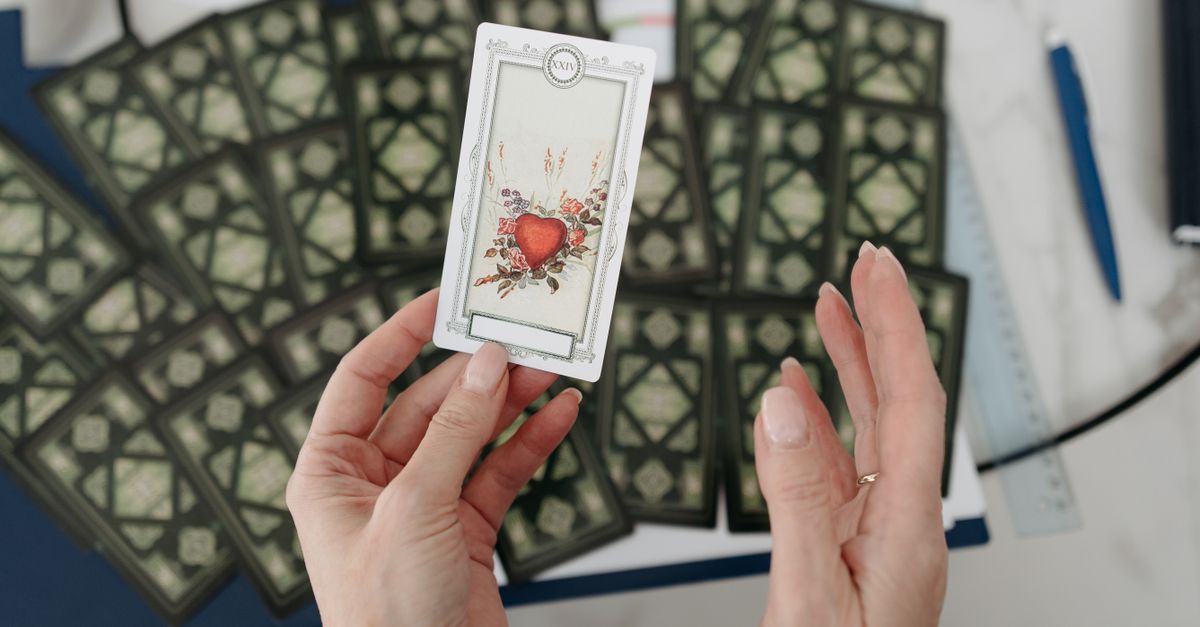
What a Celtic Cross Can and Cannot Do
Any tarot spread, ten cards or three, belongs to the family of reflective tools — closer to a structured journal prompt than to a forecast engine. A spread gives you a hand of symbols arranged in named positions, and your task is to read the row of symbols against the position prompts. That is the entire mechanism. Nothing in the deck, the layout, or the order of cards contains a stored prediction about a person, a date, or a decision.
The Celtic Cross specifically earns its popularity from the breadth of those prompts, not from any special predictive power. Ten positions ask about self, situation, recent past, near future, blockers, allies, advice, and a longer arc, which together push you to look at one topic from multiple angles in a single sitting. That wide coverage is useful for reflection, but reflection is not prediction. A reflection can change how you feel about a situation; a prediction, by contrast, requires evidence about the world that no shuffled deck contains.
If you are evaluating this tool, the practical test is simple: does the product page describe outcomes in your life, or does it describe a hand of cards for you to interpret? The Celtic Cross Tarot tool deliberately does the second. It names the chosen variant (Tarot.com's modern ten-position sequence), it does not call any card a forecast, and it explicitly excludes consequential decisions from its intended use. Those boundaries are part of what makes the tool usable for reflection rather than misleading.
Why Tarot Cannot Make Decisions for You
A decision is a commitment to act. Committing requires information about the world that a deck — even a perfectly ordered one — does not gather. The Celtic Cross Tarot tool, like every honest tarot application, does not know your accounts, your relationships, your employer, your medical history, your local laws, or anything else that actually drives a real-world outcome. It deterministically hashes all 78 card IDs with native SHA-256 under a versioned namespace, sorts the digests, and selects ten unique upright cards.
What the tool can offer is a structured pause. When you turn a card and read a prompt like Blockers and Inhibitions, you are invited to name the obstacles you already sense; when you turn the next one labeled Advice, you are asked what you would tell a friend in the same spot. That is the value, and it depends entirely on your own knowledge, not on the card. Substituting the cards for that knowledge would be substituting a symbol for a fact, and the tool's own FAQ is clear about that distinction.
Another common misconception is that a reproducible spread somehow becomes a forecast because the same seed produces the same cards. Reproducibility in this tool is a usability feature, not a metaphysical one. The same seed reproduces the same draw so a curious user can verify the order, retry after Reset, or experiment with alternative seeds. It does not mean those cards describe an event that has been locked in.
The Ten Positions, Sourced and Named
The Celtic Cross is not a single universal layout. Different authors describe different position counts, labels, and orderings, and a serious tool should name its variant rather than claim unanimity. The interface here follows Tarot.com's documented modern ten-position sequence. A. E. Waite's public-domain Pictorial Key to the Tarot describes an older Ancient Celtic Method with a significator and different labels, an option the historical record preserves in the public-domain text; the contrast is part of why this tool avoids universal claims.
| # | Modern position label | Example reflection angle |
|---|---|---|
| 1 | Self | How you currently see yourself in the situation |
| 2 | Situation | The immediate context you are sitting with |
| 3 | Challenges or Opportunities | What is pressing on the situation, positive or negative |
| 4 | Recent Past | What just happened that still affects the present |
| 5 | Higher Power | Above-the-line factors such as chance, principles, or outside influence |
| 6 | Near Future | The short arc ahead, treated as a label rather than a forecast |
| 7 | Blockers and Inhibitions | Obstacles slowing you down or pulling you back |
| 8 | Allies | People, circumstances, or resources helping you |
| 9 | Advice | The recommendation the reading surfaces, filtered through you |
| 10 | Long-Term Potential | The wider arc, again a prompt rather than a forecast |
The exact wording matters. "Near Future" is the sourced position label from Tarot.com, not a prediction, and the same is true of "Long-Term Potential." Treating those as oracular timelines is what creates the false impression that a spread can forecast; treating them as reflection prompts returns the tool to its designed role.
How to Prepare a Reflection Spread With the Tool
- Open the Celtic Cross Tarot reading in a fresh browser tab.
- Enter a short non-sensitive seed in the seed field — a private word or phrase you can remember — or leave it blank and use the random 128-bit hexadecimal generator that runs in the browser.
- Choose Prepare spread to begin. The interface clears any older draw, normalizes the seed with NFKC, trims, collapses whitespace, lowercases it, then ranks every card ID with native SHA-256 under a versioned celtic-cross-v1 namespace across the 78-card catalogue.
- Reveal position one (Self). Only the first card title and theme enter the page; the remaining positions resolve to null and stay absent from the page, accessibility tree, and data attributes until each is revealed.
- Reveal the remaining nine positions in order. A polite status message announces progress without exposing the next card identity, and focus moves to the newly revealed position each time you continue.
- Keep the visible seed value if you want to reproduce the same spread later, or choose Reset to invalidate pending work and clear the current seed, prepared card IDs, reveal count, status, and any error state in this tab.
That sequence is the entire control flow. Nothing is sent to a server, stored in localStorage, written to a cookie, or associated with an account, because no reading API, analytics payload, or model request exists inside the tool. You can change tabs, close the browser, and come back to a blank state, which is part of why it stays honest about what a card can and cannot do.
Where Reflection Stops and Real Decisions Begin
A tarot spread is one prompt among many, and the most useful habit is to keep it on its own side of the line. Consequential decisions — about health, mental health, legal questions, finances, relationships, safety, and crisis situations — should not be sourced from a randomized card draw. This tool's published scope excludes all of those, and reading them as out-of-bounds is the practical version of the prediction question: do not hand a decision to a card when the decision needs real information.
If a card surfaces a feeling you want to explore further, the safer follow-ups are also outside the deck. A trusted friend, a licensed professional, a financial adviser, a legal aid office, or a crisis hotline are sources whose information actually changes the world. The Celtic Cross Tarot tool gives you ten symbols and ten prompts; everything it leaves out is the territory that other tools and other people are designed for. That division of labor is what makes the tool safe to use as reflection without sliding into the prediction role.
For a reader who specifically wants to test the future-prediction question against another reflection tool, the site also publishes a parallel walkthrough of whether a Tarot Birth Card Calculator predicts your future, applying the same honesty criteria to a different layout.
Reset, Reproducibility, and What They Are For
Two control ideas deserve a paragraph of their own because they are often misunderstood. Reproducibility in this tool means the same normalized seed reproduces the same draw under the versioned method. That is useful for verifying how the layout works, comparing seeds, or pausing a reading and coming back to the same hand later. It does not mean the spread encodes a real-world event.
Reset is the inverse control: it discards pending calculations and clears the current-tab state so you can start fresh. There is no permanent history, no shared account, no archive of your readings. Combined with the hidden-card boundary and the absence of any storage or network call, the experience is closer to writing on a whiteboard than to using a diary app. Both controls reinforce the same message the tool sends with its safety wording: this is local, anonymous entertainment and reflection, and the moment a question starts to feel load-bearing is the moment to put the deck down.
If you want to try it with that safety scope already in view, the Celtic Cross Tarot reading is built around exactly that posture — ten positioned cards, hidden until revealed, sourced and versioned, and explicitly not a decision engine.
If you're weighing options, How to Decide If You Need a Tarot Birth Card Calculator covers this in detail.