Comparing approaches to tarot card meanings means weighing how each method delivers card information — through memorized guidebooks, intuitive impressions, random draws, reversed interpretations, or searchable reference catalogues. Each approach answers a different question: a random draw creates a moment of choice, reversed meanings add interpretive layers, and a reference catalogue provides fast upright lookup for all 78 Rider-Waite-Smith cards. The comparison that matters most is whether you need a generative ritual (drawing) or an information tool (search). A searchable upright catalogue like Tarot Card Meanings falls firmly on the information side — it indexes all 22 Major and 56 Minor Arcana without performing a draw, asking a personal question, or producing a prediction. Understanding that distinction before you begin keeps you from expecting a reading from a reference, or expecting a reference from a draw. It also clarifies which companion tool to pair with the catalogue when you want a generative spread, and which limits — like the upright-only scope — are deliberate design choices rather than missing features.
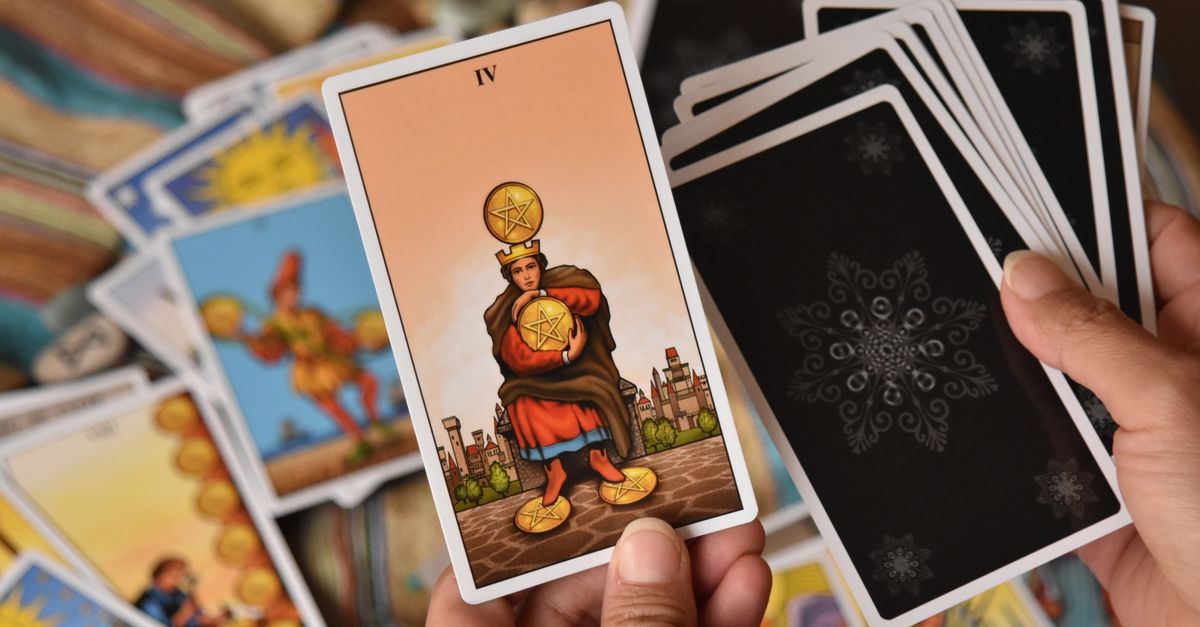
The Main Approaches to Working With Tarot Card Meanings
Students of tarot usually encounter five distinct approaches to card meanings, and each one shapes the kind of answer you get.
Book or guidebook study. The traditional approach involves sitting with a published reference. A. E. Waite's Pictorial Key to the Tarot remains the foundational public-domain text for the Rider-Waite-Smith tradition, and the V&A's history of tarot cards traces how that deck became the most widely referenced modern system. Book study is slow, deep, and well suited to learners who want a personal mental library of upright themes and symbolism.
Intuitive reading. Many readers use the card image as a starting point and let personal association, emotional response, and symbolic pattern recognition guide interpretation. Intuition can operate alongside or in place of guidebook study, and it scales naturally once you know the basic structure of the Major and Minor Arcana.
Random draw with interpretation. Drawing one or more cards at random — single card, three-card Past/Present/Future, or ten-card Celtic Cross — adds a generative element. The draw chooses the card; the reader interprets it. Tools that serve this approach include Tarot Card Reading and Celtic Cross Tarot.
Reversed-card interpretation. Some traditions read cards upside-down to add a second layer of meaning — blocked energy, internalized trait, opposite pole, and so on. Reversed reading is a separate skill with its own conventions and is explicitly outside the upright-only scope of a reference catalogue.
Searchable reference catalogue. A modern approach: type a keyword, filter by suit or arcana, and inspect the upright themes of any of the 78 cards on demand. No draw, no question, no prediction — just structured lookup. This is the approach served by the Tarot Card Meanings catalogue.
Side-by-Side Comparison of Tarot Meaning Approaches
| Approach | Input needed | Output type | Best for | Generative? |
|---|---|---|---|---|
| Book or guidebook study | Time and the text itself | Memorized meaning library | Long-term learning, deep symbolism | No |
| Intuitive reading | A drawn card or image | Personal interpretation | Readers who trust association | Sometimes |
| Random draw | Pressing a draw button | One or more random cards | Generative ritual, spreads | By design |
| Reversed interpretation | A drawn card, flipped | Layered or blocked meaning | Readers trained in reversals | Sometimes |
| Searchable reference catalogue | A keyword or filter | Upright themes on demand | Quick lookup, comparison, study | No |
The comparison makes a structural point: only two of the five approaches are designed to deliver a personal prediction, and only one is designed to give you structured access to every card in the deck without any randomness. If your goal is to study what a card means rather than to be told what a card means for you, a searchable catalogue is the most direct fit.
How to Search and Filter the 78-Card Reference Catalogue
Using a searchable upright catalogue as your approach is straightforward once you know the three controls.
- Search by name or theme. Type a card title like "The Fool" or a concise theme such as "beginnings" into the search field. The catalogue matches across the title, upright themes, arcana label, suit, and rank, so partial keywords work.
- Narrow with Arcana and Suit filters. Use the Arcana selector to show only Major Arcana or only Minor Arcana. Use the Suit selector to restrict the Minor Arcana results to Wands, Cups, Swords, or Pentacles. Combining search text with both filters quickly isolates a single card or a small group.
- Select a card to inspect its details. Click any card in the result list. The detail panel opens with the card title, arcana, rank, suit, and concise upright themes. If your current filters hide the previously selected card, the panel follows the first visible result instead of showing stale data.
- Clear or Reset as needed. Clear search keeps your arcana and suit filters in place but empties the text box. Reset catalogue restores all 78 cards and returns to The Fool. No draw is performed and no prediction is generated at any point.
This control model is deliberately narrow: the catalogue's job is to show you what each card means upright, quickly, without layering on ritual mechanics. If a search produces no matches, the result list reports that state and the detail panel asks you to select a card after adjusting your filters.
When a Reference Catalogue Is the Right Approach
Certain tasks are a natural fit for a searchable upright catalogue and a poor fit for a random draw.
Comparing two cards side by side. If you want to see the difference between the Ace of Wands and the Ace of Cups without pulling either one randomly, search and filter give you both on screen at once.
Studying a suit or arcana in order. Set the suit filter to Pentacles and scroll through all fourteen cards from Ace to King in canonical order. The catalogue's product order — Wands, Cups, Swords, then Pentacles — makes that walk-through predictable.
Verifying a card's identity. The catalogue preserves the Rider-Waite-Smith numbering, including the alignment check that Strength is VIII and Justice is XI. Other historic deck traditions number those cards differently, so the catalogue's numbering is a useful reference point rather than a universal rule.
Preparing for a separate draw. Many readers study the deck first and draw second. A searchable catalogue is a natural companion to a generative reading tool — you can look up upright themes for any card that appears in a three-card or Celtic Cross spread without leaving the upright scope.
In each of these scenarios, the absence of a random draw, a reversed layer, or a prediction is the feature, not a gap. The catalogue answers "what does this card mean upright?" and stays out of the way of whatever generative tool you pair it with.
What the Reference Catalogue Does Not Cover
Knowing what a tool does not do is part of comparing approaches honestly.
Reversed meanings. The scope is explicitly upright-only. Reversed tarot meanings vary widely across traditions and are outside this compact reference, so if your approach depends on a blocked or inverted layer, pair the catalogue with a separate source on reversals.
Personalized predictions. The catalogue performs no random draw, asks no personal question, scores no outcome, and presents no prediction. If you want a generative answer to "what should I focus on this week?", you need a draw tool — the reference catalogue will not produce one.
Universal authoritative interpretation. Meanings vary by deck, surrounding cards, reader, history, and context. The upright themes in the catalogue are concise original paraphrases informed by Waite's public-domain text and are not copied from a modern commercial guidebook. Treat them as a compact orientation, not the final word.
Persistent state across visits. Search and filter values live in the current session's React state. There is no fetch call, cookie, localStorage entry, sessionStorage entry, analytics request, or remote model call. Nothing is uploaded, and no account is needed — but anything visible on your screen is still visible to anyone who controls or views the device.
These limits are deliberate. A reference catalogue that tried to do draws, reversals, predictions, and persistent accounts would no longer be a reference catalogue; it would be a reading platform. Keeping the scope upright-only and stateless is what lets the catalogue stay fast, private, and predictable.
Choosing the Approach That Matches Your Task
When you compare the five main approaches — guidebook study, intuitive reading, random draw, reversed interpretation, and searchable reference — the right pick depends on the question you are actually asking. If the question is "what does this specific card mean upright?", the searchable catalogue is the fastest path. If the question is "what card is showing up for me right now?", a draw tool is the right tool. If the question is "what does this card mean when it appears upside-down?", you need a reversed-meaning source. If the question is "what does the whole tradition look like?", study is the right approach.
For readers who want a fast, upright, complete lookup of the Rider-Waite-Smith deck without any generative layer, the Tarot Card Meanings catalogue is the reference approach made into a tool. It is one of several valid approaches, and it pairs cleanly with any of the others — but it does not replace them.
Related reading: How to Study Tarot Card Reading with a Seeded Draw.
Related reading: Compare Approaches to Calculate a Zodiac Element.