Focus is one of four product-defined categories in the Fortune Cookie Generator, and it contains exactly nine original English micro-messages about small tasks and clear starts. Choosing Focus narrows the draw from the full 36-message pool down to that single category, so every line you generate is a short observation about attention, beginnings, or simple next steps. The other three categories, Curiosity, Creativity, and Everyday, each hold their own nine lines and their own tone, so selecting Focus is really a way to ask the tool to stay in one mood rather than mixing all four. The messages themselves were written for this tool rather than copied from any quotation, proverb, commercial fortune database, or public figure, which means the Focus pool behaves as a small, contained set of playful prompts rather than a forecast or a personalized reading. Because the generator performs an unbiased draw from the Focus pool only, the result is reproducible across sessions only by intent, not by any stored state, and the tool never analyzes a question, accepts a name or birthday, or tailors a line to the user.
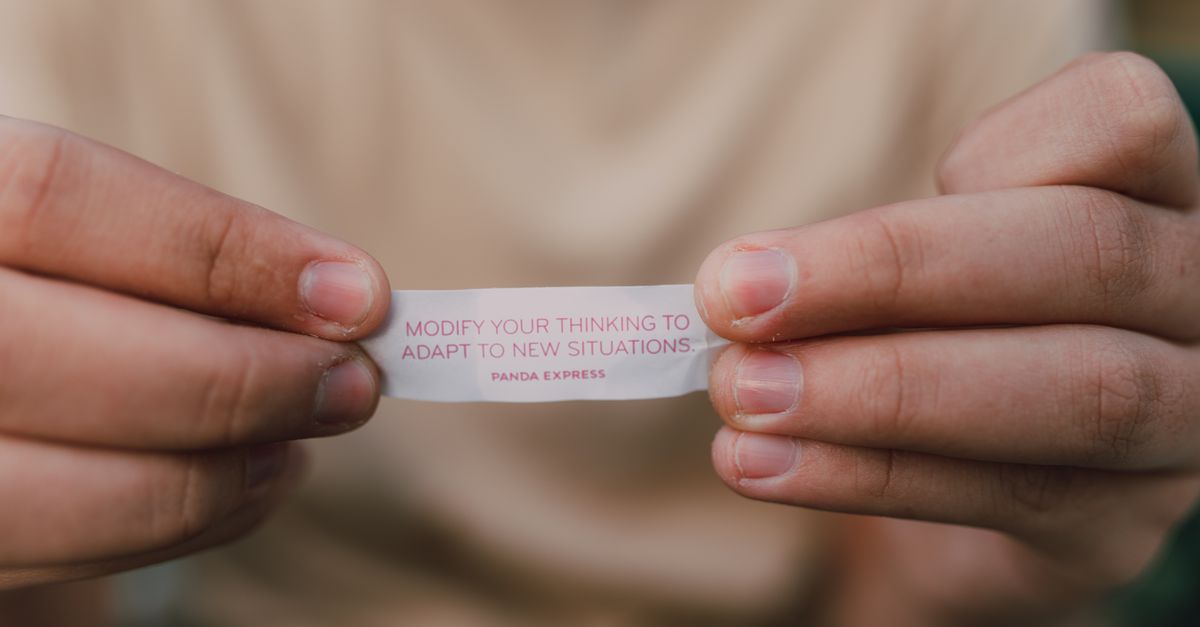
What the Focus Category Actually Contains
Focus, as a category in the Fortune Cookie Generator, is built around a specific editorial direction: gentle observations about small tasks and clear starts. The nine lines in the pool are microcopy rather than advice, and they tend to land on moments like opening a tab, starting a draft, putting a first item on a list, or noticing a quiet change of attention. The product contract describes Focus as holding "gentle observations about small tasks and clear starts," which is the clearest framing of what the pool will and will not deliver.
Because every line in the Focus pool was authored for this tool, there is no overlap with the Curiosity, Creativity, or Everyday pools. Each line is unique English microcopy, and the pool is fixed at nine entries. Selecting Focus is essentially a filter that says "only these nine" rather than a request for a different style of randomness; the underlying unbiased index algorithm still uses the same Web Crypto path, just over a smaller pool length.
It is worth noting what Focus does not contain. There are no lucky numbers, no prediction about what will happen, no health, financial, relationship, legal, or medical statement, and no question-answering behavior. The tool does not analyze a question, accept a name or birthday, or tailor output to a user, and the Focus pool follows that same rule. Reading the result as a writing prompt, a team icebreaker line, or a small moment of novelty is the use case the product is built for.
When Focus Fits Better Than Curiosity, Creativity, or Everyday
Picking a category is partly a mood choice, so it helps to think about the kind of line that would actually fit the moment. The four categories divide cleanly by editorial intent: Focus is about small tasks and clear starts, Curiosity is built around questions, unusual angles, and playful connections, Creativity covers drafts, remixes, constraints, and unfinished ideas, and Everyday holds light scenes involving pages, pens, walks, music, snacks, fresh air, browser tabs, and chairs. The table below compares these intents at a glance.
| Category | Editorial direction | Typical moment it fits |
|---|---|---|
| Focus | Gentle observations about small tasks and clear starts | Beginning a task, resetting attention, picking a first step |
| Curiosity | Questions, unusual angles, playful connections | Brainstorming, journaling, reacting to a question |
| Creativity | Notes about drafts, constraints, remixes, unfinished ideas | Working on a draft, unblocking a creative task |
| Everyday | Light scenes: pages, pens, walks, music, snacks, fresh air, tabs, chairs | A break, a placeholder line, a small moment of novelty |
If the moment is about getting started or returning to something specific, Focus is the closer match. If the moment is more open-ended and exploratory, Curiosity or Creativity usually lands better. For a placeholder card or a light social line that is meant to be scene-setting rather than directional, Everyday is usually the right pick.
How to Choose Focus in the Fortune Cookie Generator
This is the exact sequence to draw a Focus line. The same path works for any of the other three categories.
- Open the Fortune Cookie Generator in your browser.
- Locate the category selector. The default value is All categories, which draws from the complete 36-message pool.
- Change the selector to Focus. This narrows the pool to the nine Focus messages only.
- Select Generate message. The tool requests a secure unsigned 32-bit value from the browser's Web Crypto API, applies rejection sampling to remove modulo bias, and maps the result to an index inside the Focus pool.
- Read the line in the result panel, which also displays the category label so you can confirm the message came from the Focus pool.
- Use Copy message to send the line to your clipboard if you want to paste it elsewhere. The clipboard write happens only after this user action.
- Select Reset to clear the line, return the category to All, and restore the idle panel when you are done.
Changing the category at any point after a line is displayed clears the old result on purpose, so a Focus line cannot remain on screen if you switch to Curiosity or All. That behavior is intentional: the result panel only ever shows a line that matches the category currently selected.
What Happens After You Generate a Focus Line
Once a Focus line is on screen, a few small behaviors are worth knowing. The first is that the result is session-only. All state stays in the current browser tab, so refreshing the page or closing the tab returns you to the idle panel with the category selector at its default. Nothing is sent to a server, nothing is written to localStorage, sessionStorage, or IndexedDB, and no user account is involved.
The second is around the random draw itself. The generator calls globalThis.crypto.getRandomValues and never falls back to Math.random, Date.now, or any effect-time random draw. Because the selection uses rejection sampling over the full 2^32 space, even the first and last messages in the Focus pool have exactly the same probability of being drawn, which is the point of choosing a category over a custom seed. If the browser cannot supply secure entropy for any reason, the output clears and the tool shows an explicit browser-support message rather than a fallback result. A more detailed walkthrough of the rejection-sampling step is covered in How a Fortune Cookie Generator Picks Lines Without Bias.
The third is around copying. Copy message uses the Clipboard API after the user action and reports either success or a clear manual-copy fallback. If the browser blocks the write, the visible message is unaffected, so the line itself stays usable. Reset, by contrast, removes the line entirely and returns the category to All, which is useful when you want to start a fresh round or hand the tool off without leaving a previous result on screen.
Common Situations Where Focus Is the Right Pick
There are a few scenarios where Focus is a particularly good match. One is at the very start of a working block, where a short line about small tasks and clear starts reads like a soft cue to begin. Another is in a team icebreaker where the line is meant to nudge attention rather than entertain, since the Focus pool stays in one quiet register. A third is in a writing prompt context where the line is a sentence to react to rather than a theme to riff on; the Curiosity and Creativity pools tend to give more reactive material.
Focus is also a safe pick when the audience is mixed and the line has to be neutral. The pool contains no prediction, no lucky number, and no advice about money, health, relationships, or legal questions, which means a Focus line can sit inside a card, an email, or a chat message without needing context about the reader's situation. For a placeholder card or a small moment of novelty that has to stay low-stakes, the Focus pool behaves the way the product contract describes: playful microcopy, not a forecast.
If a result feels off, the simplest next step is to Reset and generate again with Focus still selected. Because the pool is only nine entries, repeats are statistically possible across many draws, and the unbiased selection means there is no way to force a different line by changing the timing of the click. For more variety in the same sitting, switching the category to All or to one of the other three categories expands the pool without leaving the tool.