The Tarot Card Meanings catalogue includes all 78 tarot cards in the Rider-Waite-Smith tradition: every one of the 22 Major Arcana and every one of the 56 Minor Arcana, searchable as a single upright reference rather than a shuffled draw. Coverage is total by design, and the catalogue's whole purpose is to give you the complete 78-card deck without forcing you to pull, flip, or interpret a card. The 22 Major Arcana run from The Fool at 0 through The World at 21, with Strength numbered VIII and Justice numbered XI in the same positions A. E. Waite used, an alignment check worth confirming against older or non-Waite references. The remaining 56 cards are Minor Arcana, split into Wands, Cups, Swords, and Pentacles, with each suit holding exactly fourteen cards (Ace through Ten, then Page, Knight, Queen, and King). 14 × 4 = 56, and 22 + 56 = 78, matching the historical Rider-Waite-Smith pack counted as a complete set by major museums. Nothing is hidden behind a login, a payment, or a daily reveal; the same complete list of 78 cards is available on every visit, in canonical order, held in current React state on the page. No fetch call, cookie, localStorage, sessionStorage, analytics request, or remote model call is involved, so searches and filters operate entirely on the 78-card list the page already holds.
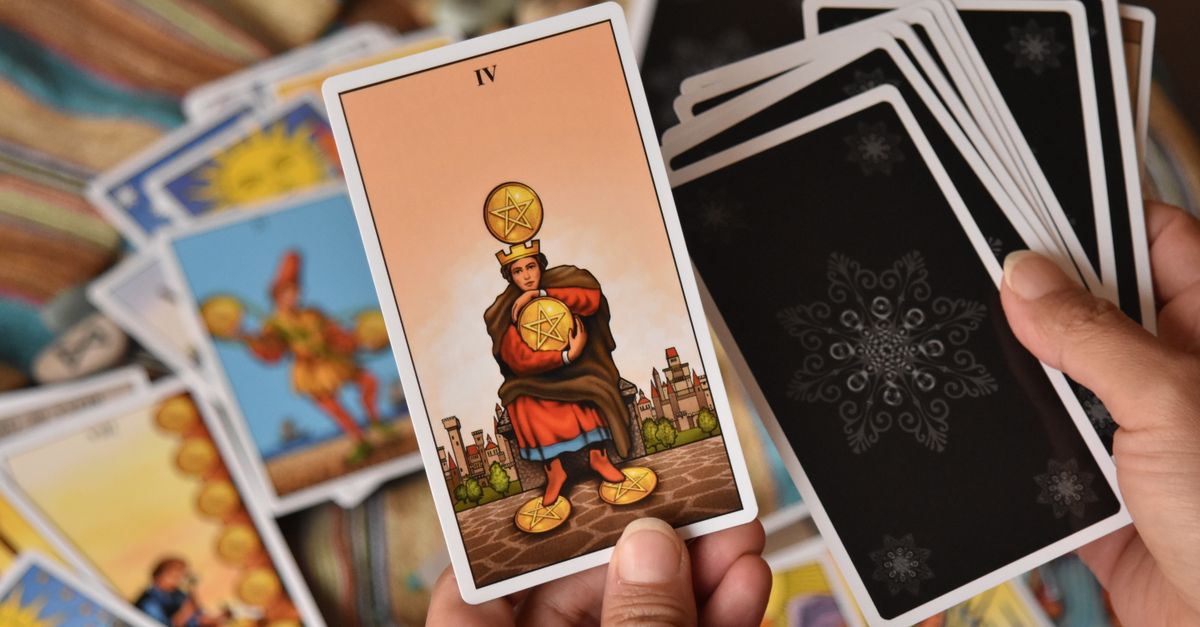
The 78-Card Catalogue at a Glance
The catalogue is presented in two distinct groups that together account for every card in the deck. The Major Arcana are the un-suited cards numbered 0 through 21 and form the backbone of the reference; each entry shows its number, title, and a concise set of upright themes. The Fool sits at the start of the Major sequence (number 0), The World at the end (number 21), and the two cards often re-numbered between traditions (Strength and Justice) keep the Rider-Waite-Smith positions: Strength is VIII and Justice is XI. Each Major entry carries only a short phrase summary rather than a full essay, which the product describes as a compact orientation rather than a universal interpretation. The numbering inside the Major section also acts as a navigation aid, so you can scan the list sequentially and confirm the entire sequence in a few seconds.
The Minor Arcana are the 56 suited cards and behave a little differently. Rather than a continuous numbering, they cluster into four suits — Wands first, then Cups, Swords, then Pentacles — and each suit holds exactly 14 cards in fixed rank order: Ace, Two, Three, Four, Five, Six, Seven, Eight, Nine, Ten, Page, Knight, Queen, King. The order across suits is preserved (Wands → Cups → Swords → Pentacles), so the catalogue reads as one continuous list with the same boundaries you would see on a physical pack. Because every Minor card belongs to one of those four suits, a suit selector will narrow the catalogue from 56 cards to 14 in a single click. Because every Minor card carries a rank from Ace to King, the search field can match a rank label such as "queen" or "ace" in combination with the other filters.
| Group | Count | Numbering | Example cards | What the entry shows |
|---|---|---|---|---|
| Major Arcana | 22 | 0–21 | The Fool, Strength VIII, Justice XI, The World XXI | Number, title, arcana, upright themes |
| Minor Arcana | 56 | Per-suit rank (Ace–King) | Ace of Wands, Queen of Cups, King of Pentacles | Suit, rank, arcana, upright themes |
| Total deck | 78 | — | — | Title, arcana, rank (where applicable), suit (where applicable), upright themes |
How to Find Any Card in the 78-Card Catalogue
- Type a card name or a short theme phrase in the search field at the top of the catalogue. Search matches the normalized text of card titles, theme phrases, arcana, rank, and suit, so queries like queen, cups, fool, or tower all return useful results.
- Use the Arcana filter to limit the result list to either Major Arcana or Minor Arcana, and use the Suit filter to pick Wands, Cups, Swords, Pentacles, or All suits. Combining a theme search with one or both filters is the fastest way to isolate a single card from 78.
- Select any card in the narrowed result list to open the detail panel. The panel shows the card's title, arcana classification, rank, suit, and concise upright themes. The detail panel always resolves from the visible result set, so any card you click is one the page is actually showing.
- If the search or filter combination hides the card you were viewing, the detail panel automatically follows the first visible result rather than displaying stale information. Adjust the search or filters to bring the card back, or reset the view to recover all 78 cards.
- Use the Reset catalogue control to restore the full 78-card list and the canonical starting point (The Fool at 0); use the Clear search control to empty the search box while keeping any active Arcana or Suit filter in place.
What the Catalogue Does Not Do
A 78-card catalogue that covers everything in the deck is the product, and several adjacent capabilities are explicitly outside the scope so the boundary is unmistakable. No card is ever drawn at random — the catalogue never selects, reveals, or "picks" a card for the user. No reversed meanings are provided: the product is upright-only, and reversals plus complete reading systems vary by tradition and are not condensed into a single page (for the full scope discussion, see Are Reversed Tarot Meanings in Tarot Card Meanings?). No personal question is taken as input, so no prediction, score, reading, or interpretation is produced. No persistence: search input and selected filters stay in current React state; they are not written to cookies, localStorage, sessionStorage, or any remote endpoint. No account is needed, and nothing is uploaded.
If you want a complementary experience — a reproducible upright random pull rather than a reference lookup — the site's reading tool keeps the same 78-card structure but adds a one-at-a-time reveal: see Tarot Card Reading for a three-card Past, Present, and Future reflection that uses an identical catalogue.
| Question | Tarot Card Meanings | Tarot Card Reading |
|---|---|---|
| Main outcome | Browse upright themes for any of the 78 cards | Reproducible upright three-card draw with Past / Present / Future prompts |
| Card draw required | No | Yes, one card at a time |
| Reversed meanings | No | No (upright only) |
| Filters | Search, Arcana, Suit | None — cards reveal in sequence |
| Account or storage | None | None |
| Network request | None | None |
Tradition and Sources for the 78-Card Frame
The 78-card total isn't arbitrary. The Rider-Waite-Smith deck, first published in 1909, formalized a structure of 22 Major Arcana and 56 Minor Arcana across four suits of 14 — the same shape the British Museum catalogued in its complete 78-card pack. The themes on the catalogue are concise paraphrases informed by A. E. Waite's The Pictorial Key to the Tarot, a public-domain text that anchors every keyword. They are not copied from modern commercial guidebooks, and each one is intentionally short because the product is built around compact orientation, not full-text commentary. The page also reminds readers that tarot meanings vary by deck, surrounding cards, reader, history, and context; a single phrase does not exhaust a symbol, and historical context for the deck format is widely documented in museum-level summaries such as the V&A's history of tarot cards. The catalogue deliberately stops at the upright label so it can stay verifiable, private, and synced with the other reference tools on the site.
Quick Checks to Verify Completeness
To confirm for yourself that the catalogue is the full 78-card RWS reference rather than a partial subset, run a few short checks in order. Confirm The Fool appears at number 0 at the top of the Major section. Confirm Strength shows as VIII and Justice shows as XI, matching the Rider-Waite-Smith sequence rather than later reorderings. Confirm the Minor Arcana end with the King of Pentacles, the final card of the canonical Wands → Cups → Swords → Pentacles order. Type a query that combines a rank with a suit, for example "queen" with the Cups suit selected, and confirm the result list narrows to cards that match both fields. Finally, click Reset catalogue and walk back to the starting state with The Fool in view and all 78 cards present in the list. If every check passes, the reference is the complete upright RWS catalogue and you can browse it the same way any time without drawing, predicting, or sending anything off the device.
If you're weighing options, How to Do a Tarot Card Reading on Yourself at Home covers this in detail.