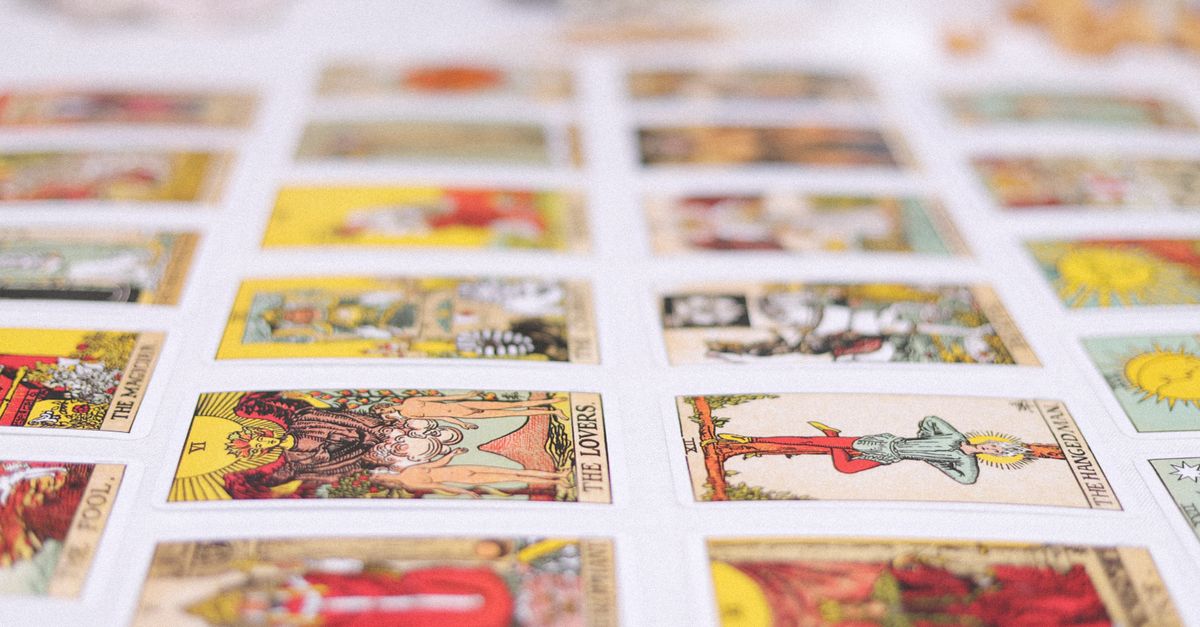
Doing a tarot card reading on yourself means drawing a small, structured set of cards from a 78-card deck and using each card's themes as prompts for private self-reflection, not as fixed predictions. A typical self-reading uses three cards labelled Past, Present, and Future, where each position asks a different reflective question and the cards are revealed one at a time so the sequence feels deliberate rather than random. Modern browser tools make this practice fully local: you type a short seed, the browser deterministically picks three unique cards from the full catalogue using a documented hash, and you reveal each panel in order. The tool does not ask for your name, your question, or any account, and it never transmits the seed. That privacy is what makes a self-reading feel safe to do on your own, even if you have never picked up a tarot deck before.
What "Reading Tarot on Yourself" Actually Means
A self-reading is a private ritual where you act as both the querent and the interpreter. You decide the moment, you decide the seed, and you decide when to flip each card. Compared with a live reader, a self-reading moves at your own pace: you can pause after each card, sit with a theme, and return to the spread later. Compared with a printed book of card meanings, a self-reading gives you a concrete three-card layout instead of an alphabetical glossary.
The Tarot Card Reading tool follows that definition closely. It draws three unique cards from a complete 78-card catalogue — 22 Major Arcana plus the 56 Minor Arcana across Wands, Cups, Swords, and Pentacles — and reveals them one at a time in a fixed Past, Present, Future order. Cards are upright only, so each drawn card carries the same reading direction regardless of who is sitting at the screen. The labels are plain and the scope is stated on the page: a reflection, not a prediction.
What the Tool Will and Will Not Ask You
Before you press a single button, it helps to know the boundary of the input. The Tarot Card Reading tool accepts exactly one thing: a non-sensitive reproducible seed. The seed can be any short label you invent, such as "march review" or "evening walk", or you can let the page generate a local 128-bit hexadecimal seed using the browser's Web Crypto API. There is no field for a personal question, no field for your name, no field for your birth date, no email field, and no account.
The tool also does not store the seed or the draw anywhere persistent. Nothing is written to localStorage, sessionStorage, cookies, or IndexedDB. There are no analytics calls, no third-party reading services, and no remote fetch requests for card images. The seed and the three selected card identifiers live only in the current tab's component memory; refreshing the page or pressing Start over clears them. That scope is the reason a self-reading on this page can feel private even when you share the screen with someone else: the only thing the page knows about you is whatever you typed into the seed box, and you chose those words yourself.
Prepare a Three-Card Reading on Yourself
This is the actual workflow. Follow each step in order the first time; once you have done it once, the rhythm is short enough to repeat whenever you want a private check-in.
- Open the Tarot Card Reading tool. Go to the three-card spread page in a fresh tab so the state starts clean.
- Decide on a seed. Either type a short non-sensitive label that reminds you of the moment (for example, "march review" or "before the call"), or click the option to generate a local 128-bit hexadecimal seed with Web Crypto. The seed is the only creative input you give the reading.
- Choose Prepare reading. The browser normalizes your seed through Unicode NFKC, trims surrounding space, collapses repeated Unicode whitespace to one ASCII space, and lowercases the result. Equivalent forms of the same seed — different casing, stray spaces, accented characters — therefore produce the same draw.
- Reveal the Past card. Until you press Reveal, the card is face down and its identity is not rendered anywhere on the page: not in the DOM text, not in ARIA labels, not in data attributes, not in class names, not in inline styles. Pressing Reveal also moves keyboard focus to the new panel so screen readers follow the action.
- Read the Past prompt. The card's position, arcana or suit and rank, title, conditional reflection sentence, and themes appear in the panel. Take a moment with the question before moving on.
- Reveal the Present card. The page advances one position at a time and does not let you skip ahead. Each reveal is a deliberate act.
- Reveal the Future card. This final panel uses conditional language: it asks you to notice how the themes might develop if the patterns you see now continue. It does not state that an event will happen.
- Copy the seed or Start over. If you want to reproduce the exact same three cards later, copy the displayed seed and save it somewhere only you can see. If you want a fresh reading, choose Start over to clear the input, the prepared seed, the selected identifiers, the reveal count, and any messages or errors.
The Three Positions and What Each Card Asks You
The three-card layout is the simplest standard tarot spread, and each position is framed as a question rather than a verdict. The table below shows what each panel is meant to surface and the kind of phrasing you will see on the page.
| Position | Scope of the prompt | Type of question |
|---|---|---|
| Past | How the card's themes shaped what came before | Look back: what earlier pattern still echoes here? |
| Present | Where those themes are appearing now | Look around: where is this theme showing up today? |
| Future | How the themes might develop if current patterns continue | Look ahead, conditionally: if nothing changes, where does this theme lead next? |
Each revealed panel also lists the card's arcana or suit and rank, its title, and a concise theme phrase. If you want to explore a card further without redrawing, the Tarot Card Meanings reference lets you search and filter the same 78-card catalogue by title, suit, or arcana without preparing a new reading.
Why the Future Card Reads Like a Conditional
It is worth pausing on the Future panel, because it is the position most often misread as prediction. The Future prompt is written as a conditional: if the patterns you observe in the Present continue, notice how the themes of the card might develop. The page describes the whole spread as a reflection rather than a prediction, and it never says an event will happen, is guaranteed, or is fixed by fate.
This framing is intentional. Tarot in the A. E. Waite tradition uses the cards as symbolic mirrors, and the conditional Future lets the card act as a question about trajectory rather than a forecast about destiny. The deterministic selection underneath does the opposite of fate: for every card in canonical order — Major Arcana 0 through 21, then Wands, Cups, Swords, and Pentacles, each with Ace through King — the browser ranks a SHA-256 hash over a documented versioned string and selects the first three unique ranks. Given the same seed, the same three cards come out in the same order, every time. You can read more about the underlying hash function on MDN's SubtleCrypto.digest page.
Reproduce the Same Draw or Start Over
Reproducibility is one of the quietly useful features of a self-reading tool. Once you have a seed you like, the same draw can be regenerated on demand: paste the seed into the input, choose Prepare reading, and the same Past, Present, and Future cards will appear in the same order. That makes it easy to revisit a reading a week later, compare how the Present feels now to how it felt then, or share a reading with a friend by sending the seed alone. No card identities are included in what you copy from the page.
Normalization is what makes reproducibility reliable. Because the browser applies Unicode NFKC, trims surrounding space, collapses repeated Unicode whitespace to one ASCII space, and lowercases the input, two strings that look different on screen but are canonically equivalent produce the same draw. This is also why the tool prefers non-sensitive seeds: if you write down a seed, you want to be sure you can re-type it later without surprise changes. When you are finished, Start over clears the input, the prepared seed, the three selected identifiers, the reveal count, and any error or status messages, leaving the tab in a clean state.
Reflection, Not Prediction: Honest Boundaries
A three-card self-reading is meant for entertainment and self-reflection, and the page states that boundary plainly. It is not medical advice, mental-health advice, legal advice, financial advice, safety advice, or crisis advice, and the Future panel is not a forecast. If a card surfaces something that feels urgent, the right next step is a qualified professional, not another shuffle.
Used as a reflective practice, a self-reading gives you a small, structured moment: three cards, three questions, one screen. The seed is yours, the pace is yours, and the page never sees anything you did not choose to type. That is the whole point of doing a tarot card reading on yourself — a private, repeatable check-in you can run any time you want a moment to think.
If you're weighing options, Interpret a Celtic Cross Tarot Spread: 10 Positions covers this in detail.
If you're weighing options, I Ching Reading Online: Private Three-Coin Cast in Browser covers this in detail.