Mars changes zodiac sign roughly every six to eight weeks, so for most births the calendar date alone fixes the Mars sign and the recorded clock time has no effect at all. The time on the birth certificate only matters when Mars happens to be passing through one of the twelve sign boundaries at the moment of birth, because a single hour can flip the cultural label from one sector to the next in those narrow windows. The Mars Sign Calculator asks for a documented UTC offset precisely for that reason: it cannot treat a wall-clock reading as a unique instant without an offset, and it warns when the resulting position is close enough to a boundary that a small error could move it across the line. Mars is also closer to the Sun than the outer planets and moves noticeably faster than Saturn or Jupiter, but it is still slow enough that birth-time sensitivity is the exception rather than the rule. Anyone whose birth moment is far from a Mars sign change can rely on the date alone, while anyone whose date lands in the days bracketing a sign change needs both an accurate time and a correct offset to get a confident answer.
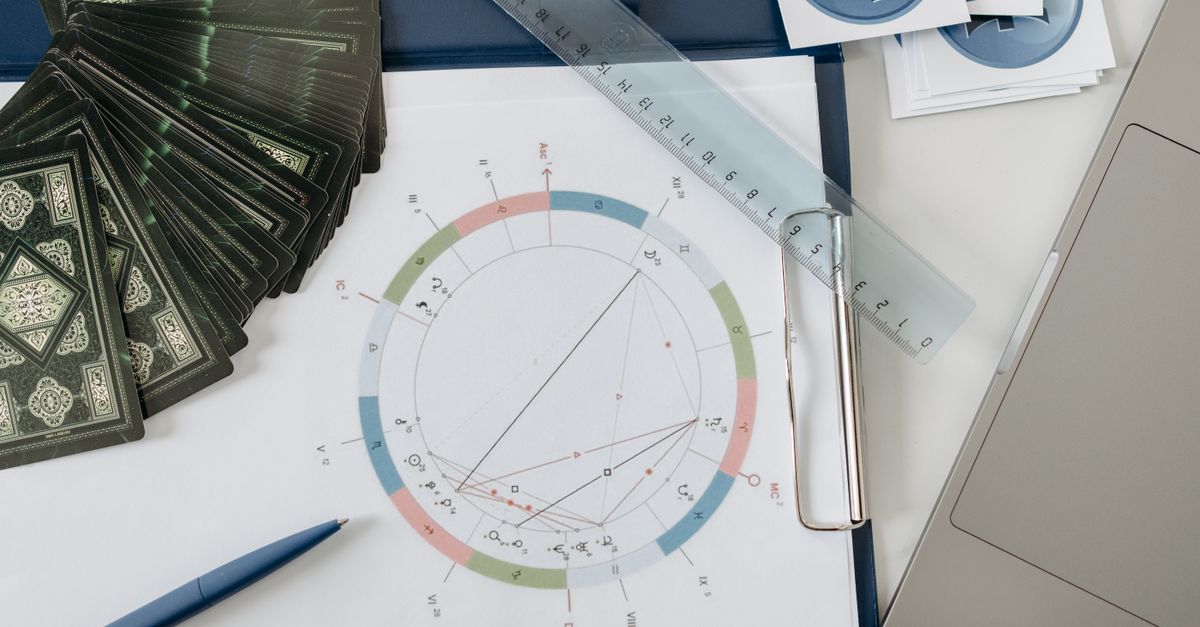
How Mars Moves Through the Zodiac
Mars orbits the Sun in roughly 687 Earth days, so over a single Earth year it traces about half of its orbit. Projected onto the tropical zodiac, that motion works out to an average travel of roughly half a degree per day, with brief retrograde phases every couple of years when the apparent motion slows, briefly reverses, and then resumes its direct course. Because each of the twelve tropical sectors spans thirty degrees of longitude, Mars crosses from one named sector to the next about every six to eight weeks on average. That long crossing interval is why the clock time on a birth certificate usually does not change the cultural Mars label. A baby born at 02:00 and another born at 22:00 on the same date, hours apart, will almost always share the same Mars sign unless the date itself falls in the days straddling a sign change.
When Birth Time Matters for a Mars Sign
The exception is the boundary window. Mars takes several days to cross the single degree that decides which of two adjacent sectors the longitude lands in, so a recorded time error of even a couple of hours can shift the answer in that narrow window. A documented UTC offset matters just as much: a wall-clock reading of 09:15 in a +01:00 zone is not the same instant as 09:15 in a -05:00 zone, and the gap between those two readings is six hours of Mars motion. The Mars Sign Calculator treats that distinction as the first thing to get right. Births recorded before the late nineteenth century add another layer of uncertainty, because standard time zones did not yet exist; for those moments the calculator normalizes the entered convention to a proleptic UTC-like instant and treats the result as an estimate rather than a verified local time, so the clock reading you submit should still be the one documented in the historical source you are working from.
How to Calculate Your Mars Sign from a Documented Birth Moment
Use these inputs in order. The order mirrors what the calculator actually does with them, so following it the same way reduces the chance of an offset mistake.
- Enter the local calendar date, the clock time, and the signed numeric UTC offset you can document for the place and moment of birth. Common modern offsets include +00:00, -05:00, +01:00, +05:30, and +09:00, and the interface accepts signed offsets from -12:00 through +14:00 including non-whole-hour values.
- Confirm the Gregorian date, the clock time, and the offset are all valid inputs; the calculator rejects impossible Gregorian dates, impossible clock readings, offsets outside the supported range, and normalized instants outside the year 1700 through 2100 window.
- Press Calculate to view Mars's apparent geocentric longitude, the 30-degree tropical sector the longitude falls into, the convention you entered, and the normalized UTC-like instant the calculation actually used.
- If a boundary warning appears, re-check the recorded time and the offset, then recalculate; if the warning persists, treat the cultural sector label as uncertain rather than as a fixed answer.
Worked offset arithmetic: a birth recorded on 14 March 1995 at 09:15 local with a documented offset of +01:00 becomes 09:15 minus 01:00, or 08:15 UTC. The normalized instant the astronomical engine actually receives is 1995-03-14T08:15:00Z, and it is that instant, not the wall-clock fields on their own, that determines the Mars longitude. The Mars Sign Calculator performs that offset step and the astronomy in a single offline pass and returns the result without making a runtime network call or asking for a birthplace.
What a Boundary Warning Tells You
A boundary warning fires when the computed Mars longitude falls within 0.05 degrees of either edge of a 30-degree sector. That small angular distance corresponds to roughly two and a half hours of typical Mars motion, so a recorded-time error, an incorrect offset, or a different ephemeris convention could move the displayed cultural label to the neighboring sector. The warning is not an error and does not block the calculation; it is a signal to verify the input before trusting the label. Once the time and offset are rechecked and corrected, recalculate the same birth moment. If the warning still appears, the cultural label should be treated as uncertain rather than as a confident answer, and the more cautious move is to record the result as Mars at the boundary of two sectors instead of committing to one. This boundary behavior is the single biggest reason a dedicated calculator should be used rather than a static date-only lookup table.
What the Mars Sign Calculator Does Not Calculate
The tool is deliberately narrow. It maps Mars to one of twelve equal 30-degree tropical sectors and reports the apparent geocentric longitude behind that mapping. It does not derive an Ascendant, a house cusp, a sign aspect, a Mars return chart, or a topocentric sky position, and it does not ask for a birthplace, coordinates, a GPS lookup, an account, or a file upload. Geocentric means the observer origin is the center of Earth, so location is not part of the input set in the first place. The interface also does not validate or reproduce interpretive claims about drive, anger, desire, or action that some astrology pages attach to Mars; the disclosed output is a transparent astronomical longitude and a disclosed cultural label, and the page is marked for entertainment and cultural interest rather than for medical, legal, financial, safety, employment, or relationship decisions. The interface does not claim second-level or professional-observatory accuracy and is unsuitable for navigation, safety, scientific measurement, or time-critical decisions.
How the Position Is Cross-Checked
Eight literal test cases spanning the year 1700 lower bound, the year 2100 upper bound, and both sides of the 270-, 300-, and 330-degree boundaries are compared with the apparent observer-centered ecliptic-of-date longitudes reported by NASA JPL Horizons and the independent official longitudes from IMCCE Miriade with INPOP. The pinned offline implementation must remain within 0.005 degrees of both research sources for each of those eight cases. NASA JPL Horizons supplies the primary apparent geocentric reference, and IMCCE Miriade supplies the independent secondary reference; the browser does not call either service at runtime, and the underlying astronomy library is the open-source Astronomy Engine 2.1.19 adapter that converts the entered instant to a normalized angle and a 30-degree sector label.
The 30-degree sector mapping used by the calculator is a Western tropical cultural convention rather than an IAU constellation boundary or a scientific behavior category. Aries begins at zero degrees and the sequence advances by 30 degrees per sector, with each interval treated as half-open so that a boundary value at exactly 30 degrees belongs to the next sign rather than the previous one:
| Tropical sector | Start longitude |
|---|---|
| Aries | 0° |
| Taurus | 30° |
| Gemini | 60° |
| Cancer | 90° |
| Leo | 120° |
| Virgo | 150° |
| Libra | 180° |
| Scorpio | 210° |
| Sagittarius | 240° |
| Capricorn | 270° |
| Aquarius | 300° |
| Pisces | 330° |
Because the half-open interval assigns the boundary value to the next sector, a Mars longitude of exactly 270.00° maps to Capricorn rather than Aquarius, and a longitude of exactly 300.00° maps to Aquarius rather than Pisces. That convention is disclosed on screen so the reader is never guessing which side of a line a near-boundary result falls on.
For a deeper look, see Does Birth Time Affect Mercury Sign? Yes, More Than the Sun.
For a deeper look, see How to Calculate Moon Sign and Rising Sign: Each Input.