A Moon sign is the Moon's geocentric tropical longitude placed into one of twelve equal 30-degree zodiac sectors, calculated from a birth date, clock time, and documented UTC or UTC-equivalent offset. A Rising sign is the eastern horizon at that exact moment projected onto the same tropical wheel, which adds a birthplace to the input list. The two calculations share the tropical ecliptic and the equal 30-degree sector system, so they look similar on paper, but they answer different astronomical questions. A Moon sign is an Earth-centered, or geocentric, quantity that does not depend on where you stood when you were born. A Rising sign is a local-horizon quantity, so it changes roughly every two hours and rotates through all twelve sectors across a single day in the same location. This is why a Moon sign can be derived from a UTC offset alone, while a Rising sign cannot. With that understanding in mind, the Moon Sign Calculator covers the Moon part of the question precisely; the Rising part is something you can only solve once you also know your birthplace.
What each sign actually measures
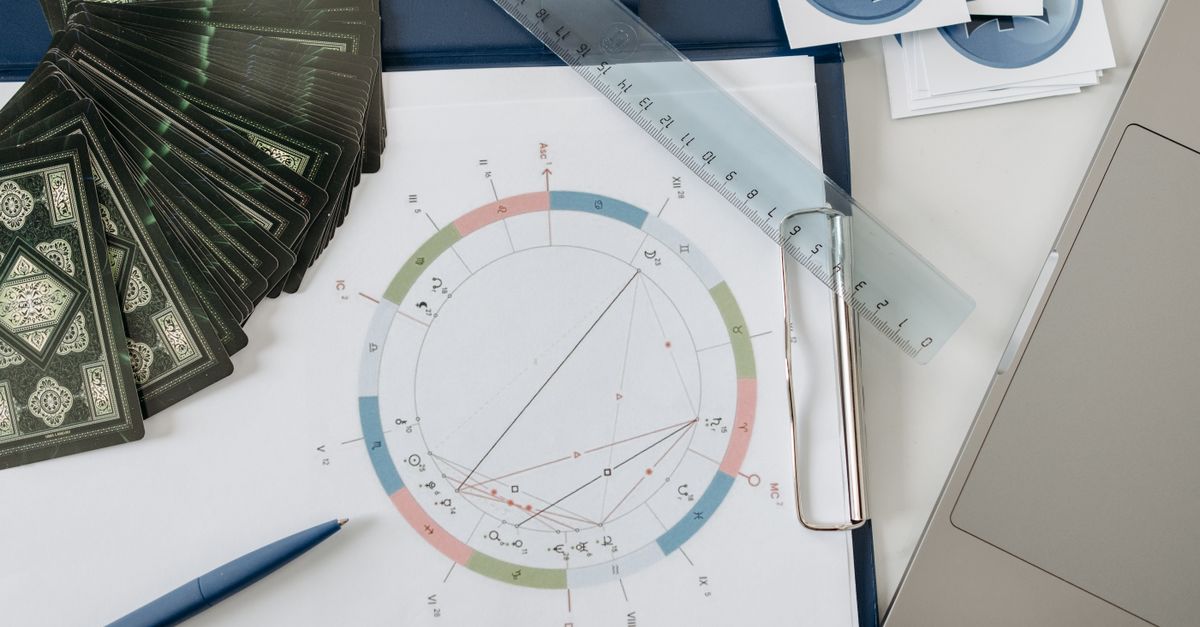
The Moon sign and Rising sign come from the same Western tropical wheel — Aries 0° through less than 30°, Taurus 30° through less than 60°, and so on through Pisces at 330° through less than 360° — so the output labels look identical. What changes is the quantity being measured:
- Moon sign: the Moon's geocentric true-ecliptic-of-date longitude at the birth instant, expressed in degrees 0 through less than 360 and then placed into the matching 30-degree sector.
- Rising sign (Ascendant): the degree of the local eastern horizon at the birth instant, projected onto the same tropical wheel. It is a horizon quantity, not a body quantity.
Because the Moon is an Earth-centered value, it does not care about your city. Because the Ascendant is a horizon value, it depends on where you stood when you were born, and it changes with time at that location. Two people born at the same clock time in different cities can share a Moon sign but have very different Rising signs, and that is not an error — it is geometry.
Inputs you need before you start
For the Moon sign alone, three pieces of information are sufficient:
- The local birth date (year, month, day).
- The local clock time on that date (hour, minute).
- The documented UTC offset, or UTC-equivalent offset, that was in use at that location at that moment — including non-whole-hour offsets such as UTC+05:30 or UTC+09:45.
The calculator does not request a city, coordinates, GPS permission, or IP-based location. It does not ask for a country either. The reason is deliberate: a geocentric Moon position does not depend on observer location, so a birthplace would be unused data. For a Rising sign, the list grows by one item — a birthplace (city, or latitude and longitude) — because the Ascendant is computed at the local horizon, and the horizon depends on where you stood. That extra input is the structural reason a Rising sign tool cannot be the same page as a Moon sign tool.
| Input | Moon sign | Rising sign |
|---|---|---|
| Birth date | Required | Required |
| Clock time | Required | Required |
| Documented UTC offset | Required | Required |
| Birthplace (city or coordinates) | Not used | Required |
| GPS / location permission | Not requested | Not requested |
| Topocentric correction | Not applied | Applied |
How to calculate your Moon sign step by step
- Open the Moon Sign Calculator.
- Enter the local birth date, the clock time on that date, and the documented UTC or UTC-equivalent offset for that moment — for example, a 1990 New York birth would use UTC−05:00 in winter and UTC−04:00 during daylight saving time.
- Choose Calculate. The page converts the three values into a normalized UTC instant and reads the Moon's geocentric true-ecliptic-of-date longitude through a pinned astronomy-engine 2.1.19 release.
- Read the output: the longitude in degrees, the degree within a 30-degree sector, the resolved UTC calculation instant, and the cultural sign label.
- If the result is within 0.05° of a 30-degree boundary, the page shows a warning. Verify the birth time and the historical offset before treating the cultural label as final, because a small change in either can flip the sign.
The conversion is deterministic, the ephemeris is pinned, and the page makes no runtime network request after its assets load. That is what allows the result to be both reproducible and private. The sector mapping applied is the standard twelve-sector Western tropical mapping shown below.
| Tropical sector | Longitude range (degrees) |
|---|---|
| Aries | 0 through less than 30 |
| Taurus | 30 through less than 60 |
| Gemini | 60 through less than 90 |
| Cancer | 90 through less than 120 |
| Leo | 120 through less than 150 |
| Virgo | 150 through less than 180 |
| Libra | 180 through less than 210 |
| Scorpio | 210 through less than 240 |
| Sagittarius | 240 through less than 270 |
| Capricorn | 270 through less than 300 |
| Aquarius | 300 through less than 330 |
| Pisces | 330 through less than 360 |
Reading the boundary warning
The Moon moves roughly 12 to 15 degrees per day across the sky, so it crosses a sector edge every couple of days. Most birth moments land clearly inside one sector, and the result is unambiguous. A small number land within 0.05° of a sector edge, where any of the following can flip the cultural label:
- A birth time rounded to the nearest five or ten minutes instead of the exact minute.
- A UTC offset that has changed for that region since the birth (for example, a country that abolished or shifted daylight saving time).
- A different ephemeris convention: true ecliptic of date versus mean ecliptic of date, or geocentric versus topocentric, can shift the longitude by a few hundredths of a degree.
- A pre-standard-time-zone era where the offset is a proleptic UTC-like estimate rather than a documented modern offset.
The warning does not block the calculation; it tells you that the cultural label is sensitive to inputs. If you see one, a one-minute change in birth time or a one-minute change in documented offset is often enough to confirm or overturn the label.
What rising sign needs instead
The Rising sign is computed from the local sidereal time at the birthplace, which is a function of:
- The same birth date and clock time you already have.
- The same UTC offset you already have.
- The birthplace — at minimum a latitude, and ideally a city or a latitude and longitude pair, so the calculator can resolve the local horizon at that exact instant.
Without a birthplace, an Ascendant calculator has to either ask for one or refuse the question. The Moon Sign Calculator refuses the question by design, because the Moon part of "how to calculate moon sign and rising sign" does not need that field, and silently inventing a location would mislead you about the Ascendant calculation you would still need to do elsewhere. If you also want your Rising sign, you need to repeat the date and time inputs in an Ascendant-specific tool that accepts a birthplace. The two results can then be combined in a Big Three reading, but they come from two different calculations, not one. If you want to see the structural difference laid out side by side, the guide Moon Sign vs Rising Sign: What Each Calculation Needs walks through the same inputs in a comparison table.
Limits and disclaimers
Several constraints are worth knowing before you trust a label:
- The calculation instant must fall between 1700 and 2100. Calendar values, offsets, or resolved instants outside that window are rejected.
- The Moon Sign Calculator is checked against twelve literal cases that sit just before and after sector boundaries in 1700, 1800, 1900, 1999, 2020, and 2099. Each test must agree with NASA JPL Horizons quantity 31 and an independent IMCCE/INPOP run within 0.03° of circular longitude error. If you would like to inspect the ephemeris source, the pinned astronomy-engine release is available at v2.1.19 on GitHub; the JPL reference it is tested against is described in the JPL Horizons API documentation.
- Before standard time zones were adopted, local mean time may not map to a reliable modern offset, so early-date output is a proleptic UTC-like estimate. The offset you entered remains visible in the result so you can audit the convention.
- The tool reports a reproducible astronomical longitude and a disclosed display convention. It does not provide compatibility, prediction, diagnosis, or advice, and astrology is not a scientific personality or relationship assessment.
That last point is why the calculator avoids second-level ephemeris claims, navigational claims, and personality claims. It answers a narrow astronomical question — what 30-degree sector did the Moon's geocentric true-ecliptic-of-date longitude land in — and it answers it deterministically. Everything else, including the Rising sign half of the search, lives in adjacent calculations that you should run with their own inputs.
Related reading: How to Find Venus Sign and House From Birth Details.