A palm line diagram does not read a photo of your palm, and it does not analyze an uploaded image at all. The keyword question — does palm line diagram read a photo of my palm — has a one-sentence answer: no diagram of this kind accepts, opens, or interprets a photograph, a camera feed, or a scanned hand. What the diagram does instead is show where four conventional Western palmistry labels sit on a simplified illustrative drawing of a hand. The Palm Reading Lines Guide is built exactly along those limits. It is a static, keyboard-accessible SVG map with four selectable paths: the Heart line, the Head line, the Life line, and the Fate line. Each path highlights on demand so you can locate the conventional name, relative position, and general direction. There is no score, no reading, no upload control, no personal data field, and no claim about the meaning of any line. If you came here hoping a tool would scan your palm and tell you what it means, this guide is the explicit opposite: it tells you where the labels live on a simplified map, and nothing more.
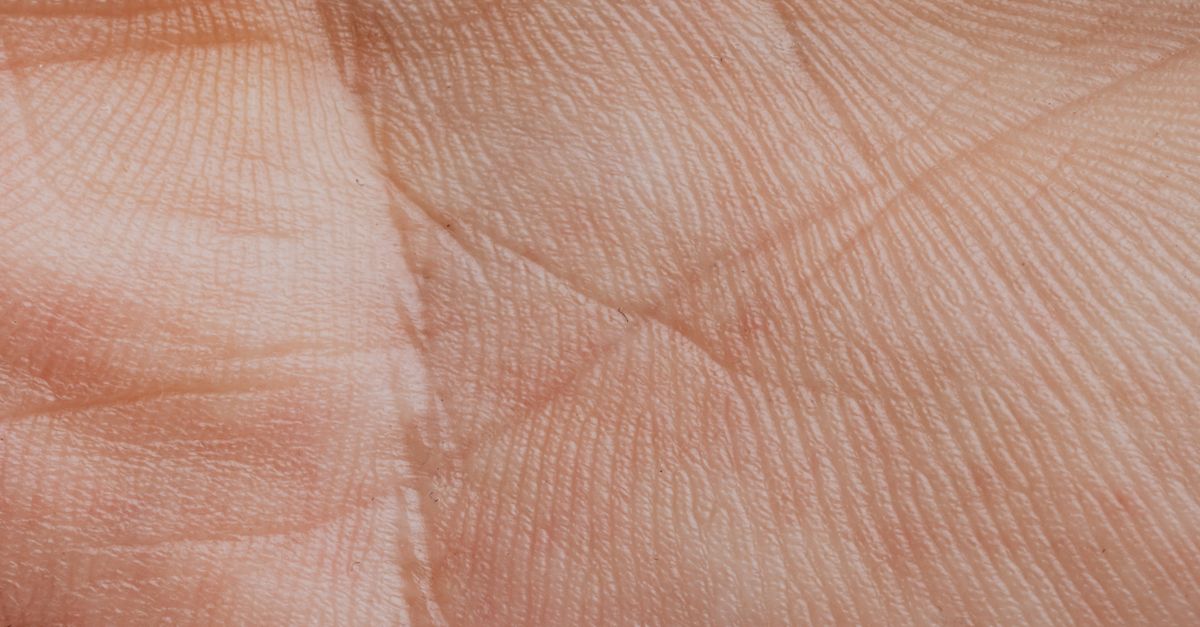
What a Palm Line Diagram Actually Does
A palm line diagram, in the sense used here, is an interactive location map. It is not a fortune-telling engine, not an image classifier, and not a scanner. The diagram is built around four conventional labels drawn from Western palmistry. Those four labels are:
- Heart line — the upper horizontal line beneath the fingers.
- Head line — the middle horizontal line below the Heart line.
- Life line — the curved line around the base of the thumb.
- Fate line — the vertical center line running toward the middle finger.
The map shows those four paths on an original simplified SVG drawing. The drawing is explicitly labeled illustrative rather than anatomical. Real hands vary widely, creases branch and overlap, and a simplified drawing cannot establish that a specific crease on a specific hand is one of these conventional lines. The diagram does not try. Its job is far narrower: name a label, point to where it conventionally sits, and note the direction it conventionally runs. Everything else — meaning, character, health, timing, relationships, predictions — is excluded by design.
How to Use the Palm Reading Lines Guide
The guide is built to be straightforward. You can complete the full interaction with a mouse, a finger, or a keyboard. The steps are:
- Open the Palm Reading Lines Guide. The diagram loads with no upload prompt, no camera prompt, and no personal data fields.
- Choose Heart, Head, Life, or Fate with one of the four large buttons, or click directly on the corresponding path in the illustrative palm drawing.
- Watch the highlight move. The selected path receives a stronger visual highlight, and the result panel repeats the line's name, relative location, general direction, and whether it is commonly absent.
- Read the boundary note that appears with every selection. The note states plainly that the diagram is simplified topology only and provides no hand analysis, meanings, health claims, timing, predictions, or advice.
- Switch lines freely. Pointer selection, Enter, and Space all activate the buttons and the wider invisible hit area around each path, so you can compare all four labels in one session.
The wider invisible hit area is there for a reason. Each line path carries a 48-unit SVG hit stroke, which keeps a touch target near or above 44 pixels even when the illustration scales down on a narrow phone screen. On small screens, the layout stacks the illustration above the details so the result panel remains readable. On wide screens, both sit side by side in a responsive grid. Buttons inherit the site's 44-pixel minimum height so they remain tappable regardless of viewport size.
Why the Diagram Stays at the Topology Layer
The question "does palm line diagram read a photo of my palm" usually comes from a worry that an image of the user's hand will be analyzed, stored, or used to generate personal claims. The Palm Reading Lines Guide addresses that worry by refusing to touch it. The page never asks for camera access. It never offers a file upload control. It never collects hand measurements, dominant-hand status, age, gender, or any other personal data. Nothing is transmitted to a server, nothing is stored against a profile, and nothing leaves the current browser tab.
The boundary is just as firm on the interpretation side. Historical and modern sources on palm lines contain many incompatible reading orders and unsupported claims about character, health, lifespan, relationships, career, illness, or future events. The guide deliberately excludes every one of those categories. It does not assign meanings, personality traits, medical significance, years, dates, event timing, predictions, forecasts, or advice. The array order Heart, Head, Life, Fate is a stable product display order; it is not a sourced reading sequence, and it carries no implication about which line matters most or should be read first.
What the Guide Includes vs. Excludes
A short comparison is helpful here, because the boundary between topology and interpretation is exactly the line the guide draws.
| Aspect | What the Guide Covers | What the Guide Excludes |
|---|---|---|
| Input format | Button click, pointer click on a path, Enter, Space | Photo upload, camera access, hand measurements, personal data |
| Visual model | Original simplified SVG hand outline and four path geometries | Anatomical accuracy, individual hand variation, branched creases |
| Output content | Line name, relative location, general direction, absence flag | Meaning, character claims, health or lifespan claims, predictions, advice |
| Privacy | All interaction stays in the current browser tab | Server transmission, profile storage, image retention |
The four labels themselves, in the guide's stable display order:
| Line | Relative Location | General Direction | Commonly Absent? |
|---|---|---|---|
| Heart | Upper horizontal line beneath the fingers | Horizontal | No |
| Head | Middle horizontal line below the Heart line | Horizontal | No |
| Life | Curved line around the base of the thumb | Curved | No |
| Fate | Vertical center line running toward the middle finger | Vertical | Yes |
The Fate row is the only one marked commonly absent. Real hands often lack the vertical center crease that the diagram labels as the Fate line, and the guide states that explicitly rather than pretending every palm carries all four.
Where the Four Labels Come From
The topology is not invented for this site. The historical anchor is Cheiro's public-domain Palmistry for All on Project Gutenberg, which provides the conventional placement plates for the four lines. That historical source is then independently cross-checked against two modern guides — PalmLines's "How to Read Palms" and Life Palmistry's "How to Read Palm Lines for Beginners" — and only the shared topology is retained. Where the historical source and the two modern guides disagree on reading order, meanings, or interpretive claims, the disagreements are dropped rather than averaged. The result is a small four-row table that records only the line ID, its conventional name, relative location, orientation, and absence flag.
That tight scope is also why the page can promise what it promises. The diagram cannot drift into prediction because no prediction sits in its data table. The diagram cannot leak a photo because no photo field sits in its UI. Each piece of behavior — the four-row immutable table, the eight external fixtures that lock the rows and lookups, the test that checks the illustrative disclosure, the keyboard handlers, the 48-unit hit area, the privacy statement, and the complete exclusion sentence — is part of how the boundary is enforced rather than merely described.
For a different kind of location lookup in the broader fortune category, the site's static guides cover separate systems like rune names, tarot card identities, and I Ching hexagrams on their own pages. Those systems are intentionally separate from this palm-line diagram, and the two should not be mixed into one location map.
If you're weighing options, Avoid Mistakes When You Read a Zodiac Modality Chart covers this in detail.
If you're weighing options, Moon Phase Today for Watch Setting: Read the Angle covers this in detail.