Eye color in newborns is determined by how much melanin develops in the iris, and a baby's chance of brown, green, or blue eyes is based on the gene variants passed down from both parents. The most reliable shortcut for an expecting parent is to pick each parent's eye color in a Baby Eye Color Calculator and read the resulting probability split, which summarizes published eye-color genetics charts in seconds. Behind that readout sits a simple model: brown behaves as the dominant trait, blue as the recessive one, and green sits between them. In reality, at least 16 genes interact to set the final shade, with OCA2 and HERC2 on chromosome 15 doing most of the work, which is why two brown-eyed parents can still have a blue-eyed baby when both are quietly carrying a hidden blue variant. Treating the calculator's percentages as a fun, science-informed estimate, not a medical prediction, keeps the result in the right frame while still giving a clear range of likely outcomes.
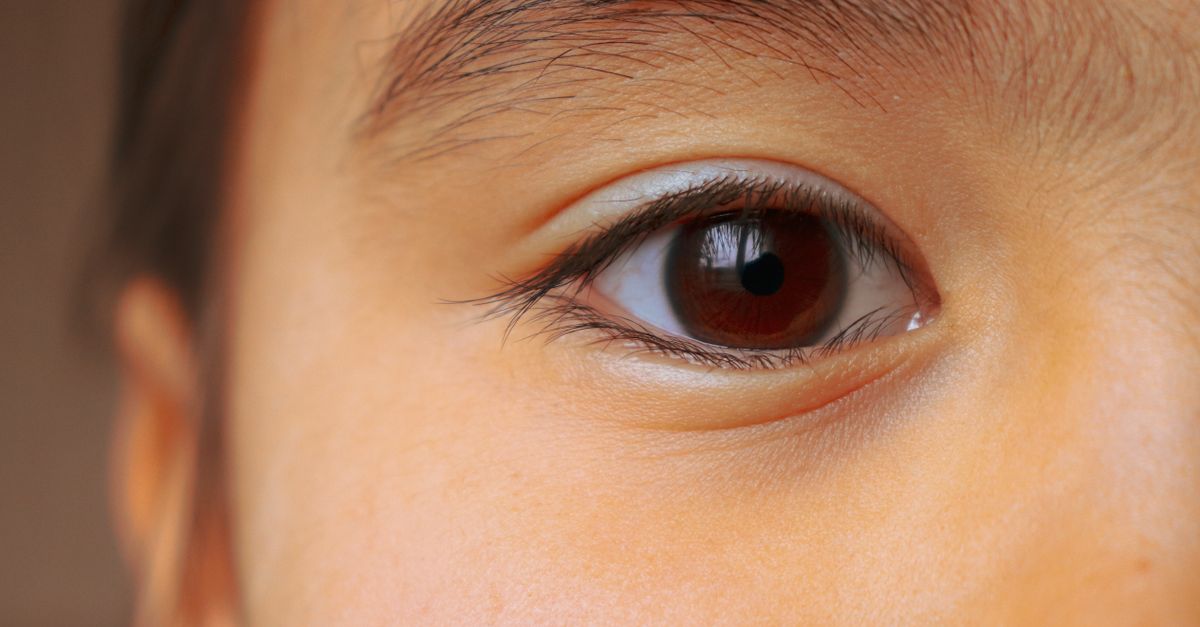
What Sets a Child's Eye Color
The pigment that gives every iris its color is called melanin, the same compound that colors skin and hair. A newborn's eye color reflects how much melanin the iris manages to produce and pack into its front layer. High concentrations absorb more light and make the eye look brown, moderate levels create the green or hazel range, and very low levels let the shorter wavelengths scatter, which the brain reads as blue. Because melanin keeps developing after birth, most babies are born with lighter or bluish eyes that may darken over the first year of life.
What you actually see in a mirror is therefore the visible result of a hidden genetic recipe. Each parent carries two copies of the genes that influence eye color, and the child inherits one copy from each side. The blend of those copies is what the calculator is summarizing when it shows a percentage. It is also why two parents with the same color can still produce a baby with a different shade, and why a baby's color can shift noticeably before it settles.
How Eye Color Genetics Actually Work
The simplified picture taught in biology class treats brown as dominant, blue as recessive, and green as a middle option that often hides behind brown. In that one-gene model, a brown-eyed parent with one brown allele and one blue allele will almost always pass on brown, but can quietly hand the blue allele to a child who then needs a matching blue allele from the other parent to end up with blue eyes. That model explains why blue eyes can skip a generation entirely and then reappear when two carriers have a child together.
Real eye color is more complicated. Researchers have linked at least 16 genes to the trait, with OCA2 and a nearby gene called HERC2, both sitting on chromosome 15, doing the heaviest lifting. Those two genes control how much melanin the iris can make and store, which is why small variations in them can swing a child's eye color across the brown-to-blue range. Because so many genes are involved, no parent pair can guarantee a single outcome, and that is why a calculator gives you a percentage split instead of one firm answer.
Use the Baby Eye Color Calculator in Three Steps
- Open the Baby Eye Color Calculator and pick the father's eye color from the dropdown. The tool accepts brown, green, or blue, which covers the vast majority of parents.
- Pick the mother's eye color from the same three options in the second dropdown.
- Read the predicted probability for brown, green, and blue eyes that appears right away. The three percentages always add up to 100%, so you can treat them as the full range of likely results for that pairing.
For example, choosing brown for the father and brown for the mother tends to produce a split that leans heavily toward brown, with smaller chances of green and blue. Choosing brown for one parent and blue for the other flattens the result into a near-even brown-versus-blue race. Choosing blue for both parents collapses almost everything into blue. Each of those scenarios reads as a quick sanity check rather than a precise forecast.
What the Calculator Can and Cannot Tell You
The tool draws its percentages from published eye-color genetics charts that simplify a polygenic trait. That makes it a fast, science-informed way to explore the possibilities, but it also means several real-world factors stay outside its reach.
- Grandparents' eye colors are not part of the input, so any hidden variants they contributed to the parents cannot be factored in.
- Rarer shades such as hazel, amber, and gray are not separate options, so a parent with one of those eye colors falls outside what the calculator can account for.
- The calculator does not read each parent's specific gene variants, so it cannot tell whether a brown-eyed parent is carrying hidden green or blue alleles.
- It is not a medical or genetic test, and the percentages are an educational estimate rather than a prediction of what any individual baby will look like.
Used as a quick reference before a baby arrives, those limits are easy to live with. Used as a substitute for medical advice, the tool would be the wrong choice.
Odds Across Common Parent Combinations
The table below shows how the six most common parent pairings tend to break down. For the exact percentage that matches your situation, run the pair through the calculator and read the live readout.
| Parent combination | Most likely outcome | Notable secondary chance |
|---|---|---|
| Brown + brown | Strongly brown | Smaller chance of green or blue |
| Brown + green | Brown or green | Smaller chance of blue |
| Brown + blue | Close to even brown-or-blue split | Green usually very small |
| Green + green | Favors green | Some chance of blue |
| Green + blue | Splits between green and blue | Brown very small |
| Blue + blue | Almost always blue | Other colors very small |
Two patterns stand out across those rows. First, brown acts as the dominant color whenever it shows up in a pairing, which is why so many babies end up with brown eyes even when only one parent has them. Second, the only pairing that almost locks in a single outcome is two blue-eyed parents, where the chance of a blue-eyed baby sits close to 99% and any other result is the rare exception rather than the rule.
When a Baby's Final Eye Color Shows Up
Even after the genetics are settled, a baby's eye color can keep shifting during the first year. Many newborns arrive with bluish or grayish eyes because the melanin in their irises is still developing, and the shade often deepens as more pigment builds up. The final color typically settles somewhere between 6 and 12 months of age, though small changes can continue a little longer in some children. That means the color you see in the hospital is rarely the color you will see at the first birthday photo.
For parents who want a quick way to anchor expectations before the baby arrives, running the parents' eye colors through the Baby Eye Color Calculator gives a science-informed estimate right away. The result will not replace what shows up at the delivery room, but it does put a meaningful range on the most common outcomes and makes the underlying genetics easier to talk through with family.
For a deeper look, see How to Determine Newborn Eye Color Step by Step.
For a deeper look, see How to Predict Baby Eye Color From Both Parents.