Newborn eye color is determined by the amount of melanin in the iris, which is shaped by 16 or more interacting genes inherited from both parents. Brown eyes carry the most melanin, green eyes sit in the middle with a moderate amount, and blue eyes have very little, and the combination a child inherits from each parent sets the odds before birth. Because the trait is polygenic, two brown-eyed parents can still produce a blue-eyed baby if both happen to carry hidden recessive variants, while two blue-eyed parents almost always have a blue-eyed child. The simplest way to estimate what a newborn's eye color might be is to compare both parents' colors against published genetics charts and turn those charts into readable percentages. That way expecting parents can see the brown, green, and blue odds at a glance, rather than guessing from family photos or piecing together clues from older relatives.
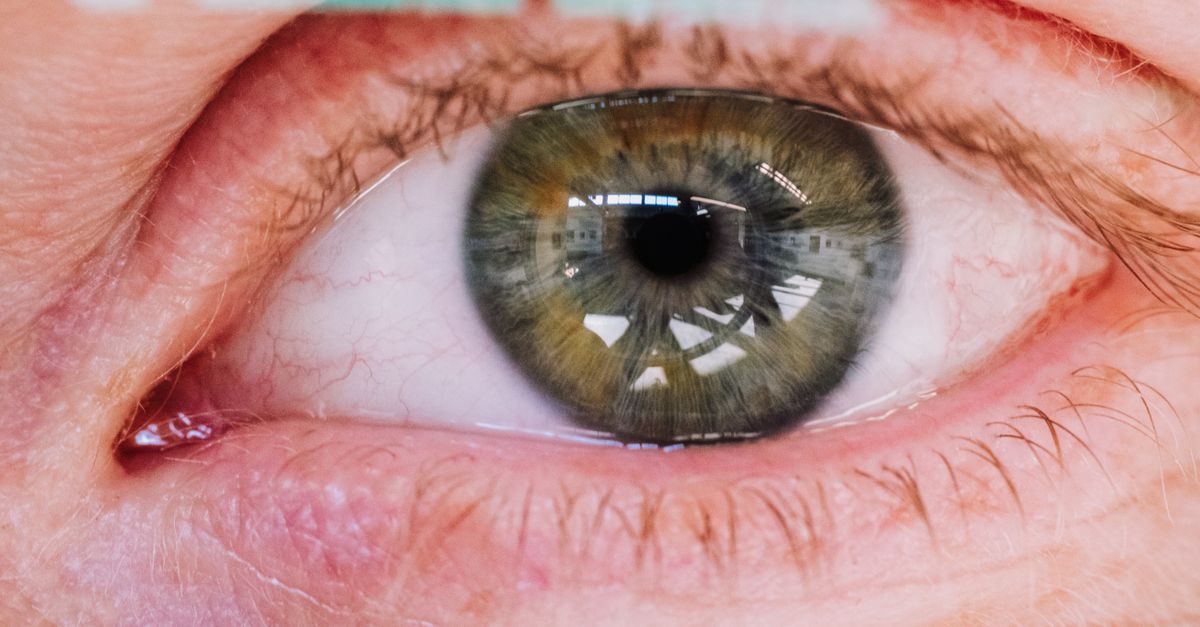
Why Newborn Eye Color Changes in the First Year
Many newborns leave the hospital with light or bluish-gray eyes that look different from what they will become. This happens because melanin production in the iris is still ramping up after birth. Over the first six to twelve months, as the melanocytes in the iris activate and deposit more pigment, the color often deepens. A baby born with seemingly blue eyes may end up with hazel, green, or brown. A baby already born with darker eyes will usually stay dark, though subtle shifts can still happen. The change is gradual rather than a single switch, and small adjustments can sometimes continue past the first birthday, even though the bulk of the change happens during that first year.
This matters for parents using any predictor tool: the answer at birth is rarely the final answer. A calculator built on parent genes forecasts the likely adult outcome, not necessarily the shade the baby brings home from the hospital. Planning around the eventual stable color is usually more useful than reading the birth shade as the last word.
The Genetics Behind a Newborn's Eye Color
Eye color comes from melanin, the same pigment that colors skin and hair, and the iris holds two layers where pigment can sit. More pigment concentrated in both layers looks brown. Moderate pigment with a slightly different light-scattering pattern looks green or hazel. Very little pigment lets the underlying blue wavelengths scatter through, producing blue eyes.
In simplified Mendelian genetics, brown behaves as a dominant trait and blue as a recessive trait, with green sitting somewhere between. A child only needs one brown variant from either parent to lean brown, but needs two blue variants (one from each parent) to land on blue. That is why two brown-eyed parents can have a blue-eyed newborn if each passes on a hidden blue variant.
In reality, eye color is polygenic, with at least 16 genes contributing. OCA2 and HERC2, both on chromosome 15, do most of the work, while other genes add small nudges in either direction. This is why predictions from parent color alone are approximate, not certain, and why eye color can skip generations before showing up again in a grandchild. Grandparent genetics can quietly shape a newborn's eye color even when neither parent shows the trait in question.
Common Parent Combinations and Likely Outcomes
Although no calculator can guarantee a single outcome, certain parent combinations lean strongly in one direction. Here is how the most common pairings tend to break down based on published genetics charts:
| Parents | Most likely outcome | Other possible colors |
|---|---|---|
| Brown + Brown | Strongly brown | Some chance of green or blue |
| Brown + Green | Brown or green | Smaller chance of blue |
| Brown + Blue | Close to a 50/50 split between brown and blue | Small green chance |
| Green + Green | Mostly green | Some blue |
| Green + Blue | Split between green and blue | Brown possible but rare |
| Blue + Blue | Almost always blue | Brown or green extremely rare |
These patterns reflect dominant and recessive relationships, not fixed rules. The exact percentages vary slightly by chart, but the direction holds across most published sources and is the same logic the calculator uses. Parents who see a small percentage for an unexpected color should not dismiss it. The percentages describe what is possible across many families with the same parent colors, and individual families can fall anywhere along the range.
How to Estimate Your Newborn's Eye Color Using the Calculator
To get a quick estimate before the baby arrives, the Baby Eye Color Calculator translates parent colors into predicted odds in three steps.
- Open the calculator and choose the father's eye color from brown, green, or blue.
- Choose the mother's eye color from the same three options.
- Read the predicted probability for brown, green, and blue eyes for your baby.
The tool draws on published eye-color genetics charts and instantly translates the parent combination into three percentages that always add up to 100%. For example, two brown-eyed parents see roughly a 75% brown chance, about 18.75% green, and 6.25% blue. Two blue-eyed parents see about a 99% blue chance. A brown-eyed parent paired with a blue-eyed parent sees close to a 50/50 split between brown and blue, with green as a smaller third possibility.
For the most useful reading, treat the largest percentage as the most likely outcome, the second-largest as a real possibility, and the smallest as a long-shot surprise. Run a few different combinations in a row if family history involves hazel, amber, or green eyes, since the model uses three categories and bundles close shades under the closest match. Comparing the same parents against each other across combinations also helps build intuition for how the dominant and recessive relationships play out.
What the Calculator Can't Tell You
The tool is a quick, science-informed estimate, not a genetic test. It looks at two parents' visible eye colors and returns percentages based on a simplified model. It cannot read the specific gene variants each parent carries, so a brown-eyed parent with hidden blue variants looks the same to the calculator as a brown-eyed parent without them.
The calculator also cannot account for grandparents and earlier generations, even though their genes can resurface in a grandchild. Rarer colors such as hazel, amber, and gray are not part of the three-color model, so a baby whose eyes settle into one of those shades will appear under the closest matching category rather than as a separate result.
A baby's eye color at birth is not necessarily the final color. Because melanin continues to develop after birth, the percentage shown is closer to a forecast for the eventual stable color than a reading of what the newborn brings home from the hospital. The calculator is meant for fun and general learning, not as medical or genetic advice.
Reading the Probability Results
Each parent combination returns three percentages that add up to 100%. The largest value is the most likely outcome, but every value above zero is a real possibility. Genetics is a probability game, not a coin flip, and the small percentages are not zero, only less common.
For expecting parents, the most useful approach is to read the result in two passes. First, note the dominant color and treat it as the working assumption for planning or curiosity. Then note the second and third colors and treat them as live possibilities, especially if there is a family history on either side that matches one of those shades.
If both parents carry the same eye color, the percentage for that color tends to dominate while the others stay small. If the parents have very different eye colors, the percentages often split between two colors with the third as a smaller tail. Watching this pattern across a few combinations helps build intuition for how the genetics work, even when the specific numbers are approximate.
Treat the result as an educational estimate rather than a hard prediction. The calculator is a fast way to explore the genetics before birth, but the real answer arrives only when the baby does, and continues to settle over the first year as melanin finishes developing in the iris.
For a deeper look, see How to Determine Prime Factorization of Any Number.
For a deeper look, see How to Predict Baby Eye Color From Both Parents.