To convert a temperature from Celsius to Fahrenheit, multiply the Celsius value by 9/5 (the same as 1.8) and then add 32. The standard equation is °F = (°C × 9/5) + 32, and it produces a correct absolute Fahrenheit reading for any Celsius value above absolute zero. For instance, 25 °C works out to 77 °F, and 100 °C works out to 212 °F at standard atmospheric pressure. The reason the formula needs both a multiplier and an offset is that the two scales do not share a zero point: 0 °C sits at 32 °F, and the size of a Celsius degree is larger than the size of a Fahrenheit degree. You can do that arithmetic by hand in a few seconds, or you can let the Temperature Converter handle it instantly while also letting you flip among Fahrenheit, Kelvin, and Rankine without re-entering the value. The rest of this article walks through the formula, the step-by-step use of the tool, a few reference values worth memorizing, and the validation rules that catch physically impossible inputs before you paste a wrong number into a recipe, a lab notebook, or an engineering report.
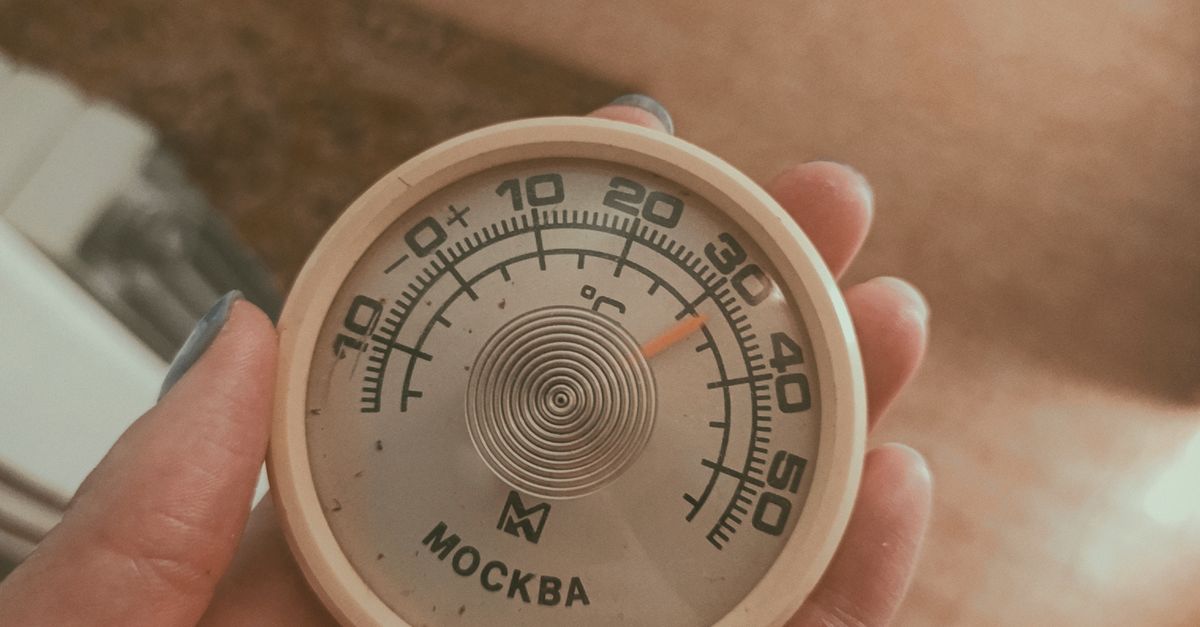
The Celsius-to-Fahrenheit Formula
The Celsius scale and the Fahrenheit scale are both offset scales, which is a slightly fancier way of saying that their zero points are arbitrary. Anders Celsius originally defined his scale with 0 at the boiling point of water and 100 at the freezing point, while Daniel Fahrenheit placed 0 at the temperature of a brine mixture and 96 at body temperature. Those historical choices left a permanent offset baked into the relationship between the two scales, and that offset is the reason a simple ratio such as 1.8 is not enough on its own.
Writing the conversion in full, the equation is:
°F = (°C × 9/5) + 32
Equivalently, °F = (°C × 1.8) + 32. The 9/5 factor accounts for the difference in degree size, and the +32 accounts for the offset between the two zero points. Working through a single value by hand is the clearest way to see how the two pieces interact:
25 °C × 9/5 = 45, and 45 + 32 = 77 °F.
That is the only arithmetic you need to memorize for ordinary everyday conversions. The same approach works in reverse: to go from Fahrenheit to Celsius, subtract 32 first and then multiply by 5/9, which gives °C = (°F − 32) × 5/9. The Temperature Converter performs both directions and also handles the absolute scales (Kelvin and Rankine) using the exact scale relationships defined in the NIST SI Units – Temperature reference, so you do not have to keep the offsets in your head.
Convert Celsius to Fahrenheit Using the Tool
When the value is not a clean round number, or when you also need the Kelvin or Rankine equivalent, the fastest path is to use the Temperature Converter directly in your browser. The tool accepts ordinary decimal numbers and scientific notation, applies the correct scale equations, and shows the result in a labeled format you can copy.
- Open the Temperature Converter in your browser. No account, upload, or server round-trip is required, so the value never leaves your device.
- Type the Celsius value into the input field. You can use a plain decimal such as 36.6 or a scientific-notation form such as 3.66e1. The tool rejects empty text, non-decimal strings, Infinity, and any value with magnitude greater than 1e100.
- Pick Celsius as the source scale and Fahrenheit as the destination scale using the two selectors. The interface spells out each scale in full to avoid confusion between °C, °F, K, and °R.
- Read the live labeled equation on the result line. The converter preserves your original entered value in the displayed equation and formats both sides consistently, so you see exactly what was converted into what.
- Use the swap control to reverse the two selected scales if you need the same number back in the other direction. Changing the input or the scales clears any previous copy confirmation, so the interface never implies an older equation is still on the clipboard.
- Copy the labeled equation if you need to paste it into a worksheet, lab report, recipe, or technical document. Switching scales or editing the input clears the previous copy state.
The result is rounded to up to twelve significant digits with unnecessary trailing zeros removed and negative zero normalized to a plain 0. Very large or very small nonzero results switch to scientific notation so long runs of zeros do not hide useful digits. This formatting is intended for readable conversion rather than arbitrary-precision decimal arithmetic; if you need more digits than the display provides, the input value is already the canonical source.
Reference Temperatures in °C and °F
A small set of reference points covers almost every everyday conversion you will ever need. The table below lists the most common anchors, including the values that define the Celsius and Fahrenheit scales in the first place. All of these reference points are mathematically defined scale relationships, not physical predictions: the actual freezing and boiling behavior of water depends on pressure, composition, purity, and the measurement convention used.
| Reference point | Celsius | Fahrenheit |
|---|---|---|
| Water freezing (ordinary reference conditions) | 0 °C | 32 °F |
| Water boiling at standard atmospheric pressure | 100 °C | 212 °F |
| Water triple point (historical kelvin anchor) | 0.01 °C | 32.018 °F |
| Typical human body temperature | 37 °C | 98.6 °F |
| Absolute zero (lowest valid absolute temperature) | −273.15 °C | −459.67 °F |
The water triple point entry deserves a small note. Historically, the triple point of water was assigned exactly 273.16 K to define the kelvin, which is why 0.01 °C maps to 32.018 °F under the scale equations. The current SI definition of the kelvin no longer fixes the triple point; it fixes the Boltzmann constant instead. The 0.01 °C ↔ 273.16 K anchor still works as a conversion check, but the formal metrology wording now lives with the constant.
For kitchen and oven contexts, the Cooking Measurement Converter is a useful companion because it handles oven gas marks alongside °F and °C, so you can convert a recipe's oven setting without doing the math yourself.
Why the Converter Rejects Some Negative Inputs
The four temperature scales do not all start at the same place, but two of them start at the same physical point: absolute zero. Kelvin and Rankine both begin at absolute zero, while Celsius and Fahrenheit are offset from it by −273.15 and −459.67 respectively. That means there is a sharp lower bound on what counts as a valid absolute temperature, regardless of which scale you happen to be reading.
The Temperature Converter treats the following as the lowest valid values: 0 K, 0 °R, −273.15 °C, and −459.67 °F. Any reading that would convert to a negative kelvin value is rejected with a specific absolute-zero error message instead of a numeric result. The validation matters because a syntactically valid number can still be physically outside the scale. If you first convert 25 °C successfully and then edit the input to −300 °C, the result area changes to an absolute-zero error rather than displaying a stale 77 °F.
Empty text, non-decimal text, Infinity, non-finite scientific notation, and values with magnitude greater than 1e100 also produce explicit messages. The 1e100 boundary is a software guard against meaningless floating-point extremes and is not a physical maximum temperature. The point of all these checks is to make sure the output is always something you can trust and label correctly in whatever document the value is heading into.
Absolute Reading vs Temperature Interval
One of the most common errors in temperature conversion is mixing up an absolute reading with a temperature interval. They are not the same calculation, and the formula differs.
An absolute reading is a single value on a particular scale, such as 25 °C or 77 °F. Converting between absolute readings uses the full equation, including the offset: 25 °C is 77 °F, and 1 °C is 33.8 °F. The offset is what makes the two zero points line up.
A temperature interval, by contrast, is a change or a difference. The size of 1 °C is identical to the size of 1 K, and the size of 1 °F is identical to the size of 1 °R. To convert an interval you apply only the ratio: multiply a Celsius or kelvin interval by 1.8 to get a Fahrenheit or Rankine interval, and divide a Fahrenheit or Rankine interval by 1.8 to get a Celsius or kelvin interval. There is no +32 step for an interval.
The practical rule is simple. If you are describing a single temperature that a thermometer is showing right now, use the full conversion with the offset. If you are describing how much something warmed up or cooled down, use only the ratio. The Temperature Converter applies the offset by default because it is built for absolute readings, which is what recipes, weather reports, and instrument panels normally report.
The Kelvin Reference Behind Every Conversion
Internally, the converter routes every valid input through kelvin before producing the output scale. A Celsius value becomes kelvin by adding 273.15. A Fahrenheit value becomes kelvin by adding 459.67 and dividing by 1.8. A Rankine value becomes kelvin by dividing by 1.8. Once the common kelvin value is known, the inverse equation produces the selected destination scale.
This one-path design is not just a coding convenience. It avoids maintaining a separate hand-written formula for every possible pair of scales, and it keeps every conversion consistent with the numerical-value equations published in NIST Special Publication 811. If you need the formal metrology wording for a regulatory report or a peer-reviewed paper, the BIPM SI Brochure and the NIST SP 811 Appendix B.8 entry on temperature conversion factors are the appropriate references. The tool itself is a transparent numerical conversion, not a replacement for instrument calibration, measurement uncertainty, or the significant figures required for your specific application.
For a one-off conversion where the offset is obvious and the result is for personal use, the (°C × 9/5) + 32 formula is fast and correct. For everything else, the Temperature Converter gives you a labeled, NIST-traceable result you can paste directly into a worksheet, with below-zero validation and full Kelvin and Rankine support built in.
Related reading: The Celsius to Fahrenheit Formula: How It Works.
Related reading: Converting Across Celsius, Fahrenheit, Kelvin, and Rankine.