The Celsius to Fahrenheit formula is °F = (°C × 9/5) + 32. This single equation converts any Celsius reading into Fahrenheit by first scaling the value by 9/5 (the same as multiplying by 1.8) and then adding 32 to shift the zero point. The 9/5 factor reflects that a Fahrenheit degree is smaller than a Celsius degree — nine Fahrenheit degrees cover the same temperature span as five Celsius degrees — while the +32 offset accounts for the fact that water freezes at 0 °C but at 32 °F. The formula is exact, not an approximation, and applies to every Celsius reading at or above absolute zero. It can be rearranged as °F = °C × 1.8 + 32 for faster mental math, and inverted as °C = (°F − 32) × 5/9 to go the other direction. Because the conversion is just two arithmetic operations, you can do it with a basic calculator, but mistakes with the sign of the offset and the direction of the multiplication are common. A temperature converter applies the formula for you, displays a labeled equation, and rejects any input that would fall below 0 K, −273.15 °C, or −459.67 °F.
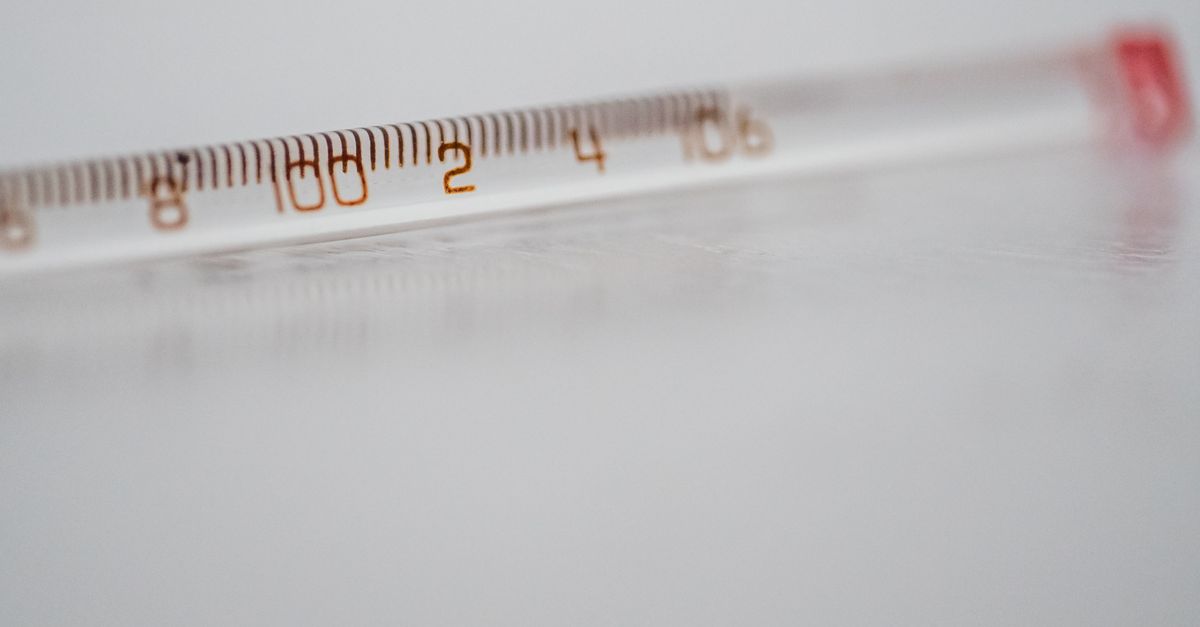
The Celsius to Fahrenheit Formula, Written Two Ways
Both forms below produce identical results; the difference is readability and which arithmetic feels more natural.
- Fraction form: °F = (°C × 9/5) + 32
- Decimal form: °F = °C × 1.8 + 32
Use 9/5 when you want to show that a Fahrenheit degree is exactly 9/5 the size of a Celsius degree, which is the historical way the formula is taught. Use 1.8 when you are doing the multiplication by hand or entering it into a calculator. The +32 step is the same in both versions. According to NIST's SI Units – Temperature page, the defining scale relationships for Celsius and Fahrenheit are fixed this way, so the formula is exact for every valid input and is not the result of any empirical curve fit.
Why 9/5 and 32: The Logic Behind the Numbers
The formula has two parts because Celsius and Fahrenheit do not agree on two things at once: the size of a single degree, and where zero lives.
The 9/5 ratio. A change of 100 Celsius degrees separates the freezing and boiling points of water. The same change in Fahrenheit covers 180 degrees, because water freezes at 32 °F and boils at 212 °F at standard atmospheric pressure. The ratio 180 ÷ 100 simplifies to 9/5, which is why every Celsius interval is multiplied by 9/5 before it becomes a Fahrenheit interval.
The +32 offset. Multiplying by 9/5 only handles the slope. The two scales also disagree on where zero is. Celsius sets 0 °C at the freezing point of water, while Fahrenheit sets 32 °F at that same physical point. So after the slope conversion you must shift the result upward by 32 to align the zeros.
You can think of the formula as two separate steps: first a proportional resize, then a translation. The proportional resize uses only the ratio of degree sizes; the translation uses only the freezing-point difference. Skipping either step gives a wrong answer by a factor of about 1.8 or by exactly 32 degrees, which is why the formula is usually written as a single line rather than two.
Applying the Formula to a Specific Value
Walk through 25 °C, a typical room temperature, using the fraction form of the formula.
- Start with the Celsius value: 25 °C.
- Multiply by 9: 25 × 9 = 225.
- Divide by 5: 225 ÷ 5 = 45.
- Add 32: 45 + 32 = 77.
- Attach the Fahrenheit unit: 77 °F.
The same steps in decimal form collapse to 25 × 1.8 = 45, then 45 + 32 = 77 °F. Either way, 25 °C equals 77 °F. As a second check, convert 100 °C the same way: 100 × 9/5 = 180, and 180 + 32 = 212 °F — the well-known boiling point at standard atmospheric pressure. If your arithmetic lands anywhere other than these two anchor results, the mistake is usually a missing +32 or a flipped subtraction in the reverse direction.
Converting Back: Fahrenheit to Celsius
To go from Fahrenheit to Celsius, invert both operations and reverse their order.
- Fraction form: °C = (°F − 32) × 5/9
- Decimal form: °C = (°F − 32) ÷ 1.8
The subtract-32 step appears first this time because you are shifting the Fahrenheit zero back to where the Celsius zero sits, and only after that do you scale by the inverse of the Fahrenheit-to-Celsius degree ratio. For example, 98.6 °F becomes (98.6 − 32) × 5/9 = 66.6 × 5/9 = 333 ÷ 9 = 37 °C. The arithmetic shows every step explicitly so you can verify each one. A temperature converter does the same math and prints a labeled equation you can paste into a worksheet, lab report, recipe, or technical document.
Offset Versus Interval: A Common Mix-Up
The Celsius-to-Fahrenheit formula is for absolute readings, which are points on a scale. It is not the right tool for converting a temperature change or interval. A change of 1 °C is also a change of 1 K and equals a change of 1.8 °F or 1.8 °R — but the 32 offset never enters interval math. If a recipe says "raise the oven by 20 °C," the increase is 20 × 1.8 = 36 °F, not (20 × 1.8) + 32. Mixing the two is one of the most common formula errors and is the source of many mis-stated weather or cooking adjustments. The fix is simple: when you see a difference or a rate, drop the +32 and use the ratio alone.
Reference Points and What They Tell You
Useful reference values are anchored in the defining constants of the scales, which NIST publishes alongside the formula. The table below shows the four scales, the symbols the converter uses for each, where absolute zero sits on each scale, and the size of one degree relative to the others.
| Scale | Symbol | Absolute zero on this scale | One degree equals |
|---|---|---|---|
| Celsius | °C | −273.15 °C | 1 K |
| Fahrenheit | °F | −459.67 °F | 1 °R |
| Kelvin | K | 0 K | 1 °C interval |
| Rankine | °R | 0 °R | 1 °F interval |
Two familiar reference points for everyday use: water freezes at 0 °C = 32 °F, and water boils at 100 °C = 212 °F at standard atmospheric pressure. Those values match the formula exactly and are the quickest way to sanity-check a hand calculation. They are not universal — actual freezing and boiling temperatures depend on pressure, salinity, and purity — so they should not be treated as environmental predictions for any specific real sample.
Putting the Formula to Work
If you want the formula applied without keeping the constants in your head, the temperature converter takes a single number plus a source and destination scale, then displays the labeled equation. A typical session looks like this:
- Enter a finite absolute temperature using ordinary decimal or scientific notation (for example, 25, -40, or 1.602e-19).
- Choose Celsius as the source scale and Fahrenheit as the destination scale.
- Read the live equation and copy it for use in a worksheet, lab report, recipe, or technical document.
The conversion routes every valid reading through kelvin, so the same interface handles all four scales in either direction. It rejects inputs that would fall below 0 K — including empty text, non-decimal text, Infinity, non-finite scientific notation, and values with magnitude greater than 1 × 10100 — and returns a specific absolute-zero error instead of a stale result. Switching scales or editing the input clears the previous copy confirmation, so the interface never implies that an older equation is still on the clipboard. Use the swap control to reverse the two selected scales and confirm that the forward and reverse readings agree, which is a useful self-check on any formula you have written by hand.
For formal metrology work, regulatory reporting, or safety-critical engineering, retain the original measurement's calibration, uncertainty, reference conditions, and significant figures. The formula only translates the numerical value; it cannot make a thermometer more accurate, and the NIST SP 811 conversion factors page is the appropriate citation when official wording is required.
For a deeper look, see Trapezoid Area Formula: Bases, Height, 8 Units.
For a deeper look, see How to Convert Area to Radius: Formula & Unit Prep.