A bra size calculator chart combines two measurements—underbust and bust—to estimate a band number and cup letter in US, UK and EU sizing.
Read each result as a complete band-and-cup label rather than as a cup letter alone. The Bra Size Calculator accepts both measurements in inches or centimeters and displays estimated sizes in the three regional systems. The reference charts and method below explain how to interpret that output, while a fitting check confirms whether the suggested size works for you.
How the calculator chart works
A calculator chart follows the modern two-measurement method. The underbust measurement establishes the band, while the bust measurement determines the cup relative to that band. This differs from charts that begin with a single measurement and add several inches to it.
- Band formula: Round the underbust measurement to the nearest even number.
- Cup formula: Subtract the rounded band measurement from the bust measurement, then match the difference to a cup letter.
For the inch-based method, roughly one inch of difference corresponds to one cup letter. The cup calculation uses the rounded band, so find the final band before comparing the difference with the cup chart. When measuring in centimeters, enter both readings in centimeters and use the calculator’s result rather than applying the inch chart yourself. Regional output is an estimate because sizing also varies by brand, style and material.
Measure and calculate your size
Use a measuring tape and, for the truest numbers, measure braless or while wearing a thin, non-padded bra. Then follow this workflow:
- Choose one unit. Open the calculator and select inches or centimeters. Use the same selected unit for both measurements so their difference is calculated consistently.
- Measure your underbust. Wrap the tape snugly and level around your ribcage directly under your bust. Keep it in that position without pulling it tighter, and enter the reading in the underbust field.
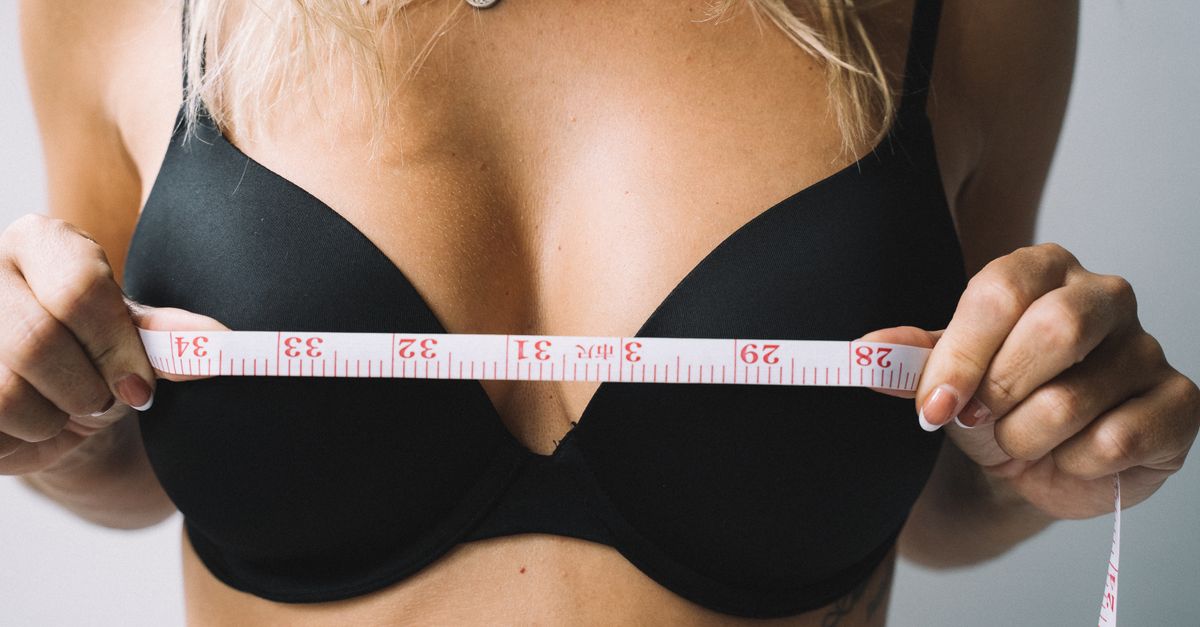
- Measure your bust. Wrap the tape loosely around the fullest part of your bust, keeping it parallel to the floor. Enter that number in the bust field without changing the selected unit.
- Read the estimated size. The calculator displays a band number and cup letter for the US, UK and EU systems. The estimate updates as you type, so check that both fields contain the intended measurements before using the result.
- Compare and try the size. Use the relevant regional chart below to interpret the result. When shopping, the band should sit level and snug, while the cups should fully contain your breasts without gaps or spillage.
For one worked example, a 32-inch underbust and a 36-inch bust produce a 32 band. The difference is 36 − 32 = 4 inches, and a 4-inch difference corresponds to D. The estimated labels are US 32D, UK 32D and EU 70D.
The output combines the two measurements into a useful starting point; it does not account for every variation in shape, construction or labeling. That is why the same person may need to compare nearby sizes or try a sister size before deciding.
Cup letter chart
The cup portion of the calculator chart comes from the difference between the bust measurement and the rounded band measurement. Use the following inch differences to identify the basic cup sequence:
| Bust minus rounded band | Cup letter |
|---|---|
| 1 inch | A |
| 2 inches | B |
| 3 inches | C |
| 4 inches | D |
| 5 inches | DD |
| 6 inches | DDD |
The cup sequence continues beyond DDD, but regional naming begins to differ after D. Because the cup is based on the difference between two measurements, a small change in either reading can change the letter. Avoid adding inches to the underbust before using this chart; the band and cup are already derived from the two separate measurements.
US, UK and EU label differences
US and UK sizing use the same band numbers, while EU labels express the band in centimeters. Cup letters match through D and then diverge. These examples show how the same size component may be labeled across regions:
| Size component | US | UK | EU |
|---|---|---|---|
| Band 32 | 32 | 32 | 70 |
| Band 34 | 34 | 34 | 75 |
| Cup D | D | D | D |
| Cup DD | DD | DD | E |
| Cup DDD | DDD | E | F |
| Cup G | G | F | G |
The band rows show the method’s defined US-to-EU conversion examples. For cups, US DD and UK DD correspond to EU E, while US DDD corresponds to UK E and EU F. A US G is labeled F in the UK and G in the EU. The same letter can represent a different volume in different regions, so always check which sizing system appears on the bra label rather than comparing letters by themselves.
Half sizes and sister sizes
The calculator rounds the underbust measurement to the nearest even band, so a half measurement folds into the closest standard band. This rule creates a consistent estimate, but it does not guarantee that every bra marked with that band will fit in the same way.
If your underbust falls between two even bands, try both the calculated size and its sister size. To aim for a tighter fit, go down a band and up a cup. To aim for a looser fit, go up a band and down a cup. The calculator supplies one estimated band-and-cup pair, so treat the sister size as an additional option to compare when shopping.
This is especially useful when your calculated band sits at the boundary between two sizes. Compare both options using the same fit criteria rather than choosing solely by the letter.
Why two bra charts can give different answers
One major source of disagreement is the calculation method. Older US store charts add 4 or 5 inches to the band before determining the cup. That approach produces a larger band number and a smaller cup than the modern underbust-and-bust method. As a result, two charts may show different sizes from the same measurements, while one is adding to the band and the other is using the underbust directly.
Brand differences matter as well. Sizing varies significantly between manufacturers, styles and materials, so a calculated size is a starting point rather than a universal fitting chart. For a closer look at the limits of an estimated result, see how accurate a bra size calculator is.
Confirm the fit before buying
Use the calculated size to begin a comparison, then try the bra on whenever possible. Check that the band sits level and snug around your torso and that the cups fully contain your breasts without leaving gaps or causing spillage. A correct cup letter cannot compensate for a band that does not sit correctly, and a comfortable band cannot fix cups that do not contain the breast properly.
If either part of the fit fails, reconsider the calculated size, compare its sister size or check another size offered by the retailer. Bodies and their measurements can also change over time, so recalculate when your underbust or bust measurement has changed rather than relying indefinitely on an old result.
Related reading: Convert Bra Size to Australian: AU/NZ Guide.