To convert bra size to Australian, match the AU/NZ band and cup to the equivalent band and cup in the US, UK, EU or French sizing system you already know.
The Bra Size Converter performs that label conversion directly in your browser. Choose US/Canada, UK, EU, FR or AU/NZ, select the band and cup, then read the AU/NZ result in the results table. It converts one complete bra size at a time, so both parts are translated rather than changing the band number alone.
This is useful when an Australian retailer uses a short AU/NZ band number while your usual bra label uses inches or centimetres. The cup letter is just as important as the band, especially once DD and larger cup sizes enter the comparison.
What the AU/NZ label represents
Australian and New Zealand bra labels use their own short numeric band system rather than showing the same band number as US, UK, EU or French labels. The cup remains a separate letter, so a complete Australian size needs both elements. A short band number by itself does not show the body measurement it represents.
Conversion works in either direction. A shopper with an AU/NZ label can select that system and read the US, UK, EU and FR equivalents. A shopper with a US, UK, EU or FR label can select that system and read the AU/NZ equivalent. The same results table supports both routes.
Identify the source system before entering the values. A familiar-looking number may belong to a different regional chart, and cup naming can change beyond the range where the systems agree.
Measure the size you want to convert
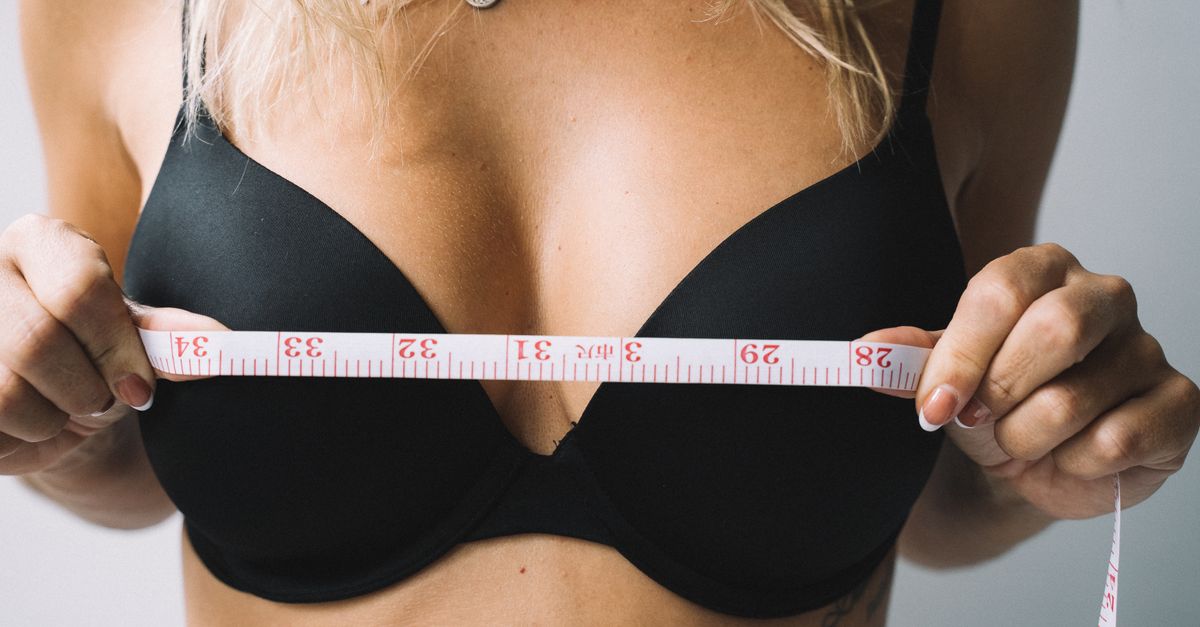
- Measure the band. Wrap a soft tape measure snugly around your ribcage directly under your bust. Keep it level and parallel to the floor, then round to the nearest inch or centimetre.
- Measure the cup area. Take a loose measurement around the fullest part of your bust. This bust circumference is separate from the snug under-bust band measurement.
- Find the cup difference. Subtract the band measurement from the bust measurement. Use roughly one inch of difference per cup step: a one-inch difference is about A, two inches B, three C, four D and five DD.
- Record the full source size. Write down the source system, band and cup before converting. Keep the two parts together; a band from one system and a cup from another is not a valid complete size.
These measurements are useful when a starting label is unavailable. When the current bra label is clear and its system is known, use the printed band and cup directly instead of estimating a new size.
Convert the selected size to AU/NZ
- Open the Bra Size Converter. The converter runs directly in your browser, so no measurements need to be uploaded.
- Choose the system you already know. Select US/Canada for a US or Canadian label, UK for a UK label, EU for a German or EU label, FR for a French or Spanish label, or AU/NZ for an Australian or New Zealand label.
- Select the band and cup. Choose the two values shown on the source label. If you began with measurements, select the band and cup derived from them.
- Read the AU/NZ result. In the results table, use the AU/NZ band and cup pair. Check the source row once more before copying the result into a retailer search.
Everything runs in the browser, so nothing you type is uploaded or stored anywhere. The converter also supports the reverse route: choose AU/NZ as the source, select its band and cup, and read the equivalent size in every other supported system.
For a purchase, treat the AU/NZ output as a translation of the sizing label, not as a guarantee that every Australian brand uses the same fit. The brand's own chart remains the final comparison point.
Band and cup conventions that affect the answer
A bra size contains two linked pieces of information, and the international systems change both. The following comparison shows the conventions handled by the converter; it is not a substitute for the tool's full results table.
| System | Band convention | Cup convention or key note |
|---|---|---|
| US/Canada | Inches, from 28 to 44 | Extended sizes use DD, DDD, G, H and I. |
| UK | Inches, from 28 to 44 | Extended sizes continue with DD, E, F, FF, G and GG. |
| EU (German) | Centimetres | Cup letters avoid double letters and count through A, B, C, D, E, F and G. |
| FR (French/Spanish) | Centimetres | The French band number is 15 higher than the corresponding EU band number; read the cup from the converter output. |
| AU/NZ | Short numeric band | Use the equivalent band and cup pair displayed for the selected source size. |
The cup systems agree in some places and then split. US and UK cup letters match through DD. After that, US skips a standalone F: a US DDD corresponds to UK E, while US G corresponds to UK F. European cup labels avoid double letters, so US DD becomes EU E and US DDD becomes EU F. The converter uses one cross-checked reference ladder, so these split points are handled rather than guessed.
The band changes too. US and UK bands are measured in inches, EU and French bands in centimetres, and AU/NZ uses short numbers. That difference is why a band-only translation can be misleading and why both source fields matter when producing an Australian size.
One complete conversion example
Rule: AU/NZ size = the equivalent AU/NZ band plus the equivalent cup from the selected source label.
Substitution: Start with US 34C. The source band is 34 and the source cup is C; the converter matches those values to AU/NZ band 12 and cup C.
Result: AU/NZ 12C.
This is a complete size conversion, not a band-only translation. Use both the AU/NZ number and cup letter shown in the results table.
Use the conversion as a fit starting point
Bra sizing is never perfectly standardised. Fit can vary noticeably between brands, styles, fabrics, and wired versus wireless construction, and vanity sizing is common. A converted size is therefore a well-researched starting point rather than a promise of exact fit.
When shopping, compare the AU/NZ result with the specific brand's own size chart and try the bra on whenever possible. This check is especially important in the extended cup range, where naming conventions differ most and a small letter mismatch can represent a meaningful size difference.
The same rule applies in reverse. Converting an AU/NZ label to US, UK, EU or FR provides the closest matching label in that system, but the destination brand can still fit the same nominal size differently. Use the converter to narrow the choice, then let the actual garment and brand guidance make the final decision.
For a deeper look, see How to Convert Kids Clothing Size to Junior.
For a deeper look, see Convert Bra Size to Bust: Estimate the Circumference.