Italic text that pastes into plain-text fields — social media bios, chat messages, forum signatures, and SMS — comes from Unicode's Mathematical Alphanumeric Symbols block, where capital letters run from U+1D434 to U+1D44D, lowercase from U+1D44E to U+1D467, and lowercase h uses the special U+210E PLANCK CONSTANT to fill the gap left by the reserved U+1D455. Each accepted ASCII letter becomes a separate scalar value, so the result travels through copy and paste without a stylesheet, but it also behaves like different letters to search engines, sort routines, and screen readers. That's why a deterministic, browser-side converter is the safest path: it performs only the verified mathematical italic mapping, leaves every other character (numbers, punctuation, spaces, accented letters, emoji, non-Latin scripts) untouched, caps input at 100,000 code points, and writes the exact result through the Clipboard API when you click copy. Anything you do not paste in does not appear, and the same input always produces the same sequence — there is no language model, no remote API, and no hidden transliteration.
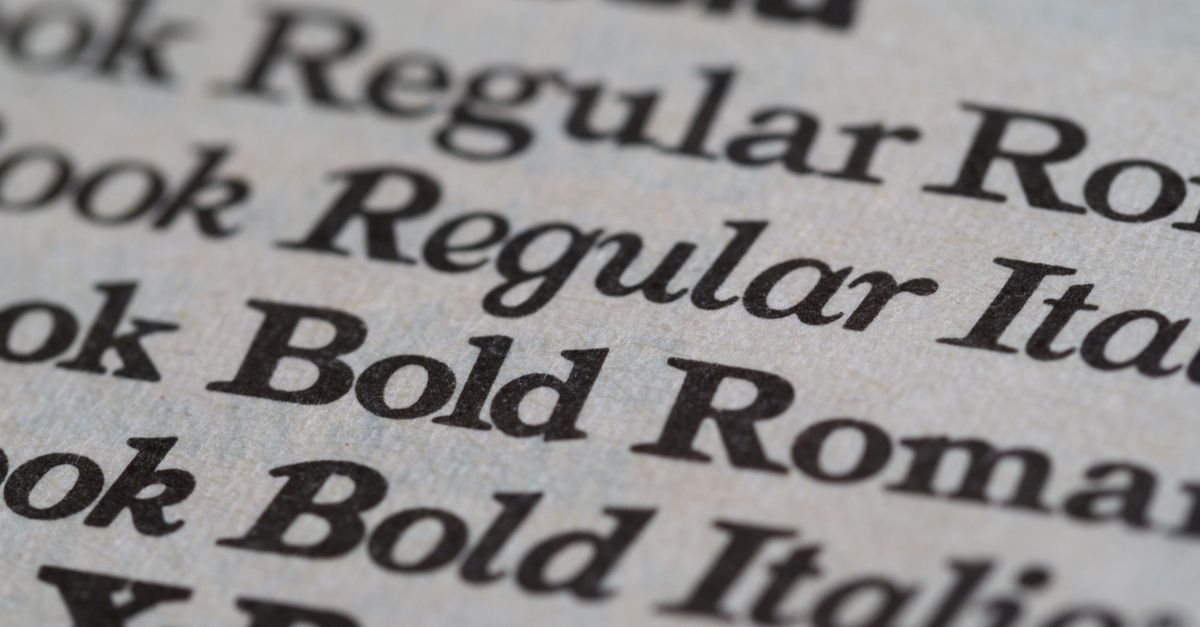
What italic text actually means in a plain-text field
Most apps render italics through CSS font-style: italic, which only works in fields that read a stylesheet. Plain-text fields — Instagram and TikTok bios, Discord display names, X posts, SMS, forum signatures, marketplace listings — ignore styling entirely, so an italic button either hides or has no visible effect. The alternative is to substitute each ASCII letter with a separate Unicode character that already looks slanted.
Unicode dedicates the Mathematical Alphanumeric Symbols block to these style variants. Capital letters live at U+1D434 through U+1D44D, and lowercase at U+1D44E through U+1D467, as the Unicode names list for the block shows. The block also has a documented discontinuity: U+1D455 is reserved, and lowercase h is filled in with U+210E PLANCK CONSTANT so the mathematical italic small-letter sequence reaches all 26 letters. A correct converter must follow these exact ranges; a tool that simply "shifts later letters by one" produces technically valid Unicode that does not match the official sequence.
That is why a scoped, deterministic tool like the Italic Text Generator exists: it performs the verified mapping locally, flags malformed input, refuses partial output, and copies the exact rendered sequence without uploading anything.
Convert your text to Unicode italic in three steps
The conversion itself is short, but the inspection step matters because the result contains different scalar values than the source.
- Enter the ASCII Latin text you want to style in the input box. Other characters — digits, punctuation, accented letters, emoji, non-Latin scripts — may remain in the same string; the converter preserves them and only swaps the ASCII A through Z and a through z.
- Generate and inspect the Unicode mathematical italic output. Look closely at letters that often surprise people: lowercase h becomes ℎ (the PLANCK CONSTANT character), while uppercase H becomes 𝐻. If any glyph seems wrong, edit the input and regenerate; the old result clears so a stale string is never mistaken for current text.
- Copy the exact result and paste it into the final app. Use the dedicated copy button, which writes the visible output through the browser Clipboard API after a direct click. If clipboard permission is unavailable, select and copy manually. Test the paste with a short sample before committing, because some destinations normalize, strip, or reject mathematical alphanumerics.
To see the mapping in numbers, take any capital: A sits at decimal 65, and 𝐴 sits at decimal 119,860 (U+1D434). 119,860 − 65 = 119,795, the offset the converter adds to every ASCII capital. Lowercase letters use a separate base — 𝑎 is decimal 119,886 (U+1D44E) and ASCII a is decimal 97, so 119,886 − 97 = 119,789, applied to every lowercase letter except h. Lowercase h breaks the pattern: the sequential slot 0x68 + 119,789 would land at U+1D455, which Unicode reserves, so the converter routes the input to U+210E (decimal 8,462) directly. The same input always produces the same output, and the result is rendered deterministically with no random or remote step.
Where the copied italic text works, and where it fails
The reliable destinations are the ones that treat input as plain text and ship with a font that includes the Mathematical Alphanumeric Symbols glyphs.
- Instagram, TikTok, and X bios — these display fields accept arbitrary Unicode and most social-platform fonts include the italic glyphs.
- Discord and Telegram display names, status messages, and channel topics — the rendering engine substitutes the math-italic glyphs when present in the chosen font.
- Markdown chat messages on Slack, GitHub, and Reddit — the pasted characters render as literal italic glyphs even when the surrounding text is otherwise ordinary prose.
- Plain-text marketing fields — tagline boxes, sponsor readouts, and email signatures pasted from a rich-text source.
The places that block, strip, or normalize the characters are equally worth knowing.
- Usernames and handles — many platforms restrict display names to ASCII letters, digits, and a small punctuation set, so a mathematical italic character may be silently replaced or rejected at signup.
- Code identifiers, package names, and version strings — build tooling and package registries almost always reject anything outside ASCII, and confusion with similar glyphs (math italic l versus digit 1) is a known footgun.
- Search indexes — when a user pastes a query in ASCII and the document is stored in mathematical italic Unicode, exact-match search misses; case-insensitive collation usually still matches, but tokenizers differ.
- Accessibility tools — screen readers can announce names such as "mathematical italic capital H" rather than reading the word naturally, which adds noise for readers using assistive tech.
Always test a short sample in the actual field before committing a long bio or a public handle. If the platform strips the characters silently, the recipient sees regular ASCII and the italic styling you intended is gone.
What the converter leaves untouched, and why
The character set the tool reaches is intentionally narrow: ASCII capital A through Z and lowercase a through z. Everything else passes through unchanged, in its original order, with line breaks and repeated spaces preserved. The reasons are practical, and the contrast with CSS italic is worth pinning down before you rely on it.
| Property | CSS font-style: italic | Unicode mathematical italic |
|---|---|---|
| Storage in the source | Wraps the original letters with a tag or rule | Replaces each letter with a different code point |
| Works in plain-text fields | No (style is ignored) | Yes (text already contains the slanted glyphs) |
| Reversible back to ASCII | Yes — remove the style | No — the letters are now different scalar values |
| Effect on search matching | None — the indexed text is unchanged | Yes — the indexed token is the italic form |
| Screen-reader behavior | Reads the word, may add an "italic" descriptor | May spell out the Unicode name per letter |
| Sensitive to font fallback | Uses the chosen style | Depends on destination font supporting the block |
Concretely, Meet at 10 😊 tonight becomes a string where all 13 ASCII Latin letters (M, e, e, t, a, t, t, o, n, i, g, h, t) get new code points; the digit 1, the digit 0, the spaces, and the emoji pass through unchanged. Accented letters such as é or non-Latin scripts such as α or 中 pass through with their original code points intact. The converter iterates by Unicode code point rather than JavaScript code unit, so emoji composed with skin-tone modifiers, flags, or zero-width joiners stay joined and are not split into surrogate halves.
For typed prose where you control the environment — your own blog, an internal knowledge base, an email you compose — semantic emphasis with an <em> tag or a CSS font-style: italic rule still beats any Unicode swap. It indexes the same word, reads naturally to assistive tech, and restores with one keystroke. Reserve Unicode substitution for the fields where styling simply does not reach.
Limits, accessibility, and search trade-offs
The Italic Text Generator is bounded so its behavior stays predictable.
- Input cap: 100,000 Unicode code points per conversion. The same bound applies to clipboard payload, React rendering, and memory; the tool deliberately does not truncate silently.
- Empty, malformed, or over-limit input: rejected with an explicit error and no partial output, so a paste of half a word never slips through as if it were valid.
- Deterministic output: the same accepted input yields the same sequence every time, with no random selection, no language model, no remote API, and no account state.
- Local processing: every step — validation, mapping, rendering, and clipboard writing — runs in the browser, so the input never reaches a server.
On accessibility and search, three trade-offs deserve a second look. Screen readers may announce each replaced letter by its Unicode name, which makes the converted text harder to listen to than the plain version. Search engines and on-site lookup fields index the italic characters as different tokens; a user searching for ASCII "Design" will not find a document where the same word is stored as mathematical italic. Sort order can also shift: most collators treat 𝑎 and a as the same logical letter, but not all, so a sorted list that mixes the two may reorder unexpectedly. Test the actual destination — a username validator, an ad field, an accessibility label, a search box — before relying on the conversion in production.
The scope is also explicitly limited. The tool produces serif mathematical italic Latin only; it does not generate bold italic, sans-serif italic, script, fraktur, double-struck, or monospace variants, and it does not transliterate Greek, digits, accented Latin, ligatures, or other alphabets. If you need a sibling style, reach for a dedicated tool with its own scoped mapping rather than expecting this one to broaden silently. Future expansion to other styles would require a separate mapping table and matching evidence, not a quiet widening of this contract.
For a deeper look, see Star Emoji Copy Paste for Instagram: A Practical Guide.
For a deeper look, see Cursive Text Generator Copy and Paste Heart for Bios.