You need a debate timer whenever your round follows a fixed, named sequence of segments — constructives, cross-examinations, rebuttals, and closing speeches — and a single countdown cannot tell you what comes next. The defining question is not "do I want a timer" but "do I want a queue." If the answer is yes, an editable ordered queue with named slots is worth more than another reset cycle on a generic clock. If the answer is no, a phone stopwatch will do the job without the overhead.
Most people who search for this question are somewhere in the middle. They have a round coming up, they want to practice, and they are unsure whether a dedicated tool adds anything over the timer they already have. This guide walks through the signals that point toward a structured queue, the situations where a plain countdown is the better fit, and the exact workflow to run once you decide a queue is the right layer for your round.
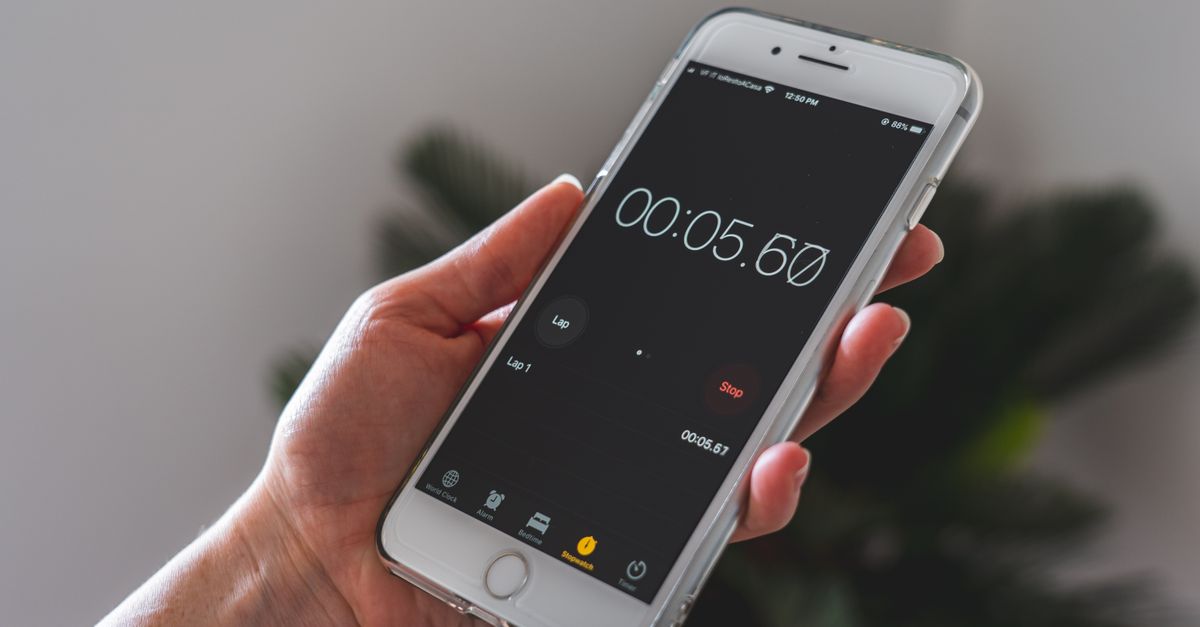
A quick decision checklist for your round
Before opening any tool, answer these four questions about the format you are practicing for. They map directly to what a debate queue actually does and what a generic countdown cannot do alone.
- Is the round split into named parts? If you can list the segments in order — affirmative constructive, cross-examination, negative constructive, and so on — a queue saves you from resetting the clock between speakers.
- Do the parts have different durations? When one slot is several minutes and the next is much shorter, manually editing a single countdown every turn invites mistakes.
- Will you practice more than once? If yes, a private daily count of completed segments answers "how much did I drill today?" without extra paperwork.
- Does the format ever change? If the school, event, or coach requires a different schedule, the queue needs editable labels and durations, not a fixed script.
If three or four of those answers are yes, a debate timer is the right tool. If only one or two, the overhead of a queue may not be worth it for your situation. There is no penalty for using a simpler tool when the format is simple.
When a plain stopwatch or countdown is enough
There are real cases where structured tools add friction without adding value. A generic countdown or stopwatch is the right call when the round is essentially one continuous activity:
- A single speech or presentation. When one person talks for a fixed block and the round ends, the next thing isn't a different speaker with a different duration — there is no next thing to queue.
- A casual timed discussion. Classroom warm-ups, debate club icebreakers, or "speak for two minutes on this prompt" drills do not need an ordered queue. The clock simply runs out.
- Free practice of just one segment. If you only need to drill, say, rebuttals for ten minutes straight, the queue is overhead. A stopwatch is faster to start and easier to read.
- Situations where the order is improvised. When speakers self-select and segments have no defined length, a structured queue fights against the format instead of supporting it.
The common thread is that the activity has one timing problem, not a sequence of timing problems. As soon as a single countdown would need to be reset and retyped between speakers, the case for a queue gets stronger.
When a named-segment queue earns its place
The stronger case for a debate timer is the round that already has structure. Cross-examination rounds, public forum drills, and policy format practice all share three traits that a generic timer cannot model cleanly:
- Different durations per role. The 2025–2026 Coolidge 1v1 singles debate, for example, uses five-minute constructives, two-minute cross-examinations, and four-minute closing speeches (as published by the Coolidge Foundation's 1v1 ordering) — three distinct durations in one round. Trying to remember which is which while resetting a phone clock is how timing errors creep into practice.
- Strict ordering. Some formats penalize a speaker who begins before the previous segment formally ends. A queue that advances one slot at a time removes the ambiguity about whose turn it is.
- A need to recover from mistakes. An accidental advance — clicking past the wrong slot — is recoverable when the tool saves the prior snapshot. It is much harder to recover from with a plain countdown, because the lost time is gone.
For these rounds, the Debate Timer keeps an ordered list of named segments with their own durations, so the question of "what comes next" is always visible on screen. Editing any label or time resets the current local round so a stale remaining time cannot silently belong to a new schedule, and an accidental advance can be undone without guessing which duration to put back. For deeper practice with the cross-examination segment specifically, the cross-examination timing guide walks through how named slots change the way you rehearse that turn.
Comparing a single countdown versus an ordered debate queue
The table below compares a generic stopwatch or countdown against an ordered queue on the tasks that matter during a structured practice round. It is a feature comparison, not a numerical benchmark.
| Task during a practice round | Generic countdown or stopwatch | Debate Timer (named-segment queue) |
|---|---|---|
| Track the current segment name | You track it mentally or on paper | Each slot has its own visible label |
| Use a different duration per segment | Manually retype the time for each speaker | Each slot stores its own configured duration |
| Move from one segment to the next | Reset and re-enter the new time | One button advances to the next named slot |
| Reverse an accidental advance | Not possible without remembering the lost time | Undo restores the previous snapshot, including remaining time |
| Reuse the same format across rounds | Re-enter the schedule each time | Edit once, reuse the queue |
| Change the format for a different event | Almost free, but no structure | Edit any label or duration; editing resets the current round |
| Count how many segments you practiced today | Keep a separate log | Private daily count stored in the browser |
| Export a portable record | No built-in export | PNG or CSV export of the daily history |
Neither option is objectively "better" — they solve different problems. The generic countdown wins on speed of start when the round has one segment. The ordered queue wins the moment the round has more than one segment with different durations and a defined order.
Running a practice round with the Debate Timer
Once you decide a structured queue fits your format, the workflow below is what a single practice session looks like from open to close. It assumes you are using a browser-local queue and may want to export your day at the end.
- Open the editable eight-slot 1v1 template. The default schedule mirrors the published 2025–2026 Coolidge 1v1 sequence: affirmative constructive, cross-examination, negative constructive, a second cross-examination, affirmative rebuttal, negative rebuttal, affirmative rationale, and negative rationale.
- Edit any segment whose name or duration does not match your event. Replace the label or seconds for the slot, then continue editing the next one. Applying an edit resets the current local round so an old remaining time cannot silently belong to a new schedule.
- Press Start for the current segment. The active slot counts down based on a saved timestamp anchor, not on each browser tick, which keeps elapsed time honest when a tab is briefly hidden.
- Pause whenever practice stops. Use Pause for interruptions, mid-round questions, or a short water break. The remaining duration is preserved on the active slot.
- Use Advance segment when a turn ends. The next slot receives its own full configured duration, so there is no retyping and no chance of carrying the wrong remaining time into the next speech. After the final slot advances, the round reports completion at zero.
- Undo an accidental advance. If you clicked past the wrong slot, undo restores the prior snapshot, including the prior current slot, its remaining time, and the day's segment count.
- Review your private daily history. Every advanced segment adds one count to the device's local calendar day, giving you a quick answer to "how much did I drill today?" without extra logging.
- Export PNG or CSV only if you want a portable record. The PNG is a clean 1080 by 1350 image of the daily total and recent days, with no URL or participant names. The CSV writes one row per saved day. Both are optional — the local record is already there in the browser.
That sequence covers the full arc of one practice round. The same steps apply whether you keep the default Coolidge slots or edit them for a different event.
Edge cases where a debate timer is not the right tool
Even with the case built up, there are honest situations where the answer to "do I need a debate timer?" is no. Being clear about them keeps the decision honest:
- Official tournament rounds. A practice queue does not administer prep time banks, speaker eligibility, judging decisions, or rule interpretations. The published competition rules always control those facts, and event-specific timing can differ from any single format.
- Tab-room operations. If you need section-wide coordination across many rooms, a local browser tool is not the right layer; a tournament's tab software is.
- One-off timed speeches. For a single speaker with no cross-examination and no defined order, a plain stopwatch is a more honest fit. The decision hinges on whether the round itself is structured, not on whether you personally like structured tools.
- Coaching notes, not timing. If your goal is to capture what a student said rather than when, a structured queue is the wrong layer entirely.
Once the round has structure that needs to be reflected in the tool — named segments, mixed durations, a defined order, and a need to undo the occasional mistake — the queue approach earns its place. That is the whole decision.