An LED banner text is a short, high-contrast message displayed in a large monospaced font that scrolls horizontally across a screen or sign, designed to be read at a glance from across a room. The format works because moving text catches peripheral attention faster than a printed poster, while a one-line layout forces the writer to keep the message short, simple, and unambiguous. In a browser preview, the same principles apply: you type a single phrase, the loop carries it across the screen, and you can stop, slow, or restart the motion to test whether the message is actually readable. The strongest LED banner text tends to follow three rules: keep it under a dozen words, choose syllables that travel well phonetically, and check the loop on the screen you will actually use. When the message has to do real work, naming a room, greeting a crowd, prompting a speaker, or marking a station, those readability checks matter more than any decorative effect.
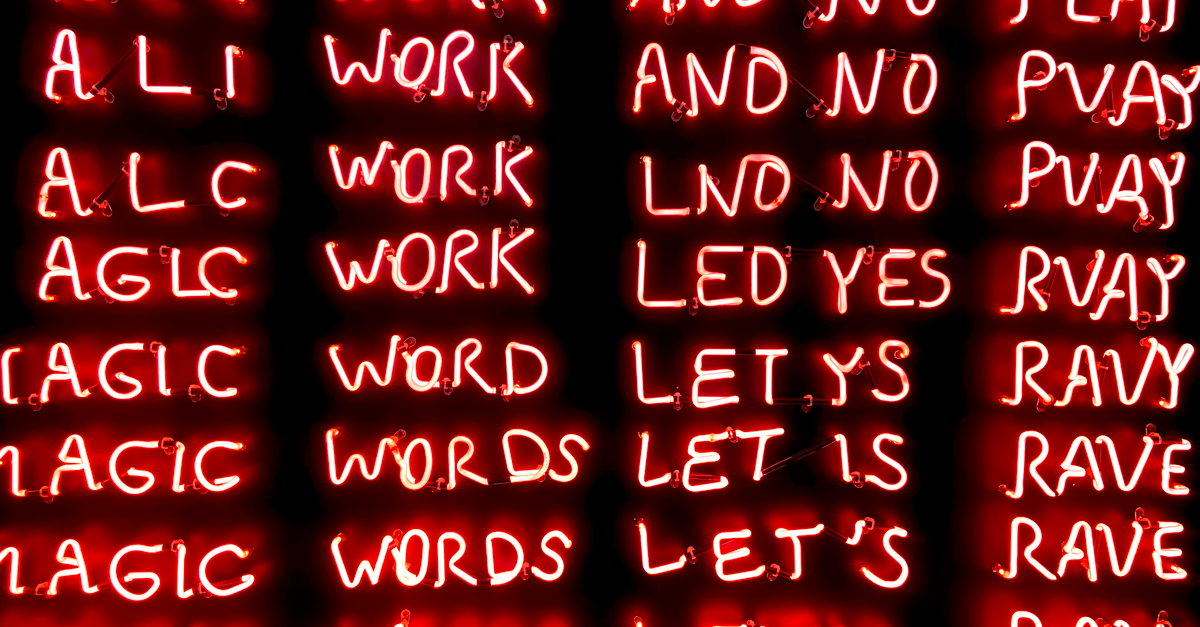
What Makes LED Banner Text Readable at a Glance
LED banner text succeeds or fails in the first two seconds, when a viewer's eyes are still deciding whether to commit. Three characteristics decide whether your message survives that window:
- Length: One short line is the default. Anything longer breaks the banner into segments the viewer has to remember.
- Phonetic weight: Short, punchy syllables read clearly while moving. Long, soft, or unusually spelled words tend to blur.
- Visual contrast: The text should sit on a clean track with no competing shapes behind it.
The browser preview mirrors these rules because the same physics apply: long phrases travel less distance per word at the same loop duration, and small text disappears at a distance. Treat the preview as a rehearsal, not a decoration. If a phrase feels hard to read while you are sitting right in front of the screen, it will be harder still from across the room or across a busy lobby.
Where LED Banner Text Actually Works
Browser scrolling banners are not certified hardware, but they earn their keep in places where motion solves a real problem. The table below maps common situations to the practical reason a moving banner helps.
| Situation | Why a Moving Banner Helps |
|---|---|
| Handheld sign at an event | Motion draws the eye across a crowded room and reads faster than a printed card. |
| Photo or video prop | A scrolling phrase adds personality without requiring a permanent slogan. |
| Presentation cue | Replaces printed cue cards with a continuous on-screen prompt for the next speaker. |
| Desk or storefront message | Marks status, hours, or a welcome without committing to a permanent sign. |
| Visual attention signal | Highlights a station, room, table, or call to action that competes with other signage. |
Each of these uses assumes the banner is supporting communication, not replacing it. A scrolling loop cannot rescue a confusing phrase, and it should not be the only channel for an emergency warning, accessibility notice, traffic direction, or other high-consequence message. Keep those messages stationary and plainly visible instead.
How to Preview LED Banner Text in Your Browser
The LED Scroller tool turns your text into a private scrolling preview in the same tab, with no upload, account, or generated file. The whole workflow takes less than a minute and stays entirely on your machine.
- Enter one short message in the text field. Up to 120 Unicode code points are accepted after outer whitespace is trimmed.
- Pick a loop speed (slow, medium, or fast), a travel direction (left to right or right to left), and a text size from the five fixed options.
- Press Start scrolling to validate your current settings and render the preview. Starting again always re-validates the full configuration.
- Watch one full loop on the screen you plan to use, then adjust the speed, direction, or size if any word is hard to catch.
- Use Pause, Resume, or Restart to freeze the banner for transcription, continue from the current frame, or send the message back to its starting position.
Editing any input clears the old preview so the visible banner never silently disagrees with the controls. If you want a larger view, raise the text size or use your browser's fullscreen command; the tool intentionally does not request fullscreen permission on its own, because browser prompts vary and may hide important controls.
Setting Up Pace, Direction, and Size
Each control changes one specific thing about how the banner behaves. The numbers below come directly from the tool's configuration and are not claims about pixels per second or physical hardware performance.
| Setting | Available Options | What It Actually Controls |
|---|---|---|
| Loop speed | Slow (12s loop), Medium (8s loop), Fast (4s loop) | Duration of one complete CSS pass; apparent travel rate also depends on text width, chosen size, and viewport. |
| Direction | Left to right, Right to left | The horizontal direction the message travels across the track. |
| Text size | 32, 48, 64, 80, or 96 CSS pixels | Letter height and overall visibility; apparent travel rate also depends on the chosen text size, since larger characters widen the rendered message at the same loop duration. |
Slow is usually the right starting point for names, addresses, room labels, or codes that need careful transcription. Medium is a strong default for greetings, prompts, and general-purpose attention. Fast works for short attention signals where catching the gist matters more than perfect recall. Direction is largely a stylistic choice, though right to left matches the reading order familiar from most street-side LED signs.
The Honest Limits of Browser LED Text
The preview is LED-style rather than a simulation of a specific hardware panel. It uses large monospaced browser text, increased character spacing, and the site's own color tokens on a clean scrolling track. It does not reproduce a named dot-matrix font, electrical refresh rate, pixel pitch, brightness level, physical sign controller, or manufacturer protocol. The rendered shape depends on the fonts available to the browser, so a message that looks one way on your machine may look slightly different elsewhere.
Three input rules keep the preview honest:
- Outer whitespace is removed automatically before validation runs.
- Control characters, line breaks, and Unicode line or paragraph separators are rejected because this is a one-line banner and invisible separators could create confusing output.
- A message may contain up to 120 Unicode code points. Emoji, accented letters, punctuation, and non-Latin scripts each count as one character rather than two raw UTF-16 units, so a single emoji is not incorrectly counted as two.
The tool does not shorten an over-limit message, replace unsupported characters, convert case, correct spelling, translate, or insert decorative symbols. If you need any of those transformations, prepare the phrase elsewhere and paste the finished version into the field. When exact signage dimensions, certified brightness, remote scheduling, or hardware export is required, use the software supplied for that physical display instead.
Tips for Stronger LED Banner Text
The phrase is the product. A few small writing choices reliably improve how a banner reads while it moves:
- Lead with the most important word. Viewers often catch only the start or end of a loop, so the headline should sit at one of those positions.
- Keep punctuation thin. A single comma or exclamation is enough. Dense punctuation breaks the line into pieces the eye has to reassemble on the fly.
- Test at the real distance. Step back from the screen or hand the device to a friend and ask them to read it out loud once. If they hesitate, the speed is too fast or the size is too small.
- Pause for hard details. Names, codes, addresses, phone numbers, and instructions that require careful transcription should be displayed stationary rather than scrolling.
- Respect motion-sensitive viewers. The page honors the operating system or browser reduced-motion preference by holding the banner paused, but you can also pause manually before showing the banner to anyone who might be affected.
Everything stays in the current browser tab. The message is not uploaded, saved, analyzed, or sent to an advertising or AI service by the widget, there is no account requirement, and no file is produced. The result is a fast, honest rehearsal for any short phrase you want to display, and a clear signal to switch to certified signage when the message needs certified brightness, exact dimensions, or hardware export.