Truth or dare cards are a set of written prompts — split into a stack of truth questions and a stack of dare challenges — that a group draws from to play the classic party game. The traditional approach means writing dozens of questions on index cards, drawing dares on sticky notes, splitting them into two piles, and shuffling by hand before every round. A faster equivalent is a browser-based generator that draws a family-friendly question or harmless challenge on demand and prints it on screen. The prompts cover the same ground — preferences, goals, harmless stories, lighthearted dares — without scissors, markers, or a storage box to misplace. Because the prompt list is curated and the selection runs entirely in your browser, the result behaves like a polished pre-made card deck rather than a homemade stack of scribbled prompts. For anyone who came here to build cards from scratch, the generator is the shortcut that keeps the game and skips the craft project.
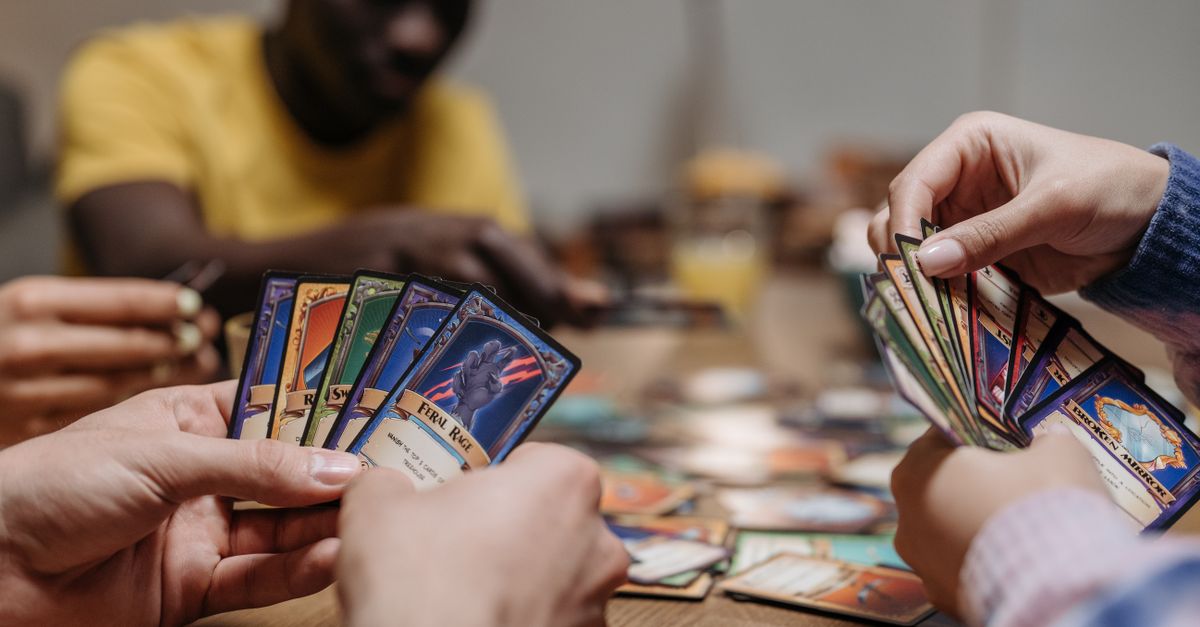
Why People Search for Truth or Dare Cards
Most people who look up how to make truth or dare cards are not committed hobbyists. They are hosts, teachers, parents, team leads, and group chat moderators who suddenly need a working set of prompts and do not want to buy a pre-made deck or spend an evening crafting one. A birthday sleepover needs ten minutes of material. A classroom wants an icebreaker that fills five minutes between lessons. A video call with cousins needs a light filler between rounds of another game. In each case the deliverable is identical: a list of acceptable truths and a list of safe dares that the group can draw from.
Handmade cards do solve the problem, but only after a real investment of time. You have to invent the questions, write them out evenly, decide what counts as an acceptable dare, make sure nothing crosses into humiliation, secrets, or risky behavior, and shuffle two piles before play. The work happens before anyone sits down, which is exactly when motivation tends to drop. A curated generator absorbs all of that pre-work into a balanced prompt list and a button, so the round can start the moment the host opens a tab.
Handmade Cards vs. an In-Browser Generator
Both approaches give the group something to draw from. The difference is where the time goes. The table below compares the two side by side so you can see what you save by skipping the card-making step.
| Factor | Handmade truth or dare cards | Truth or Dare Generator |
|---|---|---|
| Prep time before play | 30 to 90 minutes of writing | Open the page and pick a mode |
| Materials needed | Paper, pens, scissors, two containers | Any device with a browser |
| Prompt variety | Limited by who writes them | Curated set of family-friendly prompts |
| Portability between locations | Leave a card at home and you are short one prompt | Same set on any device |
| Customization | Total freedom, including risky prompts | Fixed curated list, intentionally safe |
| Cleanup after the round | Card box to put away, lost cards to replace | Close the tab |
| Risk of inappropriate prompts | Depends on the writer's judgment | Baked into the curation rules |
The short version is that handmade cards win on customization and lose everywhere else. A generator wins on speed, portability, and content safety, which is usually the part hosts care about most. If your group needs truly off-the-wall prompts, the curated list may feel too tame. For a default round that nobody has to pre-vet, a generator is the closer fit. You can always keep a stack of homemade wildcards on the side for the moments the curated set feels too gentle.
How to Get a Prompt With the Truth or Dare Generator
The whole game fits in three actions on the Truth or Dare Generator page. Once you have tried it once, you can run an entire party without any prep, and you can hand the device to anyone in the group to take the next turn.
- Choose a mode — Surprise me, Truth only, or Dare only — using the selector at the top of the tool.
- Select Get a prompt to draw one family-friendly question or challenge from the selected list.
- Read it aloud, give the targeted player a moment to answer or act, then press the button again for the next turn.
Browser cryptographic randomness selects from a fixed 12-item truth list and a fixed 12-item dare list, and uses bounded rejection sampling to stay unbiased in mixed mode. None of the prompts, names, or answers leave your device, and no camera or microphone is involved. The generator is the page itself; there is nothing to install, nothing to log in to, and no account to create.
Truth Mode and Dare Mode at a Glance
The mode selector is not cosmetic. It changes which list the tool draws from, so the feel of the round depends on which one you pick. Switching modes between turns is allowed and often improves the pace.
| Mode | What it draws | Best for |
|---|---|---|
| Truth only | One question from the 12-item truth list | Conversation-heavy groups, classrooms, family dinners, quiet video calls |
| Dare only | One challenge from the 12-item dare list | Energetic groups with room to move and a low noise tolerance |
| Surprise me | Either a truth or a dare, chosen at random | Mixed groups who want the classic alternation without choosing |
Truth questions in this set lean toward preferences, goals, harmless stories, and positive reflection. They are designed to be answerable in a sentence or two without disclosing anything private. Dares lean short and low-stakes: impressions, drawing, humming, storytelling, friendly compliments, and quick performance beats. Nothing in the curated set asks anyone to reveal a secret, perform a dangerous stunt, damage property, or be humiliated. That guardrail is what makes the generator usable for parties, classrooms, family gatherings, team icebreakers, and remote video calls with mixed-age players.
Ground Rules That Keep the Round Comfortable
The tool does not enforce social rules, only content rules. The people in the room still decide how the round feels. A few habits go a long way toward keeping mixed-age and mixed-comfort-level groups happy, and most of them have nothing to do with the generator itself.
- Agree on a skip rule before the first prompt. A simple "anyone can pass without explanation" keeps the pressure off and prevents the round from becoming a test of courage or honesty.
- Match the dare to the room. A drawing challenge is fine at a kitchen table. An impression challenge is fine in a living room. Anything that needs to be filmed or that disturbs neighbors is not.
- Use Truth only for groups where you mainly want conversation, and Dare only for groups that want to move and laugh. Switch to Surprise me when neither preference dominates and the group wants the classic alternation.
- Let someone re-roll if a prompt genuinely does not fit. Pressing the button again is faster than explaining a no and keeps the round moving.
- Keep the pace light. A round is entertainment, not an honesty test or a bravery contest. The moment it starts to feel like work, switch modes or end the round.
If a prompt ever crosses a line — someone is asked for private information, the activity is not safe for the room, or a workplace or school rule is involved — skip without debate and move on. The generator is the prompt source, but the group owns the boundaries. Use the tool for casual play and treat the round as a conversation starter, not a quiz.
Where the Generator Fits in a Game Night Toolkit
A truth or dare round rarely stands alone. It tends to fill the gap between longer games, open a video call, or break the ice at the start of a gathering. The Truth or Dare Generator fits into that same slot, and a few companion tools handle the adjacent jobs cleanly. For picking the next player fairly, a virtual coin flip removes the "who goes next" debate without needing a coin. For choosing sides or splitting a mixed group into teams before the round starts, a random team generator covers that step in the same browser-only workflow.
Groups that want to expand the game into a printable activity can pair the prompts with the Bingo Card Generator, which builds a printable 75-ball card with no upload and no signup. A printed truth or dare card deck is one of the most common companion pieces to a truth or dare round, and a bingo-card-style layout can be used to randomize prompts for groups that prefer a physical draw over a screen. For readers who want to see the prompt-driven approach from a different angle, our guide to creating truth or dare prompts online without cards walks through a few variations worth trying.
The trade-off between a stack of homemade cards and a generator comes down to one question: do you want to spend your evening building the deck, or do you want to spend it playing the game? For most groups the answer is obvious once they have tried a one-click prompt tool. The game lives in the prompts, the laughter, and the story the group tells about the round afterward — not in the hour spent cutting paper beforehand.