Simple and complex sentences differ in how many clauses they carry, not in how many words they use. A simple sentence packs one subject and one predicate into a single clause, while a complex sentence keeps one independent clause and tacks on at least one subordinate clause that depends on it. In both cases English leans on a fixed Subject-Verb-Object backbone, but the complex pattern inserts extra connectors — because, after, when, who, that — and shifts the heavier pieces toward the end so the main idea lands first. Reading "Simple vs complex sentence order" is really asking how those clause pieces slot together without breaking the underlying word-order rule. Sentence Scramble makes that question physical: eight disclosed English sentences from Princeton WordNet 3.1 example frames arrive in a fixed mixed order, and the player rebuilds each one word by word with numbered buttons or number keys. Every round checks the selection against the literal source-backed target, so the difference between a simple clause stack and a complex clause stack becomes visible token by token.
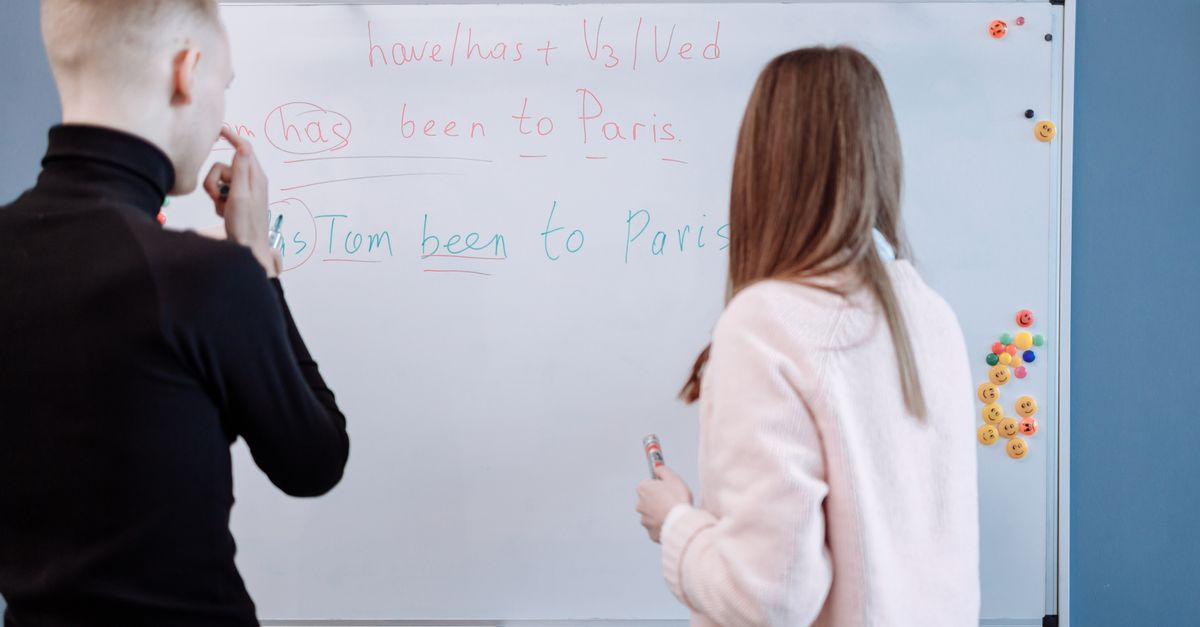
What simple and complex sentence order actually mean
Both sentence types follow English's underlying Subject-Verb-Object skeleton; the structural difference lives in how many clauses the writer stacks on top of that skeleton.
A simple sentence holds a single independent clause: one subject and one predicate doing one job. "The cars glide down the avenue" is a complete simple sentence because the subject (the cars) and the verb phrase (glide down the avenue) sit in one clause with no conjunctions attaching extra pieces.
A complex sentence keeps the same backbone but adds at least one subordinate clause that cannot stand alone. That subordinate clause typically opens with a connector such as because, when, that, who, or after, and the main clause still carries the core meaning. In a complex sentence the heavy subordinate idea tends to migrate toward the right, leaving the main clause readable on its own.
Word order in both cases still obeys English's standard rules: subject before verb, object after transitive verb, modifiers before nouns. The added complexity in a complex sentence is not a new word order but a second clause that has to be slotted into the S-V-O frame using a connector, a comma, or a relative pronoun. A sentence about clearing snow from a path can stay simple as "Workers clear snow from the path" or grow into a complex shape such as "Workers clear snow from the path so that children can reach the playground." The verb stays the same; the order grows an extra clause on the right.
How Sentence Scramble turns word order into a game
Sentence Scramble is an eight-round English word-order game built from disclosed lexical evidence. Each round shows the words from one complete sentence in a fixed mixed order. The job is to select those words in the source-backed target order until the answer line matches the disclosed literal sentence. Every token has a stable internal identity, so the state stays correct even when two words share a visible spelling.
The sentences are example frames from Princeton WordNet 3.1, with exact sense keys linking each verb to its source template and dedicated Cambridge verb pages cross-checking the ordinary movement, transfer, placement, removal, and reading patterns. That double-keyed sourcing makes the answer table auditable: a reader can open the Cambridge entry for gallop and see the same movement pattern the round is asking for, instead of trusting an unexplained generated sentence.
The eight source-backed sentences and what they reveal
The fixed route covers eight familiar scenes: children marching to a playground, cars gliding down an avenue, horses galloping across a field, people giving food, women pouring water, notices being plastered on doors, snow being cleared from a path, and parents reading a poem to children. Each round shows one of those scenes as a complete clause, and the player rebuilds the clause token by token.
Because the sentences come from a lexical database rather than a generated grammar, the patterns repeat across rounds: transitive verbs with a direct object, ditransitive verbs with a recipient, intransitive verbs of motion, and passives that swap subject and agent. That gives the eight rounds a stable structural shape that a curious player can compare across simple and complex clauses. The route is fixed, so every browser run uses the same eight targets.
The page names WordNet as the source and links to its license and commercial-use notice rather than presenting the examples as original research. WordNet permits commercial use and redistribution with its notice, which is why the game can publish the literal targets and let players audit them.
Play Sentence Scramble in three operating steps
- Start the fixed eight-sentence route and inspect the mixed numbered word buttons.
- Select words in the source-backed target order with buttons or number keys; use Backspace to undo the latest selection.
- Complete all eight disclosed targets and read errors and points only as details from this recreational route.
Each step uses the same guarded logic. A click, a tap, or a number-key press all flow through one atomic state transition, so a held key, a stale click from an earlier round, a duplicate token, an invalid index, and any input after completion are all ignored. A selected token cannot be selected twice, which means every visible word button is a fresh choice until the round is finished or the player uses Backspace to undo the most recent selection.
When all words have been placed, a matching sequence advances to the next sentence. A mismatch adds one error, explains that the route is being reset, and returns every token to the pool for another attempt. Errors reduce the recreational point total; they never produce a language level, diagnosis, grade, or permanent record.
What the controls accept and what they ignore
The game uses native HTML buttons with full keyboard, pointer, and touch support. Every token has a number key shown on its button, so a player can rebuild a sentence entirely from the keyboard by pressing the displayed digits in target order. Backspace removes the most recently selected token; a Restart button resets the whole route to the same evidence-backed sequence.
Opening the spreadsheet-style boss screen blocks word choices, undo, and Restart until the overlay is closed. These rules matter because a hidden input must not silently complete a sentence the player cannot see. Click, touch, and keyboard controls all share one guarded logic instead of running on separate scoring paths, which keeps every browser run reproducible.
After the eighth target, the result panel reports completed sentences, total errors, and points from the fixed route. The shared game shell may remember a best points value in local browser storage. It does not upload selected words, create an account, publish a leaderboard, or infer a vocabulary profile.
Simple vs complex at a glance
The table below compares the structural features that show up when a simple sentence and a complex sentence are laid out as word tokens. It does not judge which is "better"; it just spells out what the word order looks like in each pattern.
| Feature | Simple sentence order | Complex sentence order |
|---|---|---|
| Number of clauses | One independent clause | One independent clause plus at least one subordinate clause |
| Subject–verb–object backbone | One S-V-O chain inside the single clause | The S-V-O chain sits in the main clause; the subordinate clause rides alongside it |
| Connectors | None required | Subordinators such as because, when, that, who, after |
| Typical punctuation | Period, or comma in a list | Comma between main clause and subordinate clause |
| Placement of heavy pieces | Modifiers cluster near their head noun | Subordinate clause tends to move toward the end so the main idea lands first |
| Example pattern in the route | Children marching to a playground | No complex example is included in the fixed route |
The patterns above are not the only valid orderings. A target on this page is one verified route, not a claim that every other arrangement of similar words is bad English. Natural language can allow a different emphasis, dialect, punctuation choice, or complement order in another context. The game checks only one disclosed source-backed target per round, so the table is a structural guide, not a ruling.
What the game does not measure
Eight familiar source sentences cannot support a CEFR band, percentile, diagnosis, educational placement, or professional conclusion. The game has no norm group, no grade mapping, no placement protocol, and no proficiency interpretation, and it deliberately stays a recreational word-order puzzle. The boundary matters because a hidden input or a distractor must not be described as universally ungrammatical, and a single rejected ordering inside the game must not be read as a language-level verdict on the player.
For formal language evaluation or accessibility support, the right move is to use an appropriate qualified educational service. Inside the game itself, errors simply reduce the recreational point total; they never feed back into a permanent record or attach to a profile.
For a wider comparison of how different browser puzzles frame sentence-level tasks, the immediate-vs-delayed sentence recall route treats sentences as a memory challenge rather than a word-order one. The two approaches look similar on the surface but check different skills: Sentence Scramble checks whether the selected tokens reproduce a disclosed literal target, while a recall route checks whether a studied sentence survives a delay.
Get started
Open Sentence Scramble, read the first mixed word row, and start tapping buttons or pressing number keys. Each round is short, the route is fixed, and every target links back to a WordNet example frame with a Cambridge verb entry behind it, so the simple-vs-complex distinction becomes a thing a player can rebuild with their own hands rather than a definition to memorise.