"Cite, site, and sight are three English homophones pronounced identically as /saɪt/ but carrying three distinct meanings: cite means to quote or formally reference a source, site refers to a location or place, and sight relates to vision or the act of seeing. When writers type "cite site sight meanings" into a search bar, they are usually trying to break the tie between words that look unrelated but sound identical, and the only reliable way to choose between them is to inspect the surrounding sentence. This same contextual discrimination is exactly what the Commonly Confused Words Quiz trains, except the quiz applies that skill to eight audited pairs that English speakers mix up in real writing — including effect and affect, advice and advise, breath and breathe, principal and principle, stationary and stationery, desert and dessert, quiet and quite, and lose and loose. Because the quiz anchors every accepted meaning to a pinned Princeton WordNet 3.1 sense and a separate Cambridge page, the route teaches you to read context the way a dictionary does rather than memorize a slogan that one spelling is always a noun or always a verb.
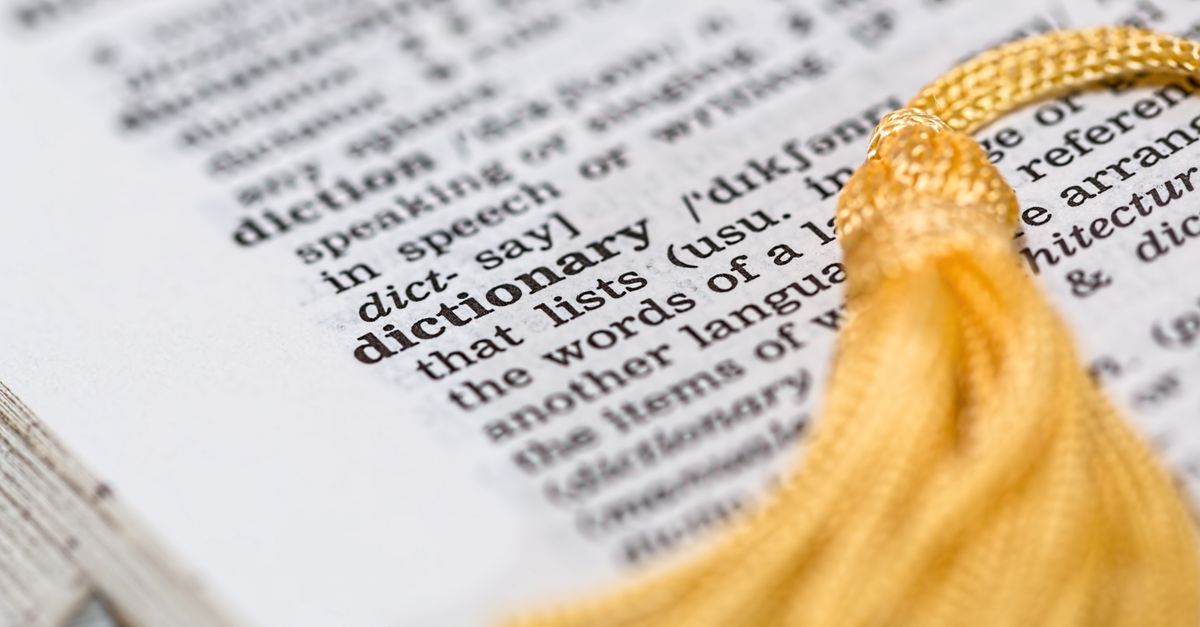
The Three Meanings of Cite, Site, and Sight
All three share the single pronunciation /saɪt/ in standard American English, but their parts of speech and ordinary senses diverge sharply once you place them in a sentence.
Cite is most often a verb meaning to quote, mention, or formally reference something — a study, a passage, a statistic, or a person as an authority. "The report cites three independent sources" works because the surrounding language (the object being referenced) matches the documented verbal sense. Cite can also be a verb in legal and military usage meaning to call someone forward or summon them to appear, and that secondary sense is what trips up writers who have only met the academic meaning.
Site is overwhelmingly a noun meaning a specific location, a plot of land, a place where something is built or happens, or, in web writing, a web address. "The construction site was fenced off" uses the physical-place sense, while "the company site went live on Monday" uses the digital-location sense. Both readings still rely on the documented nominal meaning, which is why site slots in wherever a place-name noun belongs.
Sight is a noun tied to vision. It covers physical eyesight ("her sight was perfect"), the act of seeing something ("the sight of land"), and figurative uses like "a breathtaking sight." Sight also appears as a verb in narrower usage meaning to observe or to aim a weapon, and that verb form is rare enough to be excluded from any rule of thumb a learner might try to apply.
The trap is that homophones invite slogans like "cite is for sources, site is for places, sight is for seeing," and these slogans are useful only as a starting point. Each of the three words has secondary uses that the slogan does not cover, which is exactly why the safest habit is to read the full sentence and confirm the part of speech before you commit.
How the Commonly Confused Words Quiz Tests the Same Skill
The Commonly Confused Words Quiz does not include cite, site, or sight. What it does include is a fixed eight-round route that applies the same contextual-discrimination habit to eight other pairs English speakers mix up: effect and affect, advice and advise, breath and breathe, principal and principle, stationary and stationery, desert and dessert, quiet and quite, and lose and loose. The value of running the route after a cite-versus-site-versus-sight question is that the underlying skill — reading the full sentence, identifying the documented part of speech, and matching it to the surrounding context — is the same skill you needed to choose among the three homophones.
Every round in the quiz shows one complete original sentence with a single blank and two written options. The accepted answer is whichever option's WordNet 3.1 sense and Cambridge cross-check both support in that frozen context. The route never reveals a hidden correct label and never asks you to memorize a rule. Instead it forces a deliberate read of the sentence, which is the same deliberate read that settles a homophone tie in real writing.
How to Play the Eight-Context Route
- Open the Commonly Confused Words Quiz and press Start to begin the fixed eight-context route.
- Read the entire sentence around the single blank; do not decide on the word alone without the surrounding grammar.
- Pick option 1 or option 2 by clicking, tapping, or pressing the number key 1 or 2.
- If the answer is wrong, the prompt stays on the screen, the current streak resets, the error count ticks up, and you can retry on the same visible context immediately.
- If the answer is right, the streak grows, points are added, and the route advances to the next of the eight audited pairs.
- Finish all eight rounds and read the summary: total errors, best streak, and the points you accumulated on this recreational run.
- Use Restart to repeat the same eight contexts and confirm that the visible behaviour is reproducible.
Pointer clicks and number keys feed the same guarded state transition, so there is no second scoring path with hidden rules. Inputs before Start, after completion, while a key is held, or while the spreadsheet-style boss overlay is open are ignored, which keeps the route transparent and the summary trustworthy.
The Eight Audited Pairs and Why Each Has a Real-World Trap
The quiz locks the same eight contrasts for every run. Each pair has a documented trap that a slogan rule will not catch, and several of them are homophones in the same family as cite, site, and sight.
| Pair in the quiz | Why writers mix them up | What context decides |
|---|---|---|
| effect / affect | Most school rules say effect is a noun and affect is a verb, but affect is a specialist noun in psychology and effect can be a formal verb meaning to bring about. | The sentence's surrounding verbs and objects. |
| advice / advise | Spelling matches pronunciation, but advice is the noun and advise is the verb. | Whether the word is being given (noun) or given to someone (verb). |
| breath / breathe | The added "e" shifts part of speech, and the difference is invisible in speech. | Whether the sentence needs a noun or a verb; cross-checked on the Cambridge Dictionary entry for breath. |
| principal / principle | Both are nouns, but principal can also be an adjective, as in the principal reason. | The role of the word inside the clause. |
| stationary / stationery | Identical pronunciation, but stationary means not moving and stationery means paper goods. | Whether the sentence describes motion or office supplies. |
| desert / dessert | Identical pronunciation, but desert is a dry region or to abandon, and dessert is a sweet course. | Whether the sentence describes geography, leaving, or food. |
| quiet / quite | Quiet is an adjective or verb; quite is an adverb meaning fairly or completely. | Whether the word modifies a noun or another verb. |
| lose / loose | Lose is a verb meaning to misplace or fail to win; loose is an adjective meaning not tight. | Whether the sentence needs an action or a description. |
Several of these pairs — lose and loose, desert and dessert, stationary and stationery — are homophones in the same family as cite, site, and sight. Practising the route builds the same habit of reading the full sentence before choosing, which transfers directly to breaking a homophone tie.
Why "Always a Noun" Rules Will Mislead You
The product contract is explicit about this risk. English words can be polysemous, and the route's accepted answer is always pinned to a specific frozen context, not to a global rule. Affect can be a specialist noun, effect can be a formal verb, and principal can be an adjective as well as a school leader. A learner who memorizes the slogan that effect is "always the noun" will be wrong the moment a sentence uses effect as a verb. The quiz handles this by anchoring each prompt to one documented WordNet 3.1 sense and one Cambridge cross-check, so the correct answer is whichever choice is supported in that sentence — and a different sentence can change the required word.
If both options could reasonably work in one standard reading, the prompt is excluded rather than resolved with a hidden preference. That exclusion rule is part of why the route is reproducible: every retained prompt has exactly one accepted answer in its frozen context, and a reader can audit the choice by opening the linked Cambridge page.
Where the Accepted Meanings Come From
The evidence boundary is documented. Princeton WordNet 3.1 is the primary source for the accepted sense or part of speech in every row, and each contrast is independently cross-checked on an exact Cambridge Dictionary or Cambridge Grammar page. The eight sentence prompts were written for this game, so Cambridge definitions and example sentences are not copied into the dataset, and the Cambridge pages are linked only so the review can be repeated by the reader. WordNet 3.1 permits redistribution when its complete notice is preserved, and the site publishes the WordNet 3.1 Copyright 2011 notice alongside the tool.
The same pattern applies to the broader question of cite, site, and sight meanings. WordNet's documented senses for cite cover the verbal act of quoting and referencing, the noun senses for site cover physical and digital locations, and the noun senses for sight cover vision and the act of seeing. If you want to verify any accepted answer in the quiz, open the relevant Cambridge page listed in the tool's evidence block and confirm the documented part of speech yourself rather than relying on a slogan.
What the Quiz Does Not Claim
The route is a transparent spelling-and-usage puzzle, not a clinical, IQ, or cognitive assessment. It does not estimate vocabulary size, assign a CEFR level, diagnose a language or learning condition, or establish school or employment readiness. Eight repeated contexts cannot support placement, treatment, eligibility, or professional conclusions. Use the page to build the habit of reading the full sentence and consulting a current reference when the wording of a real document carries important consequences — which is exactly the habit that settles a cite-versus-site-versus-sight tie in the first place.