The next full moon is November 24, 2026 UTC. For the event time, open Moon Phase Today and read the nearby Full Moon event alongside the calculation timestamp and browser-resolved time zone. A reader west of UTC may see the same instant dated November 23.
Full Moon has a precise astronomical definition: the Moon’s geocentric ecliptic longitude difference from the Sun reaches 180°. That is one mathematical instant, not an entire night or a multi-day phase label. The Moon also need not be above your horizon at that instant. Some calendars call the November event the Beaver Moon, but seasonal names are separate from the phase-angle calculation.
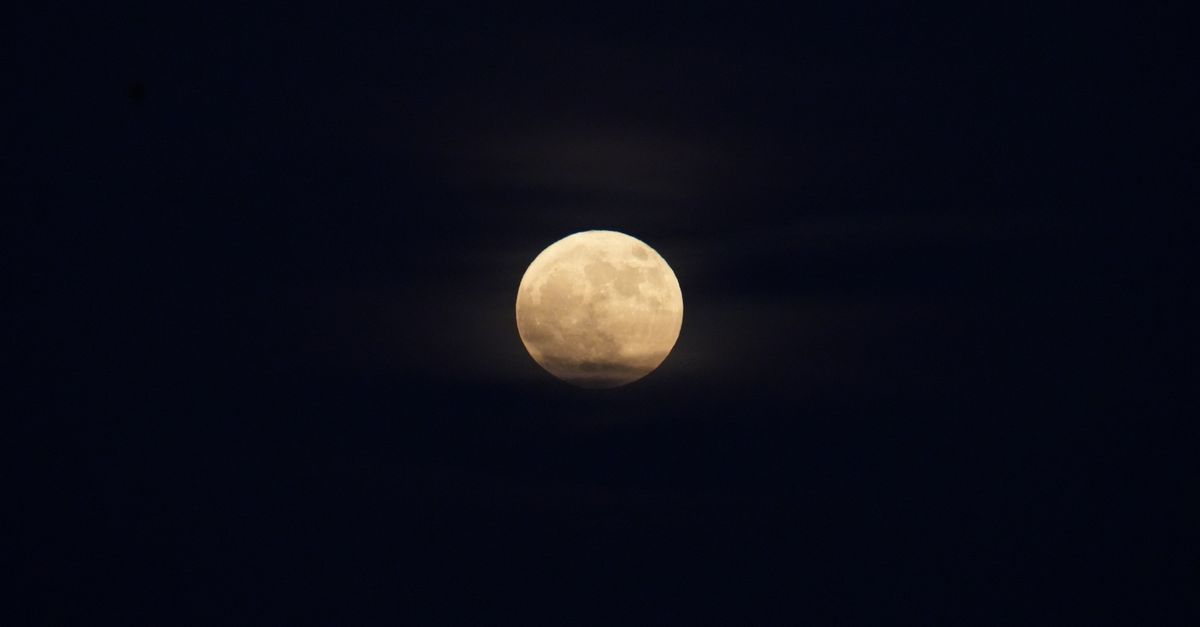
Find the next Full Moon in Moon Phase Today
- Open the tool and wait for the local calculation. The result includes the current eight-stage phase label, geocentric phase angle, illuminated percentage, nearby primary-phase events, calculation timestamp, and resolved browser time zone. No location permission or account is required.
- Locate the nearby Full Moon event. Compare its timestamp with the displayed calculation timestamp. The Full Moon entry occurring after the current calculation is the upcoming full-moon event you want.
- Read the event time with its time-zone context. Use the time shown by the tool and note the browser time zone beside the result. This matters because a single global event can fall on different local calendar dates.
- Check the current phase angle. A displayed Full Moon label covers a broad range, so it does not by itself identify the precise event. The exact Full Moon event is the primary phase at 180°.
- Distinguish the event from the current band. The broad Full Moon band can remain active before and after the 180° crossing. If you need “when,” use the nearby event timestamp rather than treating the current label as an exact moment.
- Recalculate when you need a fresh reading. Choose Recalculate to sample the browser’s current instant. The widget also refreshes automatically once per minute while it remains mounted.
A concise written answer should therefore include the event date, the time reported for your zone, and the phase definition. For example: “The next full moon is the 180° primary-phase event listed on November 24, 2026 UTC, with the displayed time adjusted to the browser’s resolved zone.”
Exact Full Moon event versus the broad display band
The tool deliberately separates an exact event from the convenient name used for everyday displays. The current angle is a measured value. The eight-stage label maps that value into a disclosed band, while the nearby event list provides times for the mathematically defined primary phases.
| What you see | Defined meaning | What it means for the answer |
|---|---|---|
| Current phase angle | The geocentric ecliptic longitude difference between the Moon and Sun at the calculation instant | A numerical position in the phase cycle, not a visibility rating |
| Full Moon display band | 157.5° through 202.5°, including the lower bound and excluding the upper bound | A broad label that can cover multiple days |
| Exact Full Moon event | The phase angle reaches exactly 180° | The event time to use when answering “when” |
| Nearby primary-phase events | Locally searched event times for the four angles: 0°, 90°, 180°, and 270° | Upcoming and surrounding events in the calculation context |
This distinction prevents a common mistake: seeing “Full Moon” in the eight-stage display and assuming the Moon becomes completely full at the beginning of that band. The band is a broad label. The 180° event is the defined full-moon instant.
How the four primary phases are defined
The product treats four angles as exact primary-phase events. These values provide a simple way to recognize the correct entry in the nearby event list.
| Primary phase | Exact geocentric phase angle |
|---|---|
| New Moon | 0° |
| First Quarter | 90° |
| Full Moon | 180° |
| Last Quarter | 270° |
Only the 180° event answers the full-moon timing question. The other entries provide useful context by showing where the Moon sits in its cycle and which primary event comes next. The eight names such as Waxing Gibbous or Waning Gibbous are a Lizely display convention, not official United States Naval Observatory classifications.
Why one event can have two local dates
A full moon is a global geocentric event, but calendars are organized by local time. If the 180° crossing occurs close to midnight, one observer may record it on one date while another records it on the following date. The event itself has not changed; only the local calendar representation has.
Moon Phase Today displays the calculation time and the time zone resolved by the browser. Use that displayed zone rather than trying to infer the event date from a generic online calendar. For a fuller explanation of this issue, see Why Moon Phase Dates Differ by Timezone.
The November 24 UTC date is therefore the clearest schedule-level answer. If the live result presents November 23 for your browser zone, that is a local-date representation of the same event rather than a contradictory calculation.
What Moon Phase Today answers—and what it leaves out
- It reports the current phase information. This includes the convenient eight-stage label, exact geocentric phase angle, illuminated percentage, nearby primary-phase events, calculation time, and browser time zone.
- It does not need your city or GPS position. A geocentric phase does not depend on the viewer’s location, so the tool intentionally avoids location permission.
- It does not provide local sky conditions. Moonrise, moonset, weather, atmospheric visibility, and whether the Moon clears your horizon are separate, location-specific questions that this tool does not collect.
- Its timing is educational. The results are astronomical estimates and do not claim second-level precision, observational-apparent timing for a particular site, professional ephemeris status, or suitability for navigation, photography safety, tides, religious observance, or other time-critical decisions.
- Its supported date boundary is 1700 through 2100. This is the range covered by the official USNO records used for independent testing. The current-time interface normally remains well inside those limits.
Those limitations do not prevent the central task. The tool can identify the upcoming 180° event and display its calculated time, while leaving location-specific visibility questions to sources designed for them.
Why the calculation stays local and how it is tested
The phase calculation runs locally in the tool widget using the precisely pinned Astronomy Engine 2.1.19 source release. A narrow local adapter handles three jobs: validating the supported date, calculating the geocentric phase angle and illuminated fraction, and searching for one of the four primary-phase angles. The component does not call the package’s broader vendor API directly.
Accuracy is tested against twelve literal primary-phase timestamps frozen from the official USNO Astronomical Applications API. The fixtures include New Moon, First Quarter, Full Moon, and Last Quarter examples; dates near the 1700 and 2100 limits; February 2020 in a leap year; and an event crossing from December into January. Every calculated result must differ from the corresponding minute-resolution USNO timestamp by no more than two minutes. USNO supplies research and test fixtures only; it is never contacted when a visitor opens or recalculates the tool.
The package is MIT licensed, has no runtime dependencies, and is shipped with the application instead of being copied from a CDN. It loads only when the Moon Phase Today widget is requested. The current result also remains available offline after the page assets have loaded. No remote astronomy request is part of the visitor’s calculation.
A reliable way to record the answer
For the current November 2026 schedule, put November 24, 2026 UTC on your calendar and add the event time displayed by Moon Phase Today together with its time-zone label. Keep the wording precise: the “Full Moon band” describes a range of current angles, while the “Full Moon event” is the single 180° crossing.
Use the event time for recordkeeping and the broad label for general orientation. If visibility matters, consult a separate location-aware moonrise, moonset, and weather service. The phase calculation identifies when the Moon reaches full Moon in geocentric terms; it does not guarantee that you will see it.