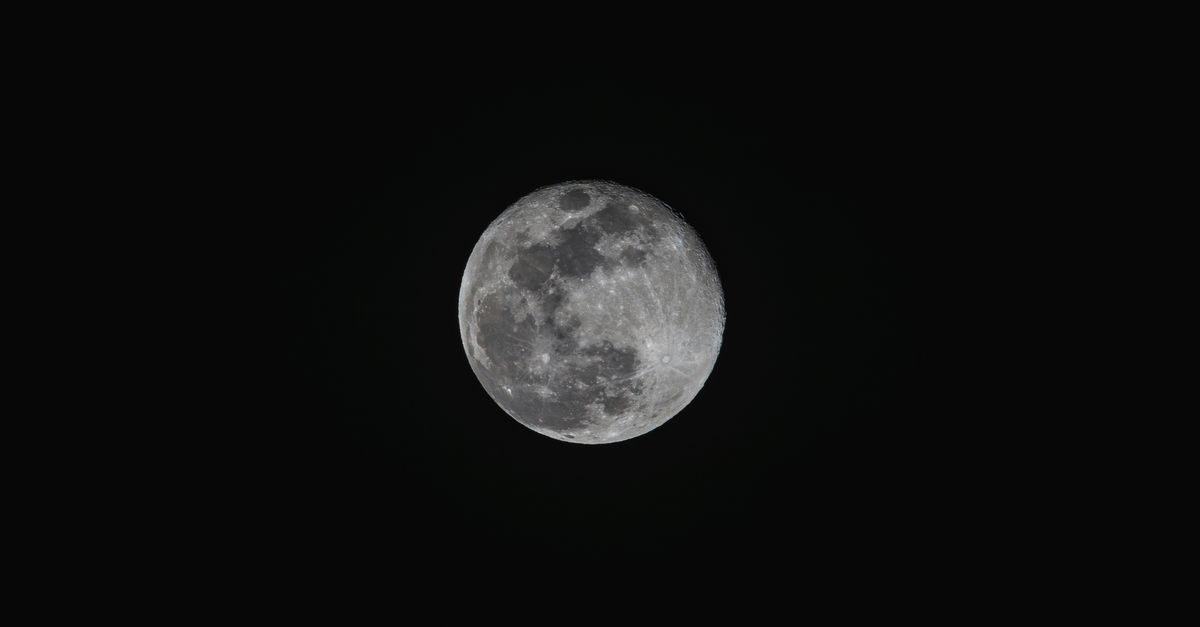
What to do with tonight's full moon: use it as a prompt to reflect on completion, symbolically release what no longer serves you, and spend time observing or creating; the exact Full Moon is the 180° instant, not an equally full all night.
This gives the evening a clear purpose without treating a lunar phase as a supernatural forecast. In reflective and spiritual traditions, the full moon can symbolize culmination, visibility, and release. Those symbols are optional prompts, not evidence that the Moon controls mood, luck, relationships, or the outcome of a decision. A good ritual is simple, personal, and safe; it need not involve buying anything or following a prescribed ceremony.
Pick one purpose for the evening
Choose one purpose instead of stacking rituals. A single completed action is easier to remember than a long checklist, and it keeps the symbolic part of the evening connected to something tangible.
| Purpose | A simple action | Symbolic focus |
|---|---|---|
| Reflect on completion | Review one project, promise, or habit. Write what is complete, what remains, and the next visible step. | Uses the full moon as a marker of culmination and clarity. |
| Release a burden | Name one unresolved concern on paper, close the notebook, and remove one outdated item from your workspace. | Makes the end of an unfinished situation visible and symbolic. |
| Make something | Create a poem, sketch, playlist, meal, or handmade card around the theme of finishing what matters. | Turns reflection into a creative act rather than a passive ritual. |
| Observe the night sky | Spend some time outside, note where the Moon appears if visible, and record the sky conditions you actually encounter. | Grounds the symbolism in direct observation instead of assumptions about visibility. |
If you have only ten minutes, use this compact sequence:
- Take three unhurried breaths and note where you are, including the date and time.
- Write down one thing that has reached completion and one thing that still deserves your attention.
- Name one burden to set down and one next step to keep.
- Complete one small action, such as clearing a surface, writing a planned thank-you, or adding the next task to your calendar.
- End with one sentence about what you noticed.
Check tonight's moon before making plans
Use the phase check as the factual first step, then let the result guide the activity. This prevents a convenient daily label from being mistaken for the exact astronomical event.
- Open Moon Phase Today and wait for the local calculation. The widget uses the current instant reported by your browser and displays the eight-stage label, geocentric phase angle, illuminated percentage, nearby primary-phase events, calculation time, and resolved browser time zone.
- Read the calculation time and time zone before comparing the result with your plans. Choose Recalculate when you want to sample a fresh browser instant. The result also refreshes automatically once per minute while the widget remains mounted.
- Read the phase angle as well as the label. The broad Full Moon label covers a range of angles, while 180° identifies the exact Full Moon phase angle. Use the nearby primary-phase event to find the corresponding instant.
- Decide whether exact timing changes your plan. If you want to mark the astronomical moment, schedule around the nearby event time. If that event falls on another local date, describe the evening as a general Moon-viewing or reflection night rather than calling it the Full Moon.
- Check local viewing conditions separately. For an outdoor activity, use location-specific weather and moonrise or moonset information. Moon Phase Today intentionally does not collect location data, so it cannot answer those questions.
Separate the exact Full Moon from the Full Moon band
Moon Phase Today gives exact mathematical meanings to four primary events: New Moon is 0°, First Quarter is 90°, Full Moon is 180°, and Last Quarter is 270°. These are instants, not multi-day labels.
Separately, the tool maps the geocentric Moon–Sun ecliptic longitude difference into a broad eight-stage display convention created by Lizely. The circles are divided at the halfway points between the primary angles. These convenient names are fully disclosed, but they are not official United States Naval Observatory classifications.
| Eight-stage display label | Geocentric phase-angle band |
|---|---|
| New Moon | 337.5°–360° and 0°–22.5° |
| Waxing Crescent | 22.5°–67.5° |
| First Quarter | 67.5°–112.5° |
| Waxing Gibbous | 112.5°–157.5° |
| Full Moon | 157.5°–202.5° |
| Waning Gibbous | 202.5°–247.5° |
| Last Quarter | 247.5°–292.5° |
| Waning Crescent | 292.5°–337.5° |
Lower bounds are included and upper bounds are excluded, except that the angle wraps cleanly at 360°. That is why the New Moon band appears in two pieces. Only the exact 180° angle marks the Full Moon event itself; an angle elsewhere in the Full Moon band remains a broad-label reading. The nearby primary-phase event is therefore the better source for an exact timestamp.
Make a simple full-moon closing ritual
Choose this sequence when you want structure without adopting a religious or astrological system. Its purpose is to turn reflection into a clear decision, not to guarantee an outcome.
- Arrive: Write down the date and, if using the phase tool, the displayed phase angle. This anchors the ritual in the evening you are actually experiencing.
- Review: Name one goal, relationship, or personal project that has moved toward completion. Include the concrete evidence that it has progressed.
- Release: Write one sentence about what you are finished carrying. Close the notebook, recycle the page, or clear one object connected with the old concern.
- Commit: Choose one next action. Begin it immediately if it is practical, or give it a definite time rather than leaving it as a vague intention.
- Close: Look toward the Moon if it is visible. Otherwise, return to your written note and end with one concrete sentence about how you want to move forward.
A shared version can work too: each person chooses a private release and shares only as much as they feel comfortable sharing. The focus stays on personal reflection rather than trying to assign everyone the same symbolic meaning.
Make timing and visibility work for you
An exact full-moon event can occur while you are at work, asleep, or otherwise unavailable. Decide in advance whether you want to be present at the astronomical moment or simply use the date for a personal observance.
- For a live marker: Use the nearby Full Moon event and confirm that the displayed browser time zone matches your intended clock.
- For a flexible evening: Complete the ritual at a convenient time. It is reasonable to celebrate the date without pretending the activity occurs at the exact 180° instant.
- For outdoor viewing: Check local cloud cover, horizon obstructions, moonrise, and moonset separately. The phase may be Full Moon while the Moon is below your horizon or hidden by weather.
The astronomical event is global, but local calendar dates are not. Why Moon Phase Dates Differ by Timezone explains why the same phase event can fall on different dates for different viewers.
Know what the result does and does not establish
The result describes the Moon's geocentric relationship to the Sun for the current browser instant. It does not describe the apparent Moon for a particular observer, atmospheric visibility, local horizon conditions, weather, moonrise, or moonset. The geocentric phase angle does not depend on the viewer's city, which is why the tool asks for neither a city nor GPS permission.
The calculation runs locally in the tool widget using a pinned astronomy-engine 2.1.19 package. Opening or recalculating the tool makes no runtime astronomy request, calls no remote USNO service, and requires no account. Twelve literal minute-resolution primary-phase timestamps from the official USNO Astronomical Applications API are frozen as independent test fixtures. The tests require each calculated event to differ from its USNO record by no more than two minutes.
The product's documented input and output boundary is 1700–2100 because that is the range covered by the comparison service; the current-time interface normally remains well inside it. Results are educational astronomical estimates. They do not claim second-level precision, observational-apparent timing for a particular site, professional ephemeris status, or suitability for navigation, photography safety, tides, religious observance, or other time-critical decisions.
The most useful plan is therefore straightforward: verify the date and exact event, choose reflection, release, creation, or observation, and consult local information for anything that depends on where you are. Let the Moon mark your intention rather than dictate it.
If you're weighing options, Moon Sign Compatibility: A Practical Cultural Guide covers this in detail.