The best way to calculate a zodiac element is to look up a Western zodiac sign you already know in a fixed Fire–Earth–Air–Water table and verify its complete three-member group.
This is a direct cultural-reference lookup, not a birth-chart calculation or a personality test. Every sign in the traditional twelve-sign zodiac maps to one of four labels—Fire, Earth, Air, or Water—so the reliable method is to start with the sign, retrieve its assigned element, and check the result against the full reference matrix.
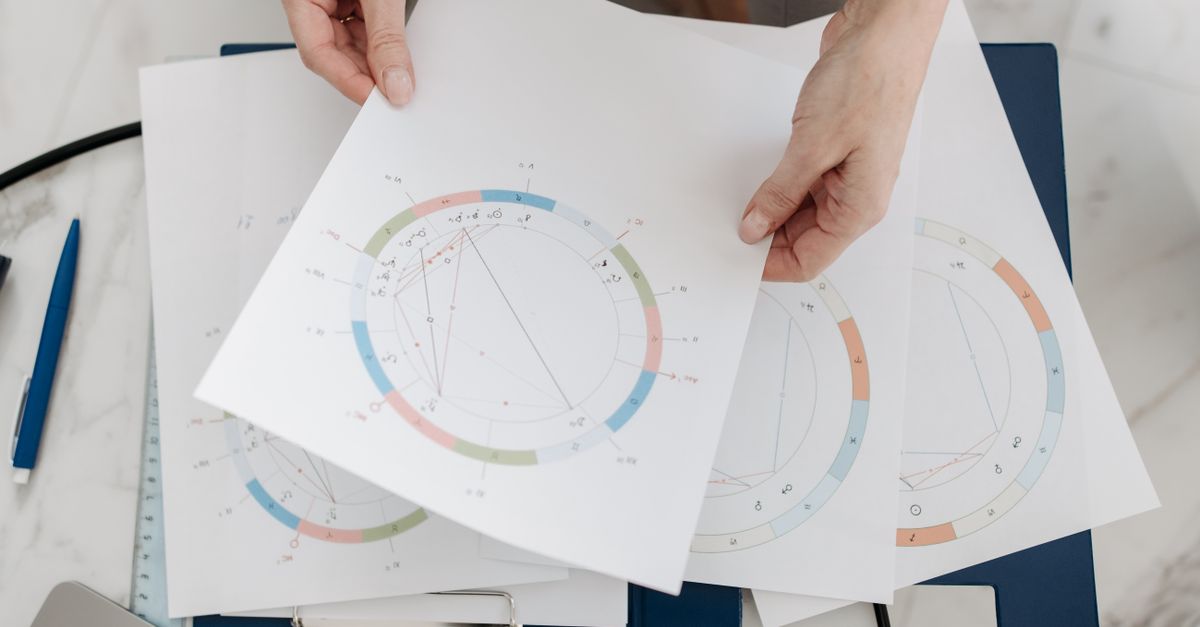
Choose the right starting point
The most dependable method begins with what you you actually know. A zodiac element is assigned to a zodiac sign, so the cleanest input is the sign itself. If you know your Sun sign is Capricorn, for example, you can look up Capricorn and read Earth directly; you do not need to reconstruct a Sun sign from a birth date before doing so.
That distinction separates three common starting points:
- Known Western zodiac sign: Select the sign and retrieve its traditional element.
- Birthday only: Identify a tropical Sun sign from the relevant month-and-day ranges first, then look up that sign in a separate step.
- Known chart placement: If you already know the sign of a Moon, rising sign, Venus, or another placement, you can classify that sign, but the tool does not calculate the placement itself.
The Zodiac Element Calculator is built for the first and third cases: it accepts a known Western zodiac sign, not a birthday. It does not calculate a Sun sign from a date or build a birth chart. Keeping that boundary clear prevents a date-based Sun-sign lookup from being confused with a sign-to-element lookup.
Read the traditional element map
The underlying map is a fixed twelve-entry table, with three signs assigned to each element:
| Traditional element | Zodiac signs |
|---|---|
| Fire | Aries, Leo, Sagittarius |
| Earth | Taurus, Virgo, Capricorn |
| Air | Gemini, Libra, Aquarius |
| Water | Cancer, Scorpio, Pisces |
Every sign appears exactly once, so there is no ambiguity caused by duplicate assignments. Each result also shows which sign was selected, its element, its position within that group, and the other two members.
The same assignments are reflected in Astrodienst’s Element reference and independently in The Old Farmer’s Almanac’s zodiac-elements guide. These are cultural astrology categories, not chemical elements; the sources support the sign-to-element mapping, not claims that the labels scientifically measure character.
Calculate the element from a known sign
- Identify the Western zodiac sign you already know. This may be your Sun sign or the sign attached to another placement you have already determined. Do not enter a birthday; the tool asks for a known sign and does not perform date-based Sun-sign calculations.
- Open the Zodiac Element Calculator and select that sign. The input is deliberately simple: choose one of the twelve supported Western zodiac signs rather than provide personal birth information.
- Read the traditional element result. The output identifies the selected sign, gives Fire, Earth, Air, or Water, places the sign within its three-sign group, and names the other two members. For example, selecting Leo returns Fire alongside Aries, Leo, and Sagittarius.
- Verify the entry in the complete reference matrix on the page. Find the selected sign, confirm that its element is unchanged, and check that its two companion signs match the group shown in the result. This confirms both the individual lookup and the surrounding group.
- Use Reset when you need to clear the current selection. It returns the selector to the initial sign and does not retain earlier choices or personal data.
This workflow is more dependable than memorizing isolated keyword descriptions because the group and matrix expose the exact mapping used for the answer. It also keeps interpretation separate: the lookup tells you where the sign belongs, not which element is superior or what the label proves.
All lookup work occurs in the browser, and the selected sign remains only in the current page state. The tool requires no account or birth date, and Reset restores the initial view without keeping a previous selection.
Perform the same lookup without a calculator
Although the direct tool is the simplest route, the classification is also easy to perform by hand because there is no arithmetic, weighting, dominant-element tally, or chart calculation. Use the reference as a lookup table, not as a formula.
- Write down the exact Western zodiac sign name.
- Locate that sign in the twelve-entry matrix and read the element in the same row.
- Read the full three-sign group and confirm that the selected sign is one of its three members.
- Cross-check the sign and group against the displayed matrix or an independent reference.
The manual and tool workflows should produce the same label because both reproduce the same fixed mapping. If they do not, check the sign spelling and selection rather than trying to derive a more complicated result.
Use the full group to check the result
A one-word result can be easy to misread, particularly when Fire, Earth, Air, and Water appear together. Showing the entire group makes the answer easier to inspect. If Capricorn is selected, the result should say Earth and list Taurus, Virgo, and Capricorn; the matrix should show the same combination.
The selected sign’s position is display context rather than a rank. Capricorn appears third in the Earth list, but the tool does not call it stronger, weaker, better, or more compatible than Aries or Virgo. The four groups are presented as equal reference categories.
Checking all three members also helps you notice a selected-sign mix-up without relying on an unexplained badge. If one group member differs from the matrix, return to the sign selector, confirm the intended sign, and run the lookup again.
Use the matrix as a final check: all 12 signs should appear exactly once, each element should contain exactly three, and no sign should belong to two groups.
Handle a missing zodiac sign
If all you have is a birthday, the first task is to identify a tropical Sun sign from the site’s month-and-day ranges. The related Zodiac Sign Calculator performs that separate date-to-sign step; once the Sun sign is known, return here and classify that sign.
Do not ask the element tool to infer the sign from the date: that capability is outside its stated purpose, and using it that way could also hide an assumption that you mean the Sun sign rather than a Moon, rising sign, Venus, or another placement.
If you do not know the sign used by a particular placement, you need a separate chart-reading process. The element lookup can classify a sign once known, but it cannot identify that placement, build a chart, or determine which signs are present across a complete birth chart.
Keeping the two workflows sequential—first establish the sign, then retrieve its element—produces the clearest result and preserves the meaning of the input.
Keep the result in cultural context
A zodiac element here means one traditional Western astrology classification for a known sign. It is not the chemical definition of an element, a scientific personality taxonomy, or a measured trait. The source material supports the fixed mapping, while the calculation itself makes no personality, compatibility, health, hiring, relationship, or predictive claim.
The result is also not a dominant-element score for a birth chart. It identifies the element attached to the one sign you selected. The tool does not rank the four elements, compare their strength, or say that one is more desirable. Using the output for a personality diagnosis or consequential judgment would go beyond both the method and the evidence.
For that reason, the most accurate description of the result is: “This selected sign belongs to the traditional Fire, Earth, Air, or Water group.” It answers a lookup question while leaving interpretation to the reader. The dependable sequence is known sign, direct element lookup, complete-group check, and full-matrix verification.
If you're weighing options, Best Way to Calculate Zodiac Modality: Lookup Method covers this in detail.