The best way to calculate zodiac modality is to use a direct table lookup for a Western sign you already know, then verify that result against the complete 12-sign modality chart.
In this context, “calculate” means classify the selected sign as Cardinal, Fixed, or Mutable. It does not mean calculating a sign from a birth date, assigning weighted points to chart placements, or determining which modality dominates an entire birth chart.
The Zodiac Modality Calculator supports this process by taking a known sign and returning its modality, structural seasonal position, and complete four-sign group. Its visible matrix lets you check the selected row against every other sign in the table.
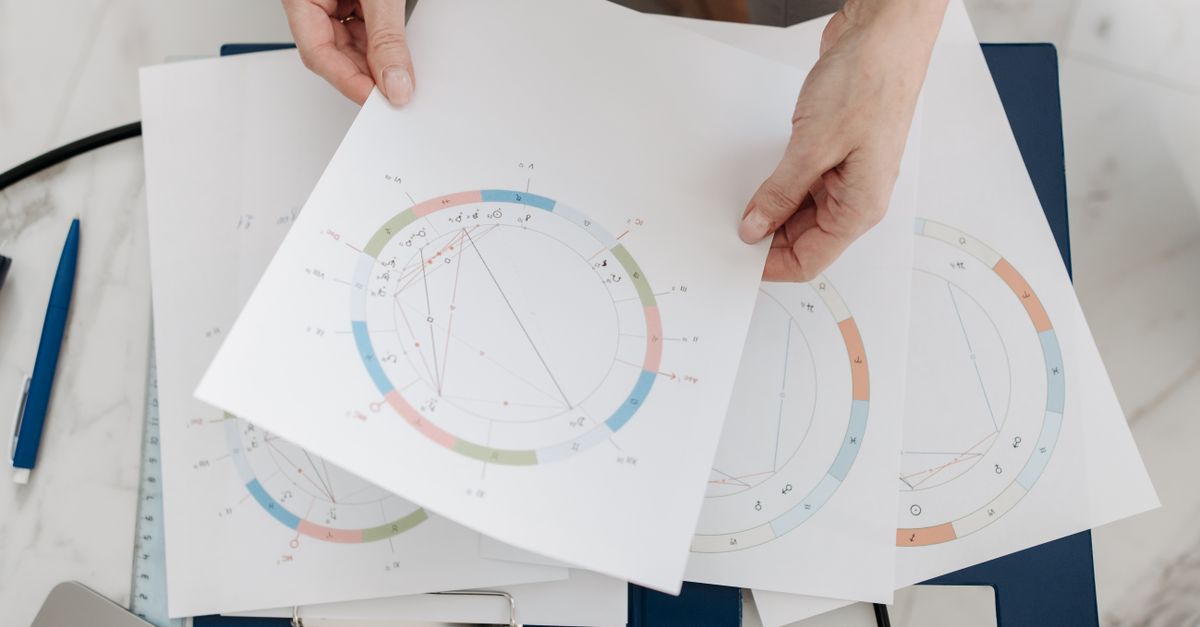
What a modality chart actually classifies
Zodiac modality is the traditional structural grouping of signs also known as qualities or quadruplicities. The twelve Western zodiac signs divide into three groups: Cardinal, Fixed, and Mutable. Every sign belongs to exactly one group, and each group contains exactly four signs.
The groups also follow a structural pattern within the zodiac’s seasonal sign sequence. Cardinal signs begin each of the four sign seasons, Fixed signs occupy the middle, and Mutable signs conclude the sequence. This seasonal language follows the conventional Northern Hemisphere framework used by the cited astrological sources. It describes position in a sequence rather than guaranteeing behavior.
| Modality | Seasonal position | Complete four-sign group |
|---|---|---|
| Cardinal | Beginning | Aries, Cancer, Libra, Capricorn |
| Fixed | Middle | Taurus, Leo, Scorpio, Aquarius |
| Mutable | End | Gemini, Virgo, Sagittarius, Pisces |
Both Astrodienst’s Astrowiki reference on quadruplicities and The Old Farmer’s Almanac’s guide to cardinal, fixed, and mutable signs publish the same three groups and the same beginning, middle, and end positions.
The calculation method in plain terms
The calculator uses a literal twelve-entry Western zodiac table. For a single known sign, the calculation reduces to finding its row and reading the associated classification. There is no numerical score, weighting system, personality assessment, or chart-wide ranking involved.
This distinction matters when you see broader instructions that describe “calculating” a chart’s modality balance through allocated points or dominant-quality rules. Those methods require additional definitions and placement data. They are outside this calculator’s scope.
- Identify the sign: Use a Western zodiac sign that has already been determined.
- Read its classification: Confirm whether the row is Cardinal, Fixed, or Mutable.
- Check the structure: Match the result to beginning, middle, or end and the complete four-sign group.
- Verify the matrix: Make sure the selected sign appears once and its group agrees with the visible reference table.
Run a known-sign modality lookup
Use the following workflow when you want one clear, verifiable result for a sign you already know.
- Establish the sign. Write down the exact Western zodiac sign you want to classify. It may be a Sun sign or another known placement, but the calculator does not determine any sign from a date, time, or location.
- Open the tool and select it. Go to the Zodiac Modality Calculator and choose that sign from the selector. No name, birth date, birth time, or birthplace is requested.
- Read all result fields. Confirm the selected sign, its Cardinal, Fixed, or Mutable classification, its beginning, middle, or end position, and the other signs in the same four-member group.
- Cross-check the twelve-sign matrix. Locate the selected sign in the visible table and verify that its modality and seasonal position match the result panel. Confirm that its group contains exactly four signs and that all 12 signs appear once across the three groups.
- Reset when finished. Use Reset to restore the initial selection without saving the current choice. If you are checking several known placements, record each result before resetting and selecting the next sign.
This method is repeatable because the mapping is fixed: each lookup always follows the same sign-to-group entry. Reset clears the current component state rather than deleting a saved chart.
Read each result field accurately
A complete lookup contains four pieces of information. Treating them as separate fields helps prevent a correct group from being paired with the wrong description.
- Selected sign: The exact sign whose row was activated.
- Modality: One of the three traditional classifications: Cardinal, Fixed, or Mutable.
- Structural season position: The neutral label beginning, middle, or end.
- Four-sign group: Every sign assigned to the same modality, including the selected sign.
For example, selecting Aries should return Cardinal, the beginning position, and the group Aries, Cancer, Libra, and Capricorn. Selecting Scorpio should return Fixed, the middle position, and the group Taurus, Leo, Scorpio, and Aquarius.
Use neutral structural wording when recording the result. For instance, write “Scorpio is Fixed and occupies the middle of its seasonal sign sequence.” Do not restate the label as proof that someone must lead, resist change, adapt, or possess a particular personal quality. The calculator presents a cultural classification, not a guaranteed personality description.
Apply the method to a chart you already have
If you already have an established chart with several known sign placements, the supported approach is to look up each relevant sign individually. The lookup can classify a known Sun, Moon, rising, or planetary sign, but it cannot calculate those astronomical placements for you.
| Task | Supported method | Result or boundary |
|---|---|---|
| Classify one known Sun sign | Select the sign directly. | Returns its modality, seasonal position, and four-sign group. |
| Classify a known Moon, rising, or planetary sign | Determine the sign elsewhere, then select that sign. | Classifies the established sign only; it does not calculate the placement. |
| Review several known placements | Look up each sign separately. | Does not automatically calculate a dominant modality or score the chart. |
| Turn a birth date into a Sun sign | Use a separate sign-calculation process. | Date-based sign calculation is not part of this modality lookup. |
For a clearer distinction between a one-sign lookup and a complete chart workflow, see Does a Zodiac Modality Chart Calculate a Full Birth Chart?
Accurate Moon, rising, or planetary sign calculation requires astronomical data and lies outside this simple table lookup. The tool also does not compare two people, rank the three modalities, infer a complete birth chart, or identify a dominant quality. Its direct sign selection keeps each result within the limits of the modality table.
Confirm the lookup in the visible matrix
The matrix provides a built-in cross-check rather than leaving the result hidden behind a single label. Before accepting an answer, confirm these points:
- The selected sign appears exactly once in the table.
- The row’s modality matches the result panel.
- The displayed seasonal position matches the row.
- The four-sign group contains the selected sign and three companions.
- Across the full matrix, every sign is assigned once and the three groups contain four signs each.
If the result and matrix disagree, reselect the sign and repeat the check. Reset is also useful when moving to another placement, because the current selection is not retained after reset. The tool runs locally in the browser, and the selected sign exists only in the current component state rather than being written to local storage, session storage, or cookies.
Know what the modality label does not establish
A modality result is a traditional astrological grouping. It is not a scientific assessment of behavior, adaptability, leadership, compatibility, or personal worth. Its value in this workflow is structural: it identifies where a sign sits within the cardinal, fixed, and mutable framework and shows the related signs.
For the most accurate result, choose a sign you already know, use the calculator as a direct lookup, confirm the output against the complete matrix, and record the result in neutral language. Do not substitute a birth-date calculation for a sign lookup, and do not present a single label as a complete chart analysis or a guaranteed personal conclusion.