A Sun Number calculation can go wrong when the birth month or day is wrong, an impossible month-day pair is used, master numbers are not reduced again, or the result is mistaken for an astrological Sun sign. The cited numerology method is fixed: number the birth month from 1 for January through 12 for December, add the day of the month, and repeatedly sum the digits until one digit from 1 through 9 remains. Only those two inputs belong in this formula.
Some numerology sources call the same arithmetic result the Attitude Number. The compact convention is documented in World Numerology's Attitude Number guidance, and the calculator used here shows the subtotal and each reduction rather than returning an unexplained digit.
Because the method has no hidden astronomical or current-year input, a wrong answer usually points to a bad field, an incomplete reduction, or a different numerology convention—not to a need for more personal information.
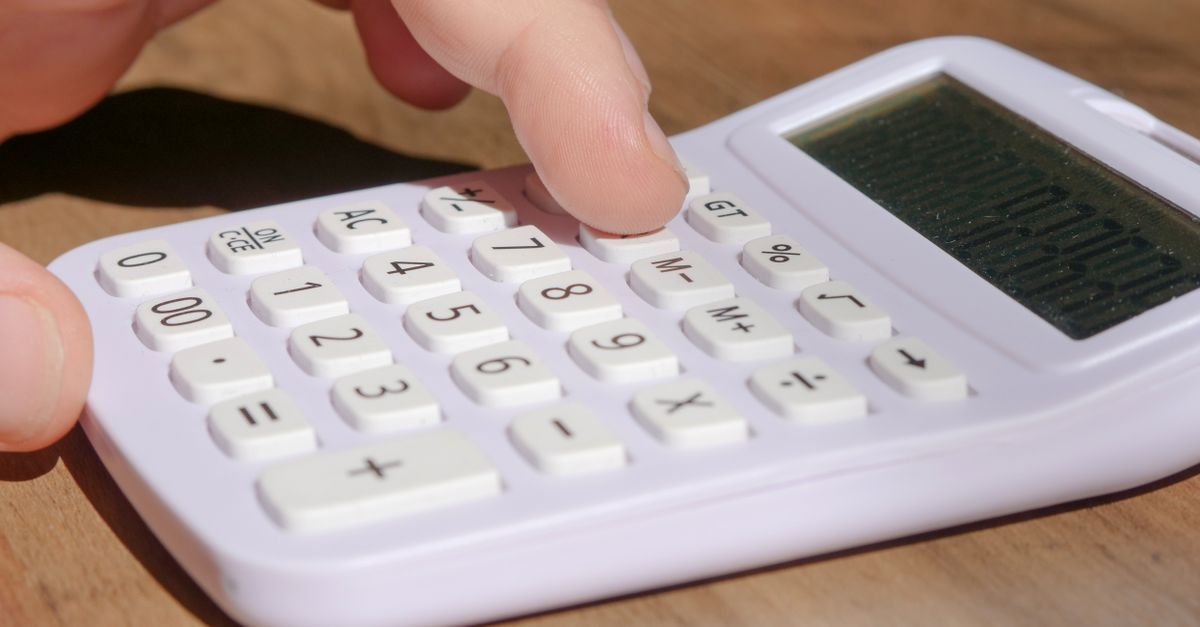
Where a Sun Number calculation breaks
Most failures can be spotted before interpreting the digit. Use the symptom, rather than an expected personality meaning, to identify the fault:
| Failure point | What you may see | Corrective check |
|---|---|---|
| Month or day mistyped | The subtotal does not equal the calendar month number plus the day | Re-enter both fields from the source record and check the displayed subtotal |
| Impossible day selected | The selected day cannot occur in the chosen month | Use a valid day; February 29 is accepted, while impossible dates are rejected |
| Extra date parts included | A year, time, location, or current year affects the result | Remove them because the cited formula uses only the birth month and day |
| Reduction stopped early | A multi-digit intermediate is treated as the final answer | Continue summing the decimal digits until one digit remains |
| Master number retained | A subtotal of 11, 22, or 33 is reported as final | Reduce it again under this single-digit convention |
| Wrong system substituted | An astrological sign or Life Path result is presented as the Sun Number | Confirm the formula and tool before comparing results |
| Another rule used | One site leaves a master number unchanged | Compare the published reduction steps because a different rule can explain the difference |
The February policy is intentionally broader than a year-specific calendar because this calculator receives no birth year. It accepts February 29 as a date that can occur in a leap year, while rejecting February 30 and September 31 as impossible month-day combinations. That distinction prevents a valid leap-day record from being confused with a typing error.
Separate the Sun Number from other numbers and signs
The word "Sun" causes frequent category errors. A numerology Sun Number is an arithmetic result; an astrological Sun sign belongs to a zodiac framework. A Life Path number uses a full birth date and a separate reduction method. These systems may be discussed together, but one result cannot validate another.
| Feature | Numerology Sun Number | Astrological Sun sign | Life Path number |
|---|---|---|---|
| Basic framework | Month number plus day, reduced arithmetically | Zodiac and astronomical framework | Full-date numerology reduction |
| Data emphasized by the method | Birth month and day | Birth-date information interpreted through the zodiac | Full birth date, including the year |
| Result | One digit from 1 through 9 with visible work | A zodiac sign | A full-date reduction under its own method |
| Master-number handling | 11, 22, and 33 are reduced again | Not applicable to a zodiac sign | The Life Path method uses a different full-date formula |
If you actually need a full-date reduction, the Life Path Number Calculator uses a different full-date formula. A matching final digit does not make the formulas interchangeable: a coincidence is not a shared calculation.
Calculate a Sun Number and inspect every step
- Open the Sun Number Calculator and select your birth month.
- Enter the day of the month and confirm that it is valid for the selected month.
- Select Calculate to see the month-plus-day subtotal and the digit-reduction steps.
- Read the final value in the 1–9 range. If the subtotal is 11, 22, or 33, check that it is reduced again rather than displayed as the final result.
- If you need to correct an entry, use Reset to clear both fields and the current result, then enter the month and day again.
Worked example: For November 28, the month number plus the day gives 11 + 28 = 39. The digits then produce 3 + 9 = 12, followed by 1 + 2 = 3. The final Sun Number under this convention is 3.
The same input always follows the same arithmetic path. The calculator does not use the current year, birth year, location, timezone, zodiac boundary, ephemeris, or a random value. A changing answer for unchanged fields therefore points to a different entry or method.
Audit an unexpected result from top to bottom
When two answers disagree, compare the process rather than deciding which digit seems right. Work through this sequence:
- Name the method. Confirm that both results claim the numerology Sun Number or Attitude Number method based on month plus day.
- Check the fields. Compare the calendar month number and day, including whether the selected day can occur in that month.
- Check the first line. The subtotal must be the calendar month number plus the birth day, with no year or other date part added.
- Follow every reduction. Each multi-digit intermediate is reduced by summing its decimal digits; continue until exactly one digit remains.
- Compare conventions. If one page leaves 11, 22, or 33 intact, it is not following the cited single-digit method implemented by this tool.
- Repeat the inputs. The result is deterministic for the same month and day, so a second run should reproduce the same chain.
For a separate verification pass, the Sun Number calculation-matching guide shows how to compare a visible result with the published month-and-day rule. For this arithmetic, ordinary month numbering is enough; no personality chart or external lookup table is needed.
Separate a valid calculation from a valid prediction
A reproducible digit is not proof that numerology measures personality or forecasts events. Numerology is a belief-based practice rather than a scientifically validated measurement of personality or future outcomes. The arithmetic can be checked, but its interpretation remains a matter of personal or spiritual belief.
This Sun Number calculator deliberately returns the subtotal, the reductions, and the final digit. It does not attach personality descriptions, compatibility claims, forecasts, or advice. The result should not be used to make medical, legal, financial, safety, relationship, or other consequential decisions.
The most important final check is therefore methodological: does the page use only the birth month and day, reduce the result to 1–9, and identify the output as numerology rather than astrology? If so, you can reproduce it. If not, you may be looking at an astrological Sun sign, a Life Path number, a calendar-period calculation, or another site's convention.
It also helps to separate related tools by purpose. Personal Year, Personal Month, and Personal Day calculators use different formulas, so their results should not be substituted for a Sun Number even when the final digit happens to match. For a full-date reduction, use the Life Path calculator instead.
If you're weighing options, What Can Go Wrong When I Calculate a Zodiac Element? covers this in detail.
If you're weighing options, What Can Go Wrong When You Calculate a Maturity Number? covers this in detail.