Using Tarot Card Meanings can go wrong mainly when its 78 upright reference entries are mistaken for complete readings, reversed-card meanings, fixed predictions, or universal definitions.
The Tarot Card Meanings catalogue is a searchable Rider-Waite-Smith reference. It contains 22 Major Arcana cards and 56 Minor Arcana cards, with concise upright themes designed to help you identify a card and orient yourself around its traditional symbolism.
It does not draw a random card, accept a personal question, score an outcome, or produce a prediction. Using it within those limits reduces the largest source of confusion: asking a reference catalogue to do more than it was designed to do.
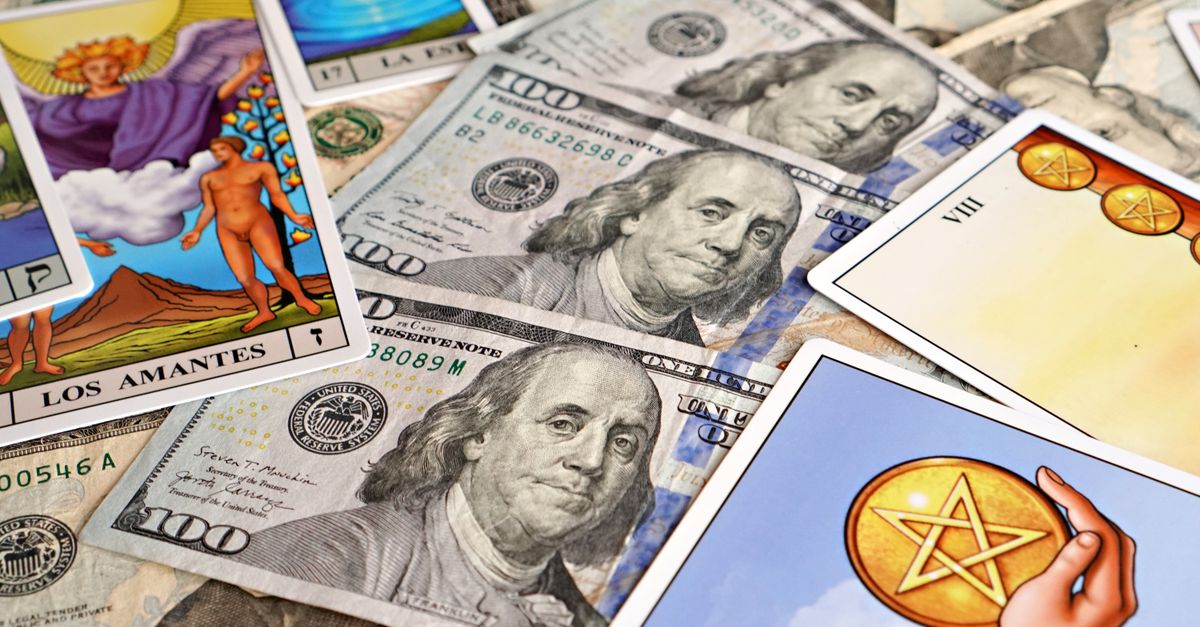
The main failure points
| Risk | What can go wrong | Safer response |
|---|---|---|
| Treating a theme as a verdict | A short phrase such as “change” or “reflection” becomes a definite prediction without considering the question or surrounding cards. | Use the theme as a starting point, not a complete conclusion. |
| Applying upright text to a reversed card | An upright theme is presented as if it described the reversed card as well. | Recognize that reversed meanings are outside this catalogue’s scope. |
| Mixing numbering traditions | A card appears to occupy the wrong position because another historic deck tradition numbers it differently. | Check the Rider-Waite-Smith sequence, including Strength VIII and Justice XI. |
| Expecting a personalized answer | A question is typed into the search field, but the catalogue only searches its card information and themes. | Use it to look up cards, not to submit a question or request a reading. |
| Assuming the visible detail is your former selection | A search or filter removes the selected card, and the detail panel changes to the first visible result. | Check the displayed card title before interpreting its themes. |
| Leaving too many filters active | The result list becomes empty even though the full catalogue still contains the card you want. | Adjust the filters, clear the search text, or reset the catalogue. |
Why a short theme can become a bad conclusion
The catalogue deliberately uses concise upright themes. That format is useful for quick reference, but it can encourage the mistake of treating one phrase as the card’s complete meaning. A short phrase does not exhaust every symbol, narrative, historical association, or interpretive tradition attached to a tarot card.
The same theme can also carry different emphasis in different circumstances. Surrounding cards, the position of a card, the reader’s approach, the deck’s imagery, and the history attached to a symbol may all affect an interpretation. The catalogue confirms the structure of its Rider-Waite-Smith entries; it does not establish a supernatural claim or certify one universal interpretation.
A safer habit is to record the visible title and themes as orientation before adding your own context. Avoid upgrading words such as “transformation” into “change is guaranteed” or reading “conflict” as a prediction of disaster. Such conclusions go beyond what a concise reference can support.
Scope, reversals, and deck numbering
The most important scope check is orientation. This catalogue is upright-only, so its themes should not be presented as reversed-card meanings. Reversed meanings and complete reading systems vary, and neither is included here. If reversals matter to the question you are exploring, an upright entry alone cannot answer that need.
Another error is assuming that every deck history uses identical numbering. The catalogue follows the Rider-Waite-Smith Major Arcana sequence from The Fool at 0 through The World at 21. In that sequence, Strength is VIII and Justice is XI. Those two positions provide a useful alignment check when comparing the catalogue with another historic deck tradition.
The Minor Arcana are also fully defined: fourteen cards in each of Wands, Cups, Swords, and Pentacles. Each suit contains Ace, Two through Ten, Page, Knight, Queen, and King. The catalogue order is Wands, Cups, Swords, then Pentacles. Confirming the suit and rank before interpreting a theme helps prevent a visually similar card from being confused with the wrong entry.
“Rank” here means the card’s position within its suit, such as Ace, Two, or King. It is not a confidence score, relevance rating, or measure of how likely an outcome is to occur.
Use the catalogue as a reference, step by step
- Decide whether a card lookup is the right task. If you want to inspect traditional upright themes, the catalogue fits. If you need a random draw, a personal reading, an outcome score, or a prediction, use a different tool or treat the lookup as background research only.
- Search for a card name or concise theme. Enter a title such as “The Star” or a short theme such as “hope.” Search can also match a card’s rank, suit, or arcana label. Alternatively, use the Arcana and Suit filters to narrow the 78-card catalogue.
- Select a matching card. Review the title, number or rank, arcana, suit, and upright themes in the detail panel. Confirm that the selected title is the card you intended to inspect.
- Check orientation and deck structure. Remember that the entries are upright-only. For Major Arcana, note the Rider-Waite-Smith number; for Minor Arcana, confirm the suit and rank. Strength VIII and Justice XI are useful numbering checks.
- Write down the theme as an orientation rather than an instruction. A phrase can inform reflection or prompt further thought, but the catalogue does not establish what must happen next. Do not treat a theme as a complete reading when no surrounding context or personal question has been considered.
- Handle empty or changed results carefully. If no cards match, the list reports that state and the detail panel asks you to select a card after changing the filters. If a search or filter excludes your previous selection, the panel follows the first visible result rather than showing stale information, so read the displayed title again.
- Reset only when you need the full catalogue. Clear search removes the search text while preserving the other filters. Reset catalogue restores all 78 cards and selects The Fool. Neither control draws a card or creates a prediction.
Avoid search and filter surprises
Search terms and filters work together. A title, theme, rank, suit, or arcana label can match the search text, while the selectors narrow the visible set further. This makes the catalogue useful for broad browsing, but it also means that an empty result may reflect the current filters rather than a missing card.
Do not assume that the first visible card has special predictive significance. The panel may show that card simply because it is the first result after a selection becomes unavailable. The catalogue has no draw, prediction, or scoring process that elevates a card based on a question.
Use the two clearing controls for different jobs. Choose Clear search when you want to remove the text but retain the current Arcana or Suit filter. Choose Reset catalogue when you want to return to all 78 cards and The Fool. This distinction prevents a narrow search from being mistaken for the entire deck.
For privacy, the catalogue requires no personal information and makes no network request. Its search and filter values remain in the current page state rather than being uploaded or stored in a browser storage system. That does not make a shared screen private: someone who controls or views the device may still be able to see what is displayed.
Check the result before relying on it
- Confirm the card title in the detail panel, especially after changing a search or filter.
- Confirm that the card is upright and that reversed-card expectations are not influencing the result.
- Check Major Arcana numbering when the sequence matters, especially Strength and Justice.
- Confirm the Minor Arcana suit and rank before using a theme.
- Read themes as concise prompts rather than exhaustive or universal definitions.
- Keep predictions, personal questions, and random draws outside the catalogue’s stated scope.
Used with those boundaries in place, Tarot Card Meanings is a dependable navigation aid for its 78-card upright catalogue. Most errors arise not from a faulty lookup, but from expecting a reference entry to perform a reading, settle a disputed tradition, or guarantee an outcome.
For a deeper look, see Tarot Card Reading Alternative: A Reproducible Reflection.
For a deeper look, see What Can Go Wrong With a Zodiac Modality Chart?.