A free Hindi tarot reading online resolves to a verifiable three-card Past, Present, and Future draw from the complete 78-card deck when the reader enters a non-sensitive seed or generates a local 128-bit hexadecimal string and then reveals each card one at a time. The Tarot Card Reading tool handles the entire draw in the browser: the seed is normalized, every canonical card is ranked with native SHA-256, and the first three unique ranks are shown as Past, Present, and Future without ever predicting an outcome. Because the experience is text and CSS only, it adapts cleanly to Hindi-language readers who prefer short, conditional reflection prompts over long romanticized passages, and the seed makes every draw reproducible for study or sharing with a friend.
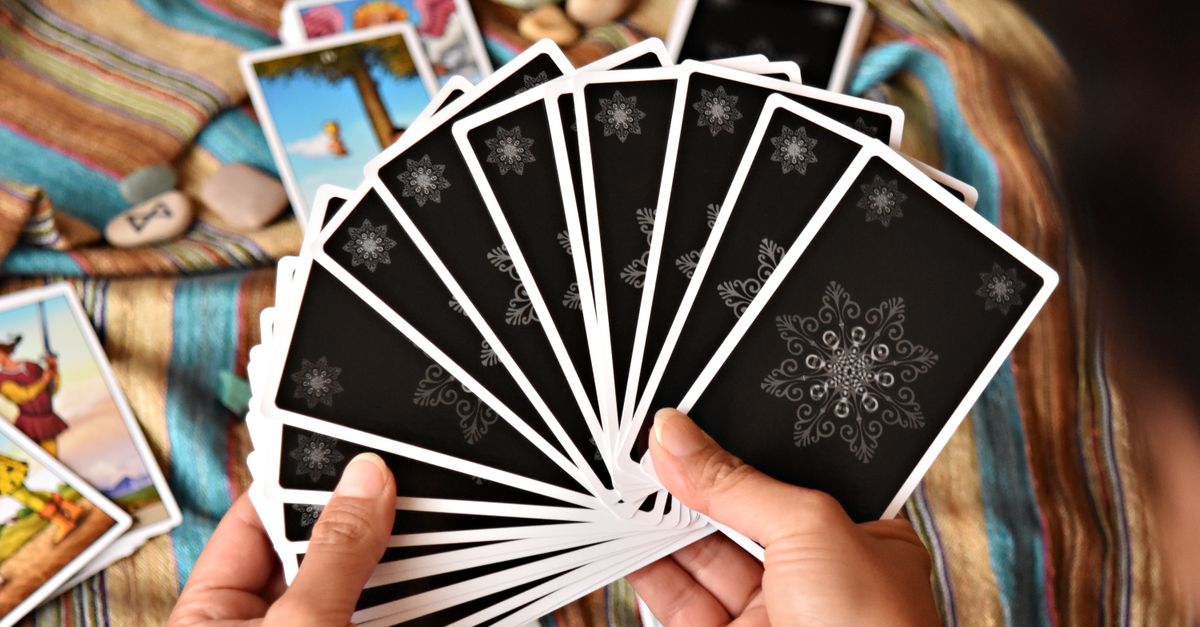
How a Free Hindi Tarot Reading Online Works in the Browser
Many Hindi-language tarot pages online promise a "free reading" but quietly ask for a personal question, a relationship detail, or a phone number, and then show you cards pulled from a small hidden list. A genuine free tarot reading online in Hindi should do the opposite: it should accept nothing personal, run the draw locally, and let the reader verify that every draw is reproducible from a documented seed. The Tarot Card Reading tool fits that description because it only takes a seed, computes SHA-256 digests with the browser's SubtleCrypto.digest API, and renders three cards in a fixed order without fetching any image, cookie, or prediction service.
For a Hindi-speaking reader who simply wants to sit with a symbolic prompt, that practical scope is a benefit. The cards shown are upright only, so the reader does not have to mentally translate reversed meanings, and the prompts are written as conditional reflections rather than as fixed outcomes. The tool's stated boundary is also honest: it is for entertainment and self-reflection only, and it is not medical, mental-health, legal, financial, safety, crisis, or other professional advice.
The 78-Card Catalogue Behind the Draw
A common shortcut in free online tarot tools is to skip the Minor Arcana and draw only from the 22 Major Arcana, then dress the result up as a "general" reading. The Tarot Card Reading tool documents its scope plainly: it uses a complete 78-card catalogue with 22 Major Arcana cards (0 through 21) plus 56 Minor Arcana cards distributed across four suits.
| Group | Count | Composition |
|---|---|---|
| Major Arcana | 22 | Numbered 0 through 21, including The Fool and The World |
| Wands (Ace, 2-10, Page, Knight, Queen, King) | 14 | One ace, nine pip cards, four court cards |
| Cups (Ace, 2-10, Page, Knight, Queen, King) | 14 | One ace, nine pip cards, four court cards |
| Swords (Ace, 2-10, Page, Knight, Queen, King) | 14 | One ace, nine pip cards, four court cards |
| Pentacles (Ace, 2-10, Page, Knight, Queen, King) | 14 | One ace, nine pip cards, four court cards |
| Total | 78 | 22 Major + 4 × 14 Minor |
The canonical order is fixed: Major Arcana 0 through 21, then Wands, Cups, Swords, and Pentacles. Each Minor suit begins with the Ace, continues Two through Ten, and ends with Page, Knight, Queen, and King. Because every card has a unique ID and title drawn from a documented list, the tool can prove that the 22-plus-56 split holds and that no card is repeated in a single draw.
Run a Tarot Reading Online in Hindi: A Three-Card Walkthrough
For a Hindi-speaking reader who wants to sit with a Past, Present, and Future reflection, the workflow takes only a few deliberate steps. The whole sequence runs in the current tab and produces a reproducible draw.
- Open the Tarot Card Reading tool and decide whether to type a short, non-sensitive reproducible seed (such as a single Hindi or Devanagari word you can remember) or to generate a local 128-bit hexadecimal seed with the in-page button backed by Web Crypto.
- Confirm the seed in the input field. The browser will normalize it by applying Unicode NFKC, trimming surrounding space, collapsing repeated Unicode whitespace to one ASCII space, and lowercasing the result, so equivalent forms of the same seed reproduce the same three cards.
- Choose Prepare reading. The tool will compute SHA-256 over the UTF-8 string "tarot-v1", a NUL separator, the normalized seed, another NUL separator, and each canonical card ID, sort the 78 digest byte strings lexically with the canonical index as a tie-break, and select the first three unique cards for Past, Present, and Future.
- Reveal the Past card first. The face-down panel flips and shows its position, title, suit or arcana, the conditional reflection sentence for Past, and the card's themes. Keyboard focus moves to the newly visible card so screen-reader users follow the reveal.
- Reveal the Present card next, then the Future card. Unrevealed card titles, IDs, suits, ranks, and themes are not rendered into the DOM, so a curious reader cannot peek at the next card by inspecting the page text.
- Read each prompt as a conditional reflection. Past asks how the card's themes shaped what came before; Present asks where those themes are appearing now; Future asks the reader to notice how the themes might develop if current patterns continue, not to expect an event.
- Copy the displayed seed if you want to reproduce the same draw later, or choose Start over to clear the input, the prepared seed, the selected card IDs, the reveal count, the messages, and any errors from the tab state.
How the Same Seed Reproduces the Same Three Cards
Reproducibility is what separates a verifiable tarot reading from a random-looking animation. The Tarot Card Reading tool defines the draw in public-facing prose that a reader can mentally audit. For every card in canonical order, the browser hashes the versioned string "tarot-v1", a NUL separator, the normalized seed, another NUL separator, and the card ID with native SHA-256 (as documented by the NIST FIPS 180-4 Secure Hash Standard and the MDN SubtleCrypto.digest reference). The 78 resulting digest byte strings are sorted ascending; if two digests are byte-equal (which is not realistically possible), the canonical index breaks the tie. The first three ranked cards become Past, Present, and Future.
Because the tool ranks every canonical card exactly once, the three chosen cards are guaranteed to be unique within a single draw. Because the seed is normalized before hashing, equivalent seeds (same word in lower case, trimmed, NFKC-normalized Devanagari form) reproduce the same draw. If a reader enters "Om" today and "om " tomorrow, both inputs collapse to the same normalized seed and produce the same three cards in the same order.
Reading the Past, Present, and Future Prompts
The three positions are not predictions, and the tool's own product contract describes the spread as a reflection rather than a guarantee. That phrasing matters for a Hindi-language reader who has likely encountered apps and videos that promise the cards will "tell your future" or "reveal what your ex is thinking." The Tarot Card Reading tool deliberately avoids that tone in three places:
| Position | What the prompt asks | What the prompt avoids |
|---|---|---|
| Past | How the card's themes shaped what came before | A fixed story about a specific past event |
| Present | Where those themes may be appearing now | A diagnosis of the reader's current situation |
| Future | How the themes might develop if current patterns continue | A claim that something will happen, is guaranteed, or is fixed by fate |
Each revealed panel shows the position label, the arcana or suit and rank, the title, the conditional reflection sentence, and the themes. The card-specific theme phrases are short, original summaries informed by A. E. Waite's public-domain text rather than long quoted passages, so the reading stays light and easy to translate mentally into Hindi phrasing for personal journaling. If you want a deeper lookup after the draw, the Tarot Card Meanings page lets you filter the same upright catalogue without drawing or submitting a question.
Privacy, Inputs, and What the Tool Does Not Do
The only input the tool accepts is a seed. It does not ask for a personal question, a name, a birth date, a relationship detail, an email address, or an account. A secure random or SHA-256 API failure produces an explicit error rather than a weak random fallback, so the reader is never silently downgraded to a less verifiable draw. The widget makes no fetch request and does not use cookies, localStorage, sessionStorage, IndexedDB, analytics, remote images, model calls, or third-party reading services. The seed and the three selected cards stay in the current tab only, which is why Start over clears the tab state without needing a logout.
Two honest limits are worth noting. The tool prevents accidental disclosure of unrevealed cards by keeping them out of the rendered DOM, ARIA labels, data attributes, class names, and inline styles, but it cannot stop a determined user from inspecting the client bundle or React memory in a browser dev tools panel. And the page states plainly that the reading is for entertainment and self-reflection only and is not a substitute for professional advice in any medical, mental-health, legal, financial, safety, or crisis context. Those limits are part of why the spread can be trusted as a starting point for personal reflection rather than as a verdict.
If you're weighing options, Verify Celtic Cross Tarot Spread Positions Correctly covers this in detail.