A situation-challenge-outcome rune spread is a modern three-position reflection framework, not a documented universal method of ancient rune divination.
In this framing, the first rune represents the present situation, the second highlights a challenge or unresolved tension, and the third invites consideration of a possible outcome. These positions are useful prompts for organizing thought, but they do not establish what will happen. The Elder Futhark was a historical writing system rather than one universal fortune-telling manual, and modern rune layouts differ considerably.
There is also an important distinction within Lizely’s product: Rune Reading does not present a built-in Situation–Challenge–Outcome layout. Its verified positions are Notice, Question, and Small step. You can use those prompts as a personal bridge to the situation-challenge-outcome framework, but the tool does not rename them, assign fixed spiritual meanings, or predict an outcome.
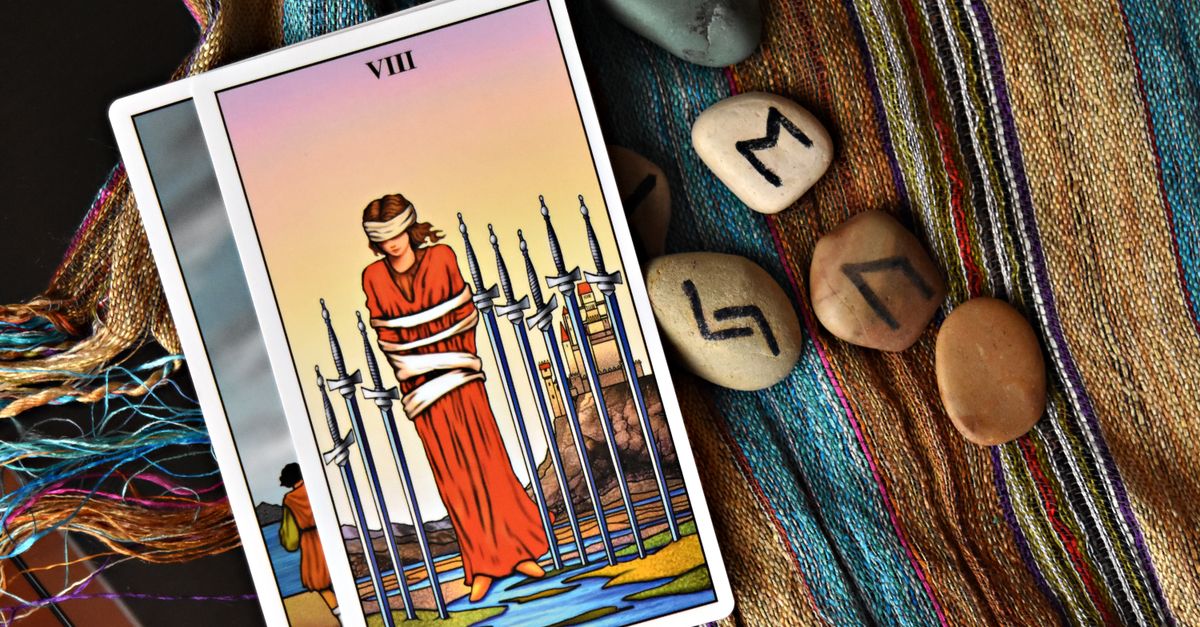
The three positions and their limits
The situation-challenge-outcome framework works best when each position answers a different kind of question. The table below shows a practical way to frame the spread while identifying the corresponding prompt in Lizely’s actual three-rune reading.
| Position | Reflection question | Responsible outcome | Closest Lizely prompt |
|---|---|---|---|
| Situation | What context or pattern is already visible? | A description of what you can observe, not a hidden cause | Notice |
| Challenge | What tension, obstacle, or uncertainty needs attention? | An open issue to explore, not a diagnosis or prediction | Question |
| Outcome | What possible direction could fit the present pattern? | A possibility to consider, not a promised result | Small step |
The final column is a reader-created correspondence, not a conversion setting inside the tool. Lizely’s cards retain their own labels and prompts. In particular, “Small step” is narrower than a full prediction: it asks for a small, reversible possibility rather than a guaranteed future event.
How to run a situation-challenge-outcome reflection
The following workflow answers the keyword’s practical request while keeping the tool’s supported behavior intact. Write your situation, challenge, and outcome framing separately; Rune Reading does not accept or store a submitted question.
- Define the three parts in your own notes. Write one sentence beginning with “The situation is…,” one beginning with “The challenge seems to be…,” and one beginning with “The outcome or possibility I want to explore is….” Keep the outcome tentative. Instead of deciding that an event will occur, describe the direction or result you would like to examine.
- Choose Draw three runes. In Rune Reading, this creates a local, no-replacement shuffle of the shared 24-entry Elder Futhark catalogue. The first three shuffled entries become Notice, Question, and Small step. Because selection is without replacement, one rune cannot appear twice in the same reading.
- Use Notice for the situation. Read the card’s historical identity fields and reconstructed literal gloss before considering its prompt. Notice asks what detail the word-image brings to attention. Write down one concrete feature of your situation that the detail helps you notice. Do not treat the gloss as a fixed code that must represent one situation.
- Use Question for the challenge. The Question prompt asks you to phrase an open question inspired by the word-image. Turn that prompt into a question about the tension you wrote earlier. “What makes this decision unclear?” is more suitable than “Will this work?” because the former supports reflection while the latter asks the tool to predict.
- Use Small step for the outcome. Read the third card’s identity and gloss, then name one small, reversible possibility connected with the outcome you are exploring. Keep it proportionate to what you can actually do or investigate. The tool’s prompt does not assign your decision or tell you that a particular action is correct.
- Compare the three notes without forcing a combined meaning. Look for a relationship between the situation you named, the question you formulated, and the small possibility you recorded. The connection should remain an interpretation you can explain, not an outcome presented as a discovered fact.
- Redraw only if you want a different entertainment arrangement. Choosing Draw three runes again creates a new independent shuffle. Closing or refreshing the page discards the displayed cards, so keep your own notes separately if you want to retain your reflections.
What the Rune Reading actually provides
The product combines two clearly separated layers. The historical layer comes from the same source-checked 24-entry Elder Futhark catalogue used by Lizely’s reference material. Each card can display the rune character, Unicode code point, common name, transliteration, position within its conventional group, reconstructed literal gloss, and any relevant uncertainty note.
The interaction layer belongs to the Rune Reading product. The random order, the three displayed positions, and the Notice, Question, and Small step prompts are modern rules authored by Lizely. They are not presented as instructions recovered from an ancient casting manual.
The catalogue itself is imported directly rather than copied into a second table. That boundary helps keep historical identity data in one maintained location, so a correction to a name, transliteration, gloss, or uncertainty note does not require rewriting an independent entertainment list. The rune information remains historical reference material even when it appears in a randomized draw.
The result is therefore a three-rune entertainment and self-reflection activity. It does not disclose hidden facts, read anyone else’s mind, establish supernatural causes, or claim that one card has a permanent spiritual meaning.
How to read the cards without inventing certainty
Each reconstructed literal gloss can function as a metaphorical word-image. For example, a gloss related to movement might prompt attention to change, while one related to shelter might prompt attention to protection or retreat. Those are reflection possibilities, not automatic interpretations or historical instructions. The tool deliberately avoids assigning a permanent meaning to every rune.
Uncertainty also remains visible. If the catalogue marks a name, sound, or gloss as disputed, the uncertainty note stays attached to that historical field. Do not erase the qualification when copying the gloss into your notes. Reconstructed rune forms and meanings are labeled as reconstructions rather than direct transcriptions from one ancient source.
Educational references such as Penn State’s overview of runic alphabets and the Viking Ship Museum’s material on runes can help place runes within their historical and educational context. Those references do not establish the modern situation-challenge-outcome layout as an ancient practice.
Rune-reading traditions also vary in their positions, symbolic associations, treatment of blank runes, reversal rules, and interpretive language. This tool does not add a blank rune, rotate cards into reversed positions, or claim that its three labels are ancient. A reversed-rune lesson therefore cannot be applied to a reading that has no reversed positions.
Why each draw contains three distinct runes and stays local and temporary
The selection process uses a complete Fisher-Yates shuffle without replacement within each draw. The browser’s Web Crypto random-number generator supplies 23 unsigned 32-bit values for a complete Fisher-Yates shuffle of the 24 catalogue entries. The first three shuffled entries are assigned to Notice, Question, and Small step. A full shuffle without replacement ensures that all three runes are unique.
If secure browser randomness is unavailable, the tool reports an error. It does not silently switch to Math.random or send a server request for a substitute result. This limitation prevents a failed secure-randomness check from being disguised as a completed draw.
The draw remains local to the browser. It is not stored, uploaded, connected to an account, or sent to an outside service, and the page performs no server processing for the reading. The tool also remains available offline after its page assets have loaded. Redrawing creates a fresh independent arrangement, while refreshing or closing the page removes the displayed result.
Turn an outcome prompt into grounded reflection
The most useful “outcome” question creates room to examine the situation rather than demanding a yes-or-no answer. These examples are prompts you can write for yourself; they are not questions submitted to the tool:
- Replace “Will this happen?” with “What part of the present pattern can I describe accurately?”
- Replace “What does this mean?” with “What open question does this word-image help me phrase?”
- Replace “What will the result be?” with “What small, reversible possibility fits the pattern I can see?”
Do not turn a positive-looking card into a guarantee, invert a difficult-looking card as though it were reversed, or combine the runes into one supposedly fixed interpretation. Their value is in giving you three distinct prompts: notice a detail, formulate a question, and consider a modest possibility.
Because the reading is not stored, any lasting record must be made by you. It also remains entertainment and self-reflection rather than professional guidance. It does not provide medical, mental-health, legal, financial, safety, relationship, employment, or crisis advice, nor does it tell you which decision to make.
A simple final review
Before setting the cards aside, check that you have described the situation, written an open question about the challenge, and recorded one possible direction without presenting it as inevitable. Also check that you kept any uncertainty note attached to the historical information and treated the reconstructed gloss as an optional word-image.
Used in that way, a situation-challenge-outcome rune spread is a structured reflection exercise rather than a forecast. The three-rune draw supplies varied prompts, while the interpretation remains a personal and revisable response to those prompts.
For a deeper look, see How Is a Ten-Card Celtic Cross Spread Made Reproducible?.
For a deeper look, see What Is the Best Way to Calculate Challenge Numbers?.