The Chinese Lucky Numbers analyzer inspects the digits 8, 9, and 4 in any red envelope amount you are considering and reports their counts and 1-based positions in the retained digit sequence, with no luck score, prediction, or recommendation attached. A red envelope (红包, hóngbāo) is a gift of money given at Lunar New Year, weddings, birthdays, and other milestones, and the digit content of the amount carries cultural associations that vary by language, region, dialect, community, generation, and personal practice. The tool is a narrow cultural reference: it tracks the three digits most widely discussed in Chinese number customs and labels every other digit as neutral or unclassified within this product. It does not produce a luck score, rank amounts, recommend a payment, predict an outcome, or read the meaning of any combination. If you paste 888 into the field, the result is three 8s at positions 1, 2, and 3; the cultural interpretation of that count is left to you and the customs you and your recipient share.
Why Red Envelope Digits Carry Cultural Weight
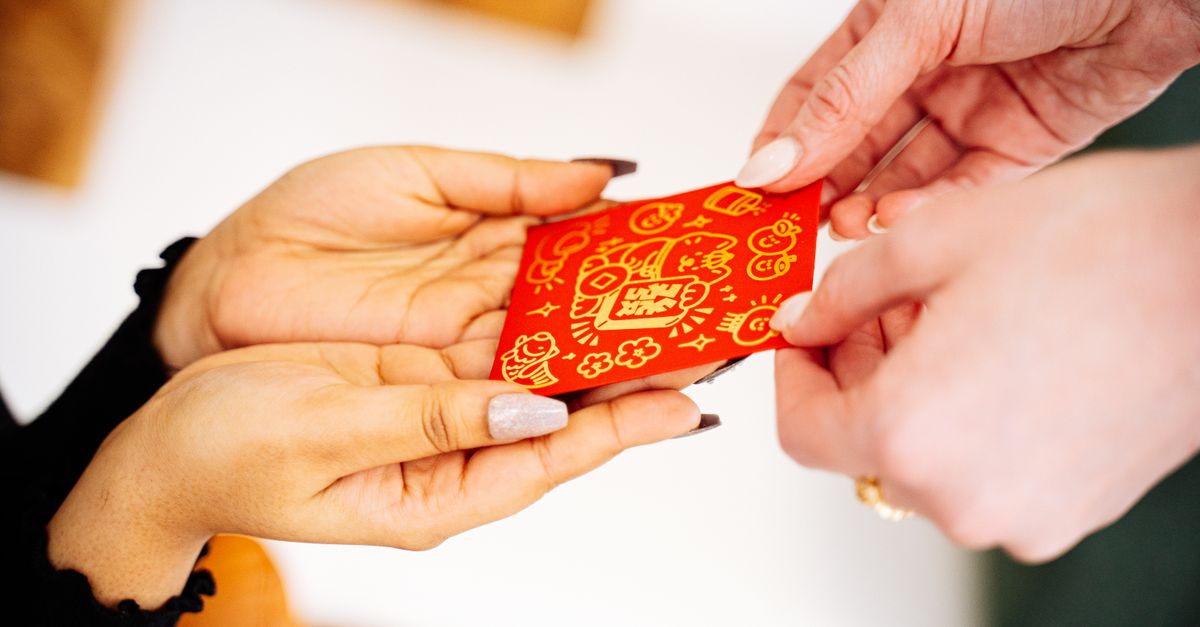
A red envelope is given to mark a moment: Lunar New Year, a wedding, the birth of a child, a graduation, a milestone birthday. The gesture is the envelope and the money inside, and the digits of the amount, in much of Chinese-speaking culture, are part of the message. People choose 88 because the doubled 8 echoes a word connected with becoming prosperous, 99 because the doubled 9 echoes a word connected with something long-lasting, and they tend to avoid amounts that lean heavily on 4 because of its sound resemblance to a word for death. None of this is physics. The associations come from pronunciation, and pronunciation varies by dialect, by region, by community, and by generation, as documented by the U.S. Commerce Office in China on Chinese Number Culture and a Carnegie Mellon overview of China in Everyday Life. The red envelope amount is also a social signal: it can express closeness, respect, congratulations, or a joke, and the digits are one layer of that signal. The analyzer treats these customs as cultural information to be inspected, not as rules to be enforced.
The Three Digits the Analyzer Tracks
The tool deliberately limits its scope to three digits and treats every other digit as neutral or unclassified within this product. The three reference cards that appear above the input say, in cautious language, what each digit is associated with.
| Digit | Cultural association | Why it is discussed |
|---|---|---|
| 8 | Prosperity, wealth | The pronunciation of bā can resemble words connected with becoming prosperous |
| 9 | Longevity, something long-lasting | The pronunciation of jiǔ can resemble words tied to duration; nine is also the highest single digit |
| 4 | Commonly avoided | The pronunciation of sì can resemble sǐ, the word for death |
The wording is associated and commonly avoided rather than "universally lucky" or "universally unlucky," because practice varies. The digits 0, 1, 2, 3, 5, 6, and 7 are grouped as neutral in this tool. Neutral means the tool has not classified them under the three source-backed claims; it does not mean a culture has no possible association for those digits, and it does not mean the tool endorses or rejects an amount that contains them. Limiting the scope keeps the analyzer from pretending to be a complete cultural authority.
A companion guide on what 8, 9, and 4 really mean walks through the same three digits in more detail for readers who want to see the sound relationships spelled out.
How to Inspect a Red Envelope Amount for 8, 9, and 4
Open the Chinese Lucky Numbers analyzer and follow these steps.
- Read the three reference cards above the input field. They describe the cultural associations for 8, 9, and 4 and the note that language, region, and personal practice vary.
- Type or paste the red envelope amount you are considering into the input field. The amount can include digits, separators such as spaces or commas, or surrounding text like a year, but the field is capped at 64 Unicode code points and must contain at least one digit after normalization, or the tool returns an error rather than a fabricated interpretation.
- If you typed digits in fullwidth form (for example, 888 copied from a Chinese-language source), the analyzer normalizes them to ordinary ASCII digits automatically before counting.
- Choose Analyze digits. The result panel shows three cards: one for 8, one for 9, and one for 4. Each card lists the count of that digit in your string and the 1-based positions it occupies in the retained digit sequence, with all other characters stripped out.
- Read the counts and positions. A report such as "two 8s at positions 2 and 4" is a literal observation about the string you entered; it is not a luck score.
- Choose Clear when you want to remove the input and the result. Clear is a local reset only and does not affect any other tab.
All counting happens in current-tab memory. The widget makes no fetch call, upload, analytics request, localStorage write, sessionStorage write, or account requirement. Still, anyone who can see or control the device can view the current field, so avoid pasting account identifiers or other sensitive numbers into the analyzer.
Common Red Envelope Amounts and Their Associations
People use a small set of amounts so often that the choices are familiar across many regions. The table below lists amounts commonly seen in red envelopes alongside the cultural association each amount is typically used to express; it does not list tool counts because those depend on the exact string you enter and are reported by the analyzer when you paste the amount in.
| Amount | Typical association | Where it is usually given |
|---|---|---|
| 66 | Smooth journey (liù liù) | Housewarming, new job, casual Lunar New Year |
| 88 | Prosperity, wealth (bā bā) | Lunar New Year, business opening, general congratulations |
| 99 | Longevity, something long-lasting (jiǔ jiǔ) | Birthday, anniversary, elder relatives |
| 168 | "Road to wealth" combined sound | Business milestones, Lunar New Year for close family |
| 188 | Long-running prosperity | Wedding, engagement, Lunar New Year |
| 288 | Doubled prosperity | Wedding, milestone celebration |
| 520 | "I love you" (wǒ ài nǐ) | Romantic partner, Valentine's Day |
| 666 | "Everything smooth" (liù liù liù) | Casual congratulations, online gifting |
| 1314 | "Forever" (yī shēng yī shì) | Engagement, wedding, anniversary |
| 9999 | Long-lasting, multiplied longevity | Major milestones, elders |
Any of these amounts can be pasted into the analyzer to see how many 8s, 9s, and 4s appear in the string and at which retained positions, with all other digits treated as neutral or unclassified within this tool.
A Worked Example: Reading the Tool Output for 1888
Suppose you are considering 1888 for a wedding red envelope and want to see what the analyzer reports.
Step 1: Normalize and retain digits. Any fullwidth or punctuation form is stripped; only digits are kept. Starting from 1888, the retained digit sequence is 1, 8, 8, 8.
Step 2: Assign 1-based positions. Position 1 is the 1, position 2 is the first 8, position 3 is the second 8, and position 4 is the third 8.
Step 3: Count each tracked digit. The result panel reports 8: count 3, positions 2, 3, and 4. The card for 9 reports count 0. The card for 4 reports count 0. The digit 1 is grouped as neutral or unclassified within this tool.
Step 4: Read the output as information, not advice. A count of three 8s is a literal observation about the string you entered; the tool does not state that three 8s will produce a better outcome than two 8s, recommend a premium for the doubled digit, or predict what will happen when the envelope is opened. The cultural reading is yours, informed by the reference cards and the customs shared with your recipient.
What This Analyzer Does Not Do
The product is intentionally narrow, and the limits are part of how it stays honest.
- It does not produce a combined luck score. Counts are reported per digit, never summed into a single number.
- It does not rank phone numbers, addresses, prices, account identifiers, vehicle plates, dates, or business names. The cultural reference is the same regardless of context, but the analyzer does not adjust its output by context.
- It does not recommend a purchase, suggest paying a premium, or advise that one amount is better than another.
- It does not predict an outcome or claim that repeated digits will change wealth, health, safety, relationships, or lifespan.
- It does not classify digits outside the three reference cards. 0, 1, 2, 3, 5, 6, and 7 are reported as neutral, not as "good" or "bad."
- It does not persist input, log the string to a server, or require an account. Counting happens in current-tab memory.
For readers who want to inspect a red envelope amount before sending it, the analyzer is a quick way to see what the string actually contains and to start the conversation about amount from a shared factual baseline.
If you're weighing options, Chinese Zodiac by Year on iPhone: Find Your Animal covers this in detail.