Chinese lucky numbers are a set of language-based customs, not physical properties of digits, that connect three widely reported Mandarin sound associations: digit 8 with prosperity or wealth because its pronunciation can resemble words connected with becoming prosperous, digit 9 with longevity or something long-lasting through the sound relationship between jiǔ words, and digit 4 with death because sì can sound similar to sǐ, the word for death. These three associations are the most frequently cited in Chinese cultural writing and form the entire reference scope of the Chinese Lucky Numbers analyzer, which counts those digits in any user-supplied string and shows their retained-sequence positions without producing a luck score, ranking, or prediction. The digits 0, 1, 2, 3, 5, 6, and 7 are deliberately treated as neutral by this tool because it limits itself to three source-bounded claims rather than pretending to be a complete cultural authority.
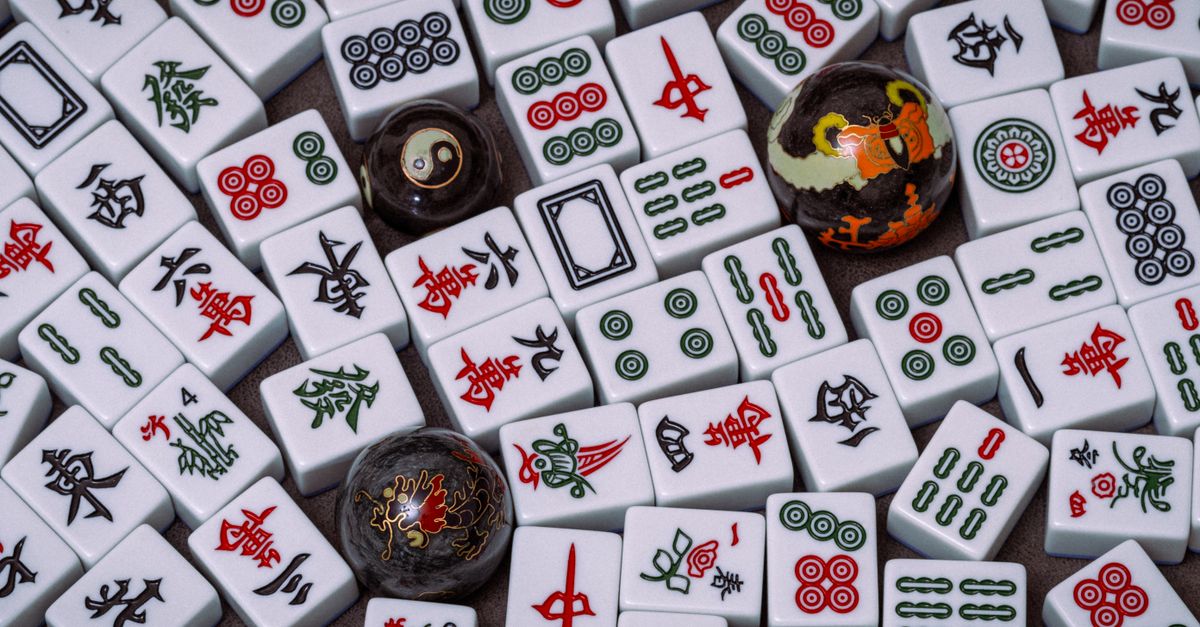
The Three Cultural Number Associations (8, 9, and 4)
Chinese number symbolism is rooted in homophony. When a digit sounds like a word that already carries a positive or negative meaning in Mandarin or another Sinitic language, the digit inherits that meaning in everyday speech, marketing, gift-giving, and address selection. The three associations most often repeated in cultural writing are summarized below.
| Digit | Reported association | Source-bounded wording | Typical use |
|---|---|---|---|
| 8 | Prosperity or wealth (bā sounds like 发 fā) | Often associated with becoming prosperous | Phone numbers, opening dates, prices, addresses |
| 9 | Longevity or something long-lasting (jiǔ) | Often associated with long-lasting or eternal | Gift quantities, festival greetings, anniversaries |
| 4 | Death (sì sounds like sǐ) | Commonly avoided in some contexts | Building floors, phone suffixes, gift quantities |
The Chinese Lucky Numbers analyzer draws these three reference cards directly from sources that document Chinese number pronunciation and belief, including the Malaysian Management Journal paper on number beliefs and pronunciation and the Carnegie Mellon "China in Everyday Life" reading set, which together ground the cautious wording used by the tool. A digit labeled associated is not declared universally lucky or unlucky; the strength of any single association depends on the speaker's language, dialect, region, generation, and the context in which the digit appears.
Why Practice and Language Change These Associations
Customs about numbers vary far more than a single list can capture. A Cantonese speaker, a Hakka speaker, a Mandarin speaker, and a Hokkien speaker can each hear different homophones for the same Arabic digit, and a custom that feels obvious in one community can be neutral or reversed in another. Generational change also matters: younger urban residents in some large cities treat number symbolism as a marketing flourish rather than a serious guide, while small-business owners in other regions still weigh it when picking a phone suffix or a store opening date.
That variability is why the analyzer uses cautious wording such as associated for 8 and 9 and commonly avoided for 4. The same caution applies to combinations: a string with many 8s is not declared better than a string with many 4s, because the tool refuses to combine its counts into a score, ranking, or recommendation. A person or business may ignore the custom entirely, emphasize a different number, or interpret the same combination differently, and the tool deliberately stays out of that decision.
Readers exploring other Chinese cultural frameworks sometimes pair number symbolism with the animal cycle used in the Chinese zodiac; the Chinese zodiac year chart maps a Gregorian birth year to the conventional 12-animal cycle and is a useful complement for anyone collecting cultural context, even though the two systems are unrelated in origin.
Counting 8, 9, and 4 in Any Number String
The analyzer accepts a short string of up to 64 Unicode code points containing at least one digit. The full pipeline is intentionally narrow so that every reported number can be trusted.
- Review the three source-bounded cultural associations and the note that language, region, and personal practice vary. Confirm that 8, 9, and 4 are the only digits the tool classifies.
- Type or paste up to 64 characters into the input field. Surrounding text, punctuation, dashes, spaces, and fullwidth digits such as 8 or 9 are accepted because the tool normalizes fullwidth digits 0 through 9 to ordinary ASCII before counting.
- Choose Analyze digits. The tool retains digits only, removes every other character, and records the 1-based position of each retained digit within that digit-only sequence.
- Read the result cards. Each card shows the count and the retained-sequence positions for one digit: the count of 8s, the count of 9s, and the count of 4s. For example, entering 8498 produces 8 at positions 1 and 4, 9 at position 3, and 4 at position 2.
- Treat every other digit, namely 0, 1, 2, 3, 5, 6, and 7, as neutral or unclassified by this tool. The label neutral means the analyzer has not classified it under the three source-backed claims, not that no cultural association exists for that digit anywhere.
- Choose Clear to remove the entered string and the result from the current tab before starting a new check.
Strings without any digit, or strings longer than 64 code points, are rejected with an error rather than producing a fabricated interpretation, so a missing or empty count always reflects the input rather than a hidden calculation.
What the Analyzer Reports and What It Does Not
The output is intentionally small. It returns three separate counts and three separate position lists, one each for 8, 9, and 4. There is no combined luck score, no ranking among phone numbers, addresses, prices, account identifiers, vehicle plates, dates, or business names, and no advice about paying a premium, choosing one option over another, or expecting a particular outcome. The tool does not state that repeated digits will change wealth, health, safety, relationships, or lifespan, because those claims fall outside the three source-bounded references the page is built on.
Two examples clarify the boundary. A count of two 8s in a phone-suffix candidate is reported as two 8s at positions 1 and 4 of the retained digit sequence, with no comment on whether that makes the suffix good. A count of one 4 in an address number is reported as one 4 at position 2, with no comment on whether the address should be avoided. The work of weighing those counts, blending them with personal preference, or ignoring them entirely stays with the reader.
Because the tool never combines its counts into a single number, two strings with identical counts of 8, 9, and 4 receive those same counts, but their retained-sequence positions still depend on where those digits appear in the retained sequence. The neutral labeling of every other digit does not change with rearrangement, which keeps the output honest about what was actually counted.
Input Rules, Limits, and Privacy
The analyzer keeps the entire processing chain inside the current tab. Input is limited to 64 Unicode code points and must contain at least one digit after normalization, so a string of pure letters is rejected rather than silently zeroed. Fullwidth digits 0 through 9 are mapped to their ASCII equivalents before any counting happens, and every non-digit character is dropped from the retained sequence used for position numbering, which is why positions are 1-based within digits only and not within the original character count.
No fetch call, upload, analytics request, localStorage write, sessionStorage write, or account login is involved, and the tool neither needs nor validates a real phone number, address, card number, or account identifier. Even so, anyone who can see or control the device can view the current field, so users should avoid pasting sensitive identifiers into any web form. Resetting the input with Clear wipes both the entered string and the displayed result from current-tab memory, leaving nothing behind for the next visitor to recover.
The interface keeps the three reference cards visible above the analyzer so the cultural wording can be read alongside every count, native controls stay at or above a 44-pixel touch target, and result cards stack vertically on narrow screens so phone, tablet, and desktop visitors all see the same counts and positions without horizontal scrolling.
Related reading: Chinese Zodiac Compatibility for Dog: Trine and Opposition.