A natal Saturn retrograde refers to the configuration in which Saturn is moving in apparent backward geocentric longitude at the documented moment of birth, identified by checking whether the planet's apparent tropical longitude is decreasing across the birth instant rather than advancing in the usual direct order. The reading is geocentric, meaning the observer origin is the center of Earth, and the apparent-motion label depends on the rate of change of longitude at that exact instant. Any interpretation rests on first locating where Saturn sat in the zodiac at the birth moment. The Saturn Sign Calculator handles that foundational step by reporting Saturn's apparent geocentric tropical longitude, the 30-degree sector containing that longitude, the degree within that sector, and the normalized calculation instant used to derive the figure, all calculated locally in the browser without uploading the input data.
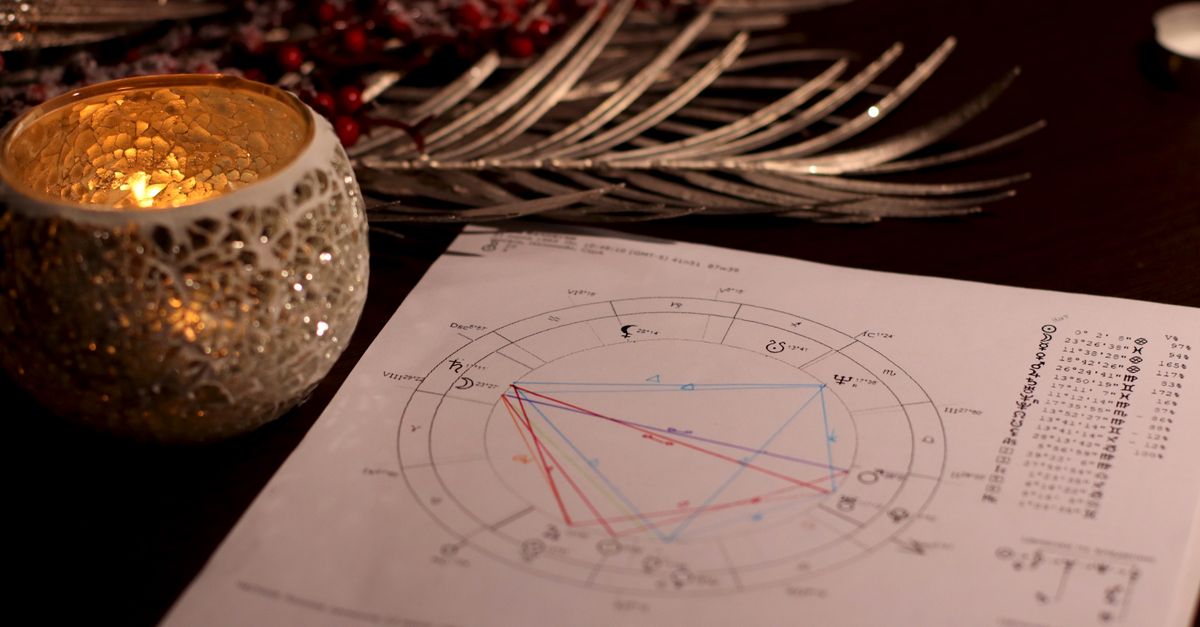
What Natal Saturn Retrograde Symbolizes in a Birth Chart
In popular Western astrology, a natal Saturn retrograde is read as an inward-turning of Saturn's themes: structure, discipline, time, accountability, and authority. Rather than expressing these patterns outward through visible roles and rules, the configuration is framed as a life-long review of how the native builds, maintains, and questions those structures. The interpretive tradition treats the sign position as the carrier of those themes, because the sign determines the cultural sector into which the retrograde motion falls. Two charts with Saturn retrograde in different signs will be described very differently in a reading, even though both share the retrograde label. The calculator's job is to surface that sign position precisely, so the rest of the interpretation has a fixed anchor.
The retrograde label itself is a motion label, not a sign label. Saturn appears to move backward when Earth, on its faster track, overtakes it on the inside orbit, which produces a temporary reversal of the planet's longitude drift in the geocentric frame. The motion label is independent of which tropical sector Saturn occupies at the moment. This is why a tool that reports only the sign and longitude still helps the retrograde-meaning question: it isolates the sector so a separate motion check can determine the direct or retrograde status for the same instant.
Why the Saturn Sign Comes First
Before any retrograde interpretation can land, the chart reader needs to know where Saturn was, not only whether it was moving backward. The sign sector pins the configuration to a thirty-degree slice of the ecliptic, which Western astrology treats as a cultural grouping rather than a physical constellation boundary. Tropical labels divide 360° into twelve equal half-open sectors beginning with Aries at 0°, so each sector spans 30° and excludes its upper edge. That convention makes the sign a numerical outcome of the longitude: a Saturn at 213.45° longitude falls into the sector beginning at 210°, which is Scorpio, and sits 3.45° into that sector. The whole sign decision is a single arithmetic step from the longitude.
The Saturn Sign Calculator does that arithmetic for the visitor and prints the sector, longitude, degree within sector, and the normalized calculation instant used for the lookup. Visitors who want the retrograde label can take the same instant and check apparent longitude motion at that moment, which is exactly the workflow the calculator supports when paired with a related retrograde tool on the site.
How to Calculate Your Natal Saturn Sign
The Saturn Sign Calculator is built for a documented birth moment and runs entirely offline once the page is loaded. To get a usable natal Saturn sign, follow these steps.
- Enter the local date of birth using the documented Gregorian calendar date for that place and time. The calculator rejects impossible Gregorian dates before any astronomy runs.
- Enter the local clock time of birth. The clock alone is not yet an instant, so the next input carries the rest of the work.
- Enter the documented UTC offset that applied to that place on that date, written with sign and hours and minutes, such as +00:00, -05:00, or +05:30. The form accepts signed offsets from -12:00 through +14:00, including non-whole-hour values, and rejects malformed entries.
- Calculate to see Saturn's tropical sector, the apparent geocentric longitude in degrees, the degree within sector, and the normalized calculation instant. If the result is within five hundredths of a degree of a sector boundary, the calculator shows a boundary warning in addition to the label.
Try the workflow on the Saturn Sign Calculator with a documented birth moment. No geographic latitude, longitude, elevation, GPS, or IP-based location is requested, because geocentric longitudes do not need a place. The browser opens no runtime network socket during the calculation, and the entire ephemeris computation runs locally against the pinned Astronomy Engine 2.1.19 adapter.
Reading the Calculator Output
The output is intentionally narrow. The calculator prints four pieces of information: the tropical sector label, the apparent geocentric longitude in degrees, the degree within sector, and the normalized calculation instant the ephemeris actually used. Each one has a specific use for the visitor who wants to ground a reading or sanity-check a chart wheel.
| Tropical sector label | Sector start (° ecliptic longitude) | End (exclusive, °) |
|---|---|---|
| Aries | 0 | 30 |
| Taurus | 30 | 60 |
| Gemini | 60 | 90 |
| Cancer | 90 | 120 |
| Leo | 120 | 150 |
| Virgo | 150 | 180 |
| Libra | 180 | 210 |
| Scorpio | 210 | 240 |
| Sagittarius | 240 | 270 |
| Capricorn | 270 | 300 |
| Aquarius | 300 | 330 |
| Pisces | 330 | 360 |
A worked example: if the calculator reports Saturn's apparent geocentric longitude at 213.45° for the birth instant, divide 213.45° by 30° to get sector index 7 (counting from 0 at Aries). The sector starts at 30° × 7 = 210°, which the table maps to Scorpio. The degree within sector is 213.45° − 210° = 3.45°, so the printed label would read "Scorpio 3.45°". That single calculation is the entire translation from a longitude figure to a tropical sign label.
Boundary Warnings and Accuracy Limits
Near a sector boundary, the printed label is fragile. The calculator warns inside five hundredths of a degree of an edge because a one-minute change in clock time, a different documented offset, or a different ephemeris source can flip the printed label to the adjacent sector. The same warning applies to visitors comparing two calculators that share the same instant. The dual-official evidence gate compares the Astronomy Engine result against external JPL Horizons and IMCCE Miriade expected values, and circular differences larger than five thousandths of a degree fail the gate before the calculator is shipped.
The supported range is UTC years 1700 through 2100. The form refuses normalized instants outside that range, and refuses impossible Gregorian dates, impossible clocks, and malformed offsets. Before modern standard time zones, a local clock may not map cleanly onto a present-day UTC offset; the calculator treats the offset the visitor typed as a proleptic UTC-like estimate for early dates and does not silently reconstruct historical political zone databases or daylight-saving transitions. That limitation matters when a chart reading hinges on a sign flip that occurred in the eighteenth or nineteenth century.
The expected comparison values in the evidence package were authored from NASA JPL Horizons observer quantity 31 as one external oracle, with the production calculator using the offline Astronomy Engine 2.1.19 adapter for the visitor's result. Astronomy Engine is the implementation under test, never the expected-data source, which keeps the comparison honest. Visitors who want a second external reference can cross-check with the IMCCE Miriade ephemcc API, which uses the INPOP theory for an independent ephemeris path.
Where Retrograde Status Fits In
The Saturn Sign Calculator prints the longitude and sector, not the direct-or-retrograde label. To finish the natal Saturn retrograde meaning question, the visitor still needs the apparent longitude motion at that instant. Two options exist for that follow-up: revisit the same instant in a wider retrograde report, or run a dedicated tracker across the surrounding hours. The related Lizely Retrograde Planets Tracker follows the same shared geocentric adapter convention used across the classical-planet fortune tools, so the Saturn entry there can confirm whether the planet was direct, retrograde, or near-stationary at the exact instant the sign was computed. Combining the two outputs gives a single precise sentence such as "natal Saturn at 213.45° in Scorpio, apparent longitude decreasing across the birth instant", which is the kind of factual anchor a serious chart reading can build on without an invented personality verdict.
Visitors who only have a date and no clock should know that an unknown-time approximation will shift the longitude by the planet's motion during the day, and a Saturn near a sign boundary is the configuration most likely to flip under that uncertainty. For deeper reading on what a sign-positioned Saturn retrograde is taken to mean, the guide Is Retrograde Saturn Bad? How to Check Your Own Chart walks through the same tool-based workflow with additional chart-reading context.
For a deeper look, see Does Birth Time Affect Your Venus Sign: A Boundary Check.