A Mercury sign is a Western tropical sector used in popular astrology as a cultural prompt for learning preferences, not a validated learning-style assessment.
That distinction matters because identifying the sign and interpreting it are separate tasks. The calculator performs the astronomical lookup: it resolves a supplied moment, finds Mercury’s longitude, and maps that longitude to a cultural zodiac sector. Any learning-style descriptions come from popular astrological shorthand, not from the calculation. Treat those descriptions as optional prompts for trying study methods rather than as evidence of ability, personality, or a fixed way of learning.
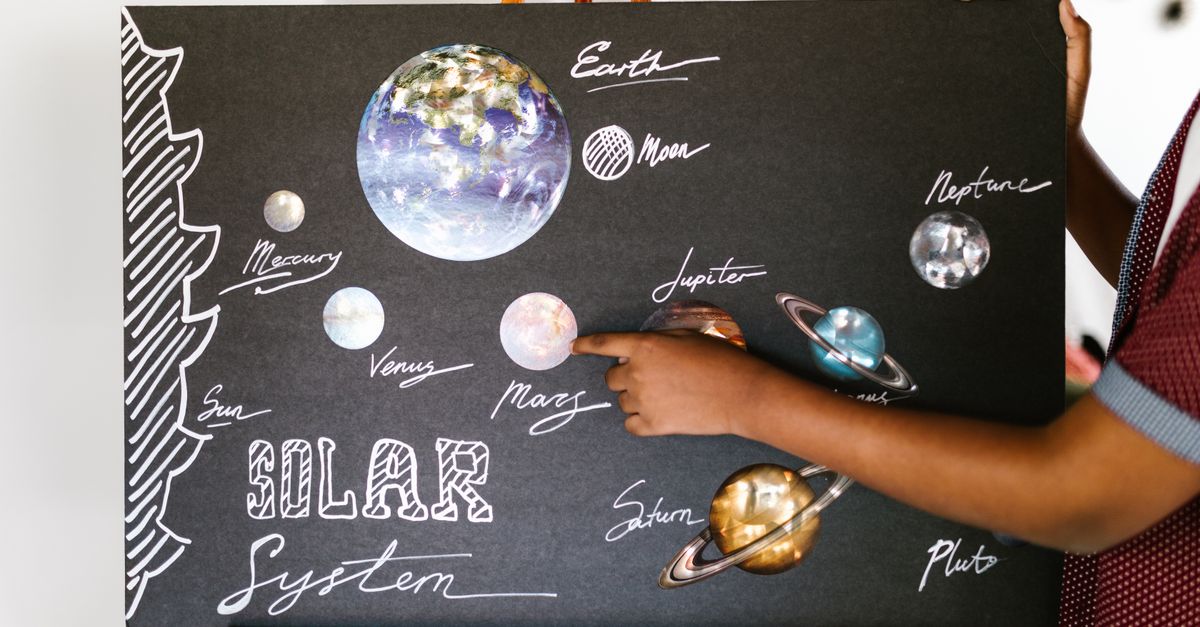
What the Mercury sign label represents
For the supplied date, clock time, and documented offset, the tool resolves one proleptic UTC-like instant. It calculates Mercury’s apparent geocentric true-ecliptic-of-date longitude, normalizes the value from zero up to but not including 360 degrees, and overlays twelve equal half-open sectors of 30 degrees. Aries starts at 0 degrees and Pisces at 330 degrees; each sector includes its starting degree and excludes its ending degree.
That Western tropical overlay is a cultural product convention. It is not the same as the uneven constellation boundaries defined by the International Astronomical Union. The resulting label answers a narrow question: which 30-degree cultural sector contains Mercury at that instant? It does not answer how quickly someone learns, which teaching format they prefer, or what they are capable of doing.
Popular astrology commonly links Mercury with communication, thinking, and learning, which explains the association. The association is outside the product, however. When the goal is a birth-based cultural reading, use the birth moment as the target and treat the sector as one symbolic ingredient rather than a complete chart.
A cultural learning map for the 12 signs
The table translates common astrological shorthand into practical study prompts. These descriptions are cultural interpretations for reflection, not calculator output and not validated learning profiles.
| Mercury sign | Common cultural shorthand | Study prompt to try |
|---|---|---|
| Aries | Quick, direct, action-first | Begin with one short task and use immediate feedback. |
| Taurus | Steady, concrete, repetition-friendly | Build a repeatable review routine with worked examples. |
| Gemini | Curious, verbal, variety-seeking | Explain the idea aloud and compare two versions of it. |
| Cancer | Associative and context-driven | Connect the topic to a familiar situation, then test recall. |
| Leo | Expressive, confident, big-picture | Teach the concept or turn it into a short presentation. |
| Virgo | Detailed, organized, practical | Use a checklist and keep an error log for corrections. |
| Libra | Comparative and collaborative | Compare two viewpoints, then write a balanced summary. |
| Scorpio | Focused, investigative, intensity-seeking | Work in one focused block, then verify the key claims. |
| Sagittarius | Conceptual, expansive, meaning-oriented | Begin with the big picture, then ground it in examples. |
| Capricorn | Goal-focused, structured, persistent | Break the work into milestones and track practice. |
| Aquarius | Systematic, unconventional, independent | Map the system and test an alternative model. |
| Pisces | Imagistic, associative, holistic | Use a visual story, then confirm it with concrete facts. |
These entries describe a proposed approach, not a limit on ability. A cultural Aries reading does not mean someone is incapable of deep study, and a Taurus prompt does not mean repetition is the only effective method. The practical use of the table is to generate options: choose one prompt, apply it to a real learning task, and judge it by whether it improves understanding, retention, or application.
Calculate the sign behind the label
The Mercury Sign Calculator finds the astronomical label for a chosen moment without assigning a personality or learning profile.
- Enter the civil date and time. Supply the local calendar date, clock time, and a documented UTC or UTC-equivalent offset for the target moment. Include the offset explicitly rather than relying on the browser’s current time zone.
- Calculate the position. The calculator resolves the entered fields into one proleptic UTC-like instant and calculates Mercury’s apparent geocentric true-ecliptic-of-date longitude.
- Inspect the complete result. Review the retained local fields, resolved calculation time, normalized longitude, tropical sector, degree within the sector, and any near-boundary warning. The sector is the cultural zodiac label; the other fields make the result easier to audit.
- Recheck the source when a boundary warning appears. A warning is issued within 0.05 degrees of a 30-degree sector edge. Confirm the original date, clock time, and offset, then calculate again. The warning is an uncertainty cue, not a claim that either adjacent sign is more meaningful.
- Preserve the inputs with the result. Keep the entered local date, clock time, and offset together with any saved answer so another calculation can reproduce the same convention.
The sequence matters: establish the instant before assigning the sector, and verify the sector before using its cultural shorthand. Starting with an assumed personality profile and then looking for a sign to match it reverses the auditable process.
Get the time and offset right
A wall-clock time is not a unique instant without an offset, and Mercury can move enough for a time error to matter near a sector edge. Signed offsets from -12:00 through +14:00 are accepted, including half-hour and quarter-hour forms. The tool does not silently use today’s browser time zone because that zone may differ from the convention recorded for an older event.
| Input condition | What it means | Supported response |
|---|---|---|
| No documented offset | The local clock does not identify a unique instant. | Supply a signed UTC or UTC-equivalent offset before calculating. |
| Offset outside -12:00 to +14:00 | The submitted offset is outside the accepted range. | Correct the offset rather than changing the intended moment. |
| Impossible date, invalid clock, or invalid offset | The civil inputs cannot form a valid calculation. | Correct the rejected fields and try again. |
| Historical local mean time | It may not translate cleanly into a modern UTC offset. | Retain the documented convention and treat the result as a proleptic UTC-like estimate. |
| Resolved instant outside 1700 through 2100 | The moment falls outside the calculator’s supported range. | The calculation is rejected; do not interpret it as an empty or missing sign. |
| Position within 0.05 degrees of a 30-degree edge | A small time or offset discrepancy could affect the sector label. | Recheck the source time and offset, then repeat the calculation. |
The calculator does not infer a historical city-zone database behind the scenes. For dates before standardized zones, the result remains tied to the convention entered by the user. Geographic coordinates are unnecessary for this geocentric quantity because the observer origin is Earth’s center; no city, coordinates, or GPS location are required.
Use the label as a study prompt
Once the sign has been calculated, the cultural table is most useful as a menu of experiments rather than as a diagnosis. A reliable routine can follow four steps:
- Define the task. Decide whether you need to understand a concept, remember facts, produce an answer, or demonstrate a skill.
- Choose one method. Select a study prompt from the table, but choose it because it fits the task rather than because it matches the sign.
- Test it on real material. Apply the method during several study sessions and note whether it makes the task clearer or easier to complete.
- Keep what works. Continue, combine, or replace methods according to the result. The sign can start the reflection, but the evidence from your own work should guide the final routine.
This approach keeps the cultural interpretation optional. It also avoids turning a broad zodiac label into claims about intelligence, attention, aptitude, or communication quality. No Mercury sign is produced by the calculator as a learning-style score.
What the calculator does not calculate
The output is a position lookup rather than a complete astrological chart. Its limits are substantive:
- It does not calculate local houses, an Ascendant, aspects, retrograde interpretation, synastry, or a horizon position.
- It does not provide a complete zodiac profile, communication assessment, learning assessment, diagnosis, compatibility result, or prediction.
- It does not convert a cultural sign label into advice about a person’s ability, behavior, or circumstances.
- It does not make the geocentric longitude suitable for horizon or location-specific observation.
A sign and a house are also different kinds of information: the sign is a zodiac sector, while house placement belongs to a fuller chart framework. Mercury Sign vs Mercury House: What Each One Measures explains that distinction further.
Accuracy, privacy, and reproducibility
The offline calculation uses the pinned Astronomy Engine 2.1.19 source. Eight literal test fixtures cover the 1700 and 2100 range limits and observations on both sides of the 300-, 330-, and 0-degree boundaries. Each fixture is checked to remain within 0.005 degrees of the primary NASA JPL Horizons values and the independent IMCCE Miriade/INPOP values. The reference service is documented in the NASA JPL Horizons API documentation. Neither JPL nor IMCCE is contacted while the calculator runs.
After page assets load, the calculation stays in the browser and requests no city, coordinates, GPS, account, upload, or remote ephemeris. The result preserves the entered local fields, resolved time, longitude, sector, and convention so the same inputs can be checked again. The tool does not promise second-level timing accuracy, professional-ephemeris accuracy, navigational use, or safety-grade use; the near-boundary cue exists because a small timing discrepancy can affect a sector label.
Use the output as an auditable longitude and cultural convention for entertainment and cultural interest. It is not scientific personality evidence or advice, diagnosis, compatibility, or prediction, and it should not guide medical, legal, financial, safety, employment, or relationship decisions.
For a deeper look, see Moon Sign and Stress Reactions: A Cultural Guide.