A Mercury sign is a Western tropical position label — specifically, the 30-degree sector of the tropical zodiac that contains Mercury's apparent geocentric longitude at a given instant — and it is not a measurement of intelligence, learning style, or communication ability. Pop-astrology sources often describe Mercury as the planet of intellect, communication, or "mind power," and many readers arrive at a Mercury-sign lookup tool wondering whether the resulting label will tell them something about how smart they are or how they think. The honest answer is that the label carries no validated psychometric content; it is the name of a sector the planet happened to occupy at the documented moment. The Mercury Sign Calculator is built to deliver an auditable astronomical position — apparent geocentric true-ecliptic-of-date longitude normalized into a 30-degree Western tropical sector — and it deliberately makes no intelligence, personality, or compatibility claim on top of that.
This article unpacks what the tool actually shows, why it requires a local time plus a signed UTC offset rather than a date alone, what a near-boundary warning means, and how the result is held to a documented offline test against NASA JPL Horizons and IMCCE ephemerides.
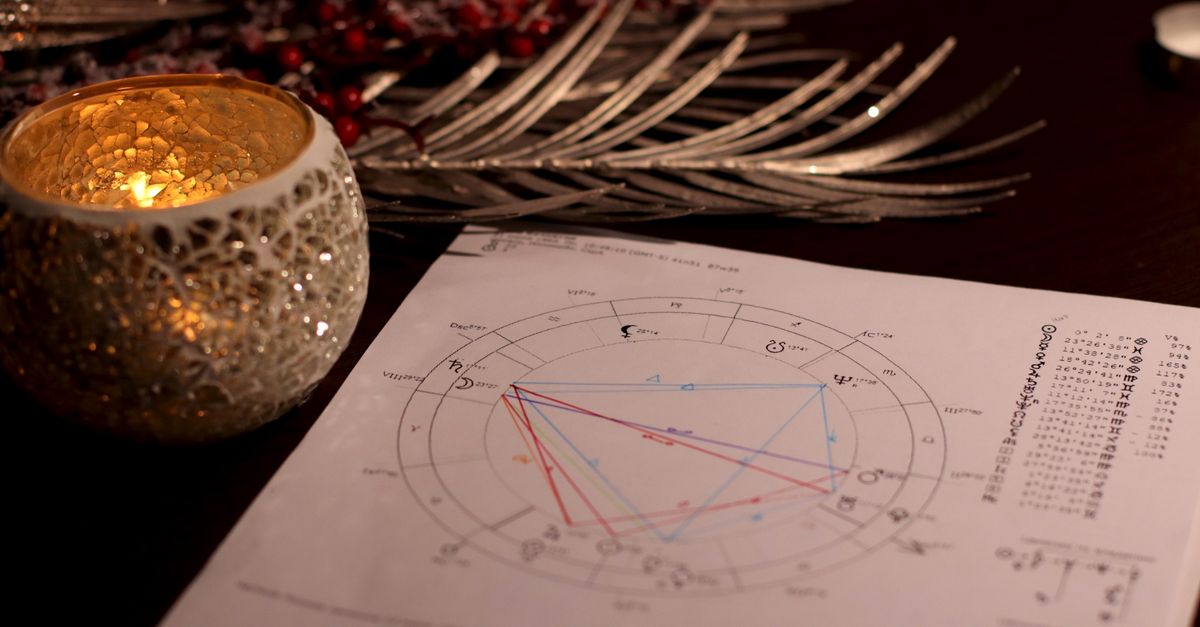
Mercury Sign and Intelligence: Separating the Cultural Label from the Position
The phrase "Mercury sign" mixes two different things that share a name. The first is an astronomical fact: at any documented instant, Mercury occupies a specific geocentric ecliptic longitude measured in degrees from zero through less than 360. The second is a cultural convention: that longitude range is divided into twelve equal 30-degree sectors, with Aries starting at zero degrees and Pisces starting at 330 degrees, and the sector containing the longitude is called the "sign." The cultural convention is real, traceable, and historically documented — but it is not a cognitive assessment, an IQ proxy, or a validated personality instrument.
Popular astrology often associates Mercury with communication, learning, and "mind power." That association is a narrative tradition, not a measured property of the planet's location. A reader whose Mercury is in one sector will not, on average, score higher on any standard intelligence test than a reader whose Mercury is in another sector. The Mercury Sign Calculator returns the sector label because the reader asked for it, not because the label carries a hidden cognitive score. If you have arrived here because a friend, a blog, or a meme suggested that your Mercury sign reveals how intelligent you are, treat that claim as folklore rather than as evidence.
For readers who specifically want to understand why that folklore persists and how it can mislead, the guide on why people misunderstand how intelligent you are goes deeper into the gap between pop-astrology framing and what an astronomical position can and cannot support.
What the Mercury Sign Calculator Actually Computes
The calculator takes three inputs from the reader — a local date, a local clock time, and a signed documented UTC or UTC-equivalent offset — and resolves them into a single proleptic UTC-like instant. From that instant it computes Mercury's apparent geocentric true-ecliptic-of-date longitude, normalizes the result into the range zero through less than 360 degrees, and overlays the disclosed Western tropical sector convention. The output shows the entered local fields, the resolved calculation time, the normalized longitude, the degree within the sector, and any near-boundary warning. Nothing else is included: no houses, no Ascendant, no aspects, no retrograde interpretation, no synastry, no horizon position, and no personality label.
| Provided by the tool | Not provided by the tool |
|---|---|
| Apparent geocentric longitude in degrees | Local houses or Ascendant |
| Western tropical sector label (e.g. Virgo) | Retrograde interpretation |
| Degree within the 30-degree sector | Aspects to other planets |
| Resolved UTC-like instant | Synastry or compatibility |
| Near-boundary warning (within 0.05°) | Personality, intelligence, or IQ score |
| Retained entered offset and local convention | Horizon or altitude position |
The observer origin is Earth's center, so geographic coordinates are unnecessary for this quantity. The calculation is performed entirely in the browser through the pinned Astronomy Engine 2.1.19 library, and the page does not request a city, GPS lock, account, upload, or remote ephemeris. That offline property is deliberate: it means the same inputs always produce the same output, which is the auditability a reader needs if they want to save the result and reproduce it later.
Resolve Your Mercury Sign from a Local Time and Offset
Three documented operating steps drive the tool. The sequence below is the supported workflow.
- Enter the local date, clock time, and documented UTC or UTC-equivalent offset for the target moment. Use the wall-clock time shown on the birth record, certificate, diary, or other source document, and pair it with the signed offset that applied to that clock at that moment. Offsets from −12:00 through +14:00 are accepted, including half-hour and quarter-hour forms. If the record predates standardized time zones, the offset you enter is treated as the documented convention rather than as a true modern UTC offset.
- Calculate to inspect Mercury's longitude, tropical sector, normalized instant, and retained local convention. The result panel shows the longitude in degrees, the sector label, the degree within that 30-degree sector, and the resolved instant used internally. The entered local date, clock time, and offset are echoed back so you can confirm what was actually submitted.
- Use any boundary warning to recheck the source time and offset rather than drawing a personality conclusion. A warning fires when the resolved longitude sits within 0.05° of a sector edge. Mercury moves quickly enough that a wrong clock minute or an incorrect offset sign can flip the label near a 30-degree boundary. The warning is an uncertainty cue, not a hint that one adjacent label is more meaningful than the other.
Why Boundary Warnings Matter Near a 30-Degree Edge
Mercury's apparent motion is the fastest of any planet in the geocentric sky. At favorable apparitions the planet can travel more than one degree per day, which means that a clock error of a small number of minutes — or an offset error of a single hour — can be enough to push a resolved longitude across one of the twelve 30-degree sector edges. The calculator's threshold is 0.05°: any resolved position within that distance of an edge triggers a visible near-boundary warning.
The right response to that warning is to recheck the source time and the source offset, not to treat one adjacent label as more plausible than the other. Both adjacent labels are equally valid as Western tropical sector names; the warning exists because the calculation has become too sensitive to small input errors to make a confident pick. If you can verify the clock and offset against a second source, rerun the calculation; if you cannot, record the position as approximate and preserve the entered inputs so a later check can reproduce the convention.
How the Result Is Validated Against JPL and IMCCE
The tool ships with eight frozen test cases — the 1700 and 2100 range limits, plus paired observations on each side of the 300°, 330°, and 0° boundaries — that are checked against two independent official oracles: NASA JPL Horizons for the primary Earth-center apparent ecliptic-of-date values, and IMCCE's Miriade ephemcc service running the INPOP theory for an independent official result. The pinned offline Astronomy Engine result must fall within 0.005° of both oracles for every literal fixture.
Those eight fixtures are checked at build time, not at runtime. The reader-facing calculator does not contact NASA JPL or IMCCE while it runs; both services are documented as evidence sources rather than as live dependencies. The relevant Horizons interface is described in the NASA JPL Horizons API documentation. Because the calculation stays in the browser, a saved longitude and sector can be re-derived later on a different device as long as the same local fields and the same signed offset are entered, which is the reproducibility property the product contract guarantees.
Common Cases That Change the Answer
Three input situations are responsible for most of the "the answer keeps changing" confusion that readers report.
- Wrong offset sign. A +05:30 offset and a −05:30 offset describe instants that differ by eleven hours. Near a sector edge that is the difference between two adjacent labels. Confirm the sign against the source record or against a second source before you trust the result.
- Records before standardized time zones. Local mean time and modern UTC offsets do not map cleanly for older documents. The calculator accepts whatever offset you enter, but the resulting instant is a proleptic UTC-like estimate based on the entered convention, not a true historical reconstruction. There is no inferred city-zone database behind the tool.
- Dates outside the supported window. Resolved instants outside 1700 through 2100 are rejected. If your source date sits outside that window, the calculator cannot give you a verified result, and no amount of offset adjustment will move it inside.
Two further limits are worth noting. The tool requires a signed numeric offset rather than guessing today's browser zone, because the modern browser zone and the convention that applied to an older record often disagree. The product contract explicitly disclaims any medical, legal, financial, safety, employment, or relationship use, and the result is positioned as entertainment and cultural interest only — not as navigational, professional, or safety-grade advice.
What the Tool Does Not Provide
The calculator reports an auditable longitude and a sector convention. It does not report a personality profile, a learning style, an intelligence quotient, a communication-style label, a relationship-compatibility score, a retrograde flag, an aspect list, or a chart-ruler assignment. Those are separate products or separate traditions, and several of them — including a Moon sign, a Venus sign, a Mars sign, a Jupiter sign, and a Saturn sign — are computed by sibling tools that follow the same local-date-plus-UTC-offset convention.
Read the result as what it is: a documented astronomical position with a cultural overlay. The label is reproducible; the cognitive interpretation is folklore.