A birth time does change the Moon phase, because the geocentric Moon–Sun ecliptic-longitude difference keeps advancing throughout the day, and the four primary phase events are instantaneous angles rather than whole-day ranges. The Moon orbits Earth in roughly 27.3 days relative to the stars and completes a full phase cycle in about 29.5 days, so the phase angle shifts by approximately 12° to 13° per 24 hours, or close to half a degree per hour. That is small on a chart, but the Lizely display bands used by the Birthday Moon Phase Calculator are only 45° wide apiece, so a shift of even a few hours can move a result from one named band into the next, especially when the moment sits close to a boundary. Without a clock time, the calculator cannot anchor the calculation to one auditable instant and must fall back to an approximation, and the page makes the distinction between exact and approximated inputs visible in the result.
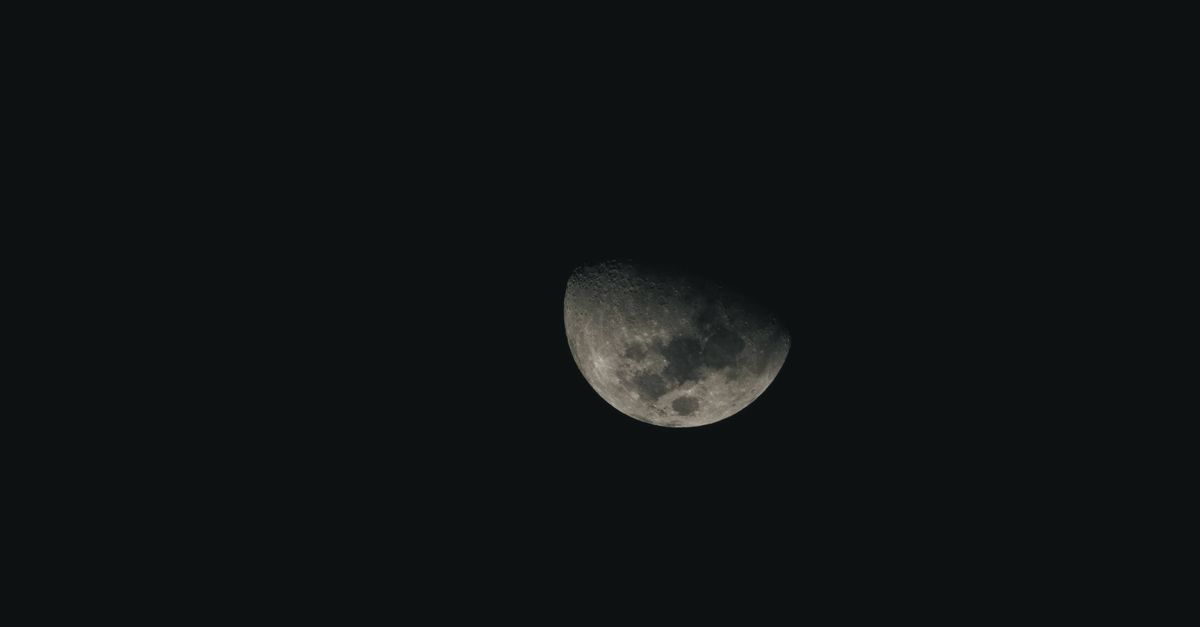
Why Birth Time Shifts the Moon Phase Angle
The Moon's phase is not a property of a calendar day; it is a property of a single moment in time, expressed as the angle between the geocentric ecliptic longitudes of the Sun and the Moon. As that angle grows, the illuminated fraction seen from Earth rises from 0 at New Moon to 1 at Full Moon and back to 0 again. Because the angle is monotonic during a single lunation, any change of clock time on a fixed calendar day changes the answer. A two-hour shift typically moves the angle by about 1°, which stays inside the same display band in most cases. A twelve-hour shift moves the angle by about 6°, which can be enough to cross a boundary when the moment sits within roughly 6° of one.
This is why the calculator does not treat a date alone as a complete input. It needs an instant, and an instant only exists once the offset that applied at that place and moment has been resolved. The page does not read the browser's current time zone to make that conversion, because that offset may not match historical daylight-saving rules or pre-standard local mean time. Instead, the offset is entered explicitly, the local civil fields are turned into a single proleptic UTC-like instant, and the astronomy step runs against that instant. The result then shows both the entered local time and the normalized calculation time so the conversion stays visible rather than hidden inside a black box.
How to Run the Birthday Moon Phase Calculator With a Known Time
- Open the Birthday Moon Phase Calculator on a desktop or mobile browser; no account, network call, or location permission is required.
- Enter the local birth date in the date field using the documented civil format the page accepts.
- Enter the clock time you have on record, for example 03:42, as it appeared on the birth clock or certificate.
- Enter the documented UTC or UTC-equivalent offset for that place and moment, signed with plus or minus hours and minutes. Use a historical time-zone reference, not the browser's current offset.
- Choose the exact, instant-estimate calculation and let the page convert the local fields to one proleptic UTC-like instant and run the geocentric Moon–Sun angle and illumination.
- Read the result together: the normalized UTC instant, the entered local time, the angle in degrees, the illuminated fraction, the Lizely eight-stage display label, and the nearby primary events listed above and below the moment.
Because the calculator uses deterministic civil-time arithmetic rather than a free-form date parser, an invalid date, time, or offset is rejected before the astronomy step runs, and a normalized calculation instant outside 1700 through 2100 is rejected for the same reason. The pinned Astronomy Engine 2.1.19 implementation must find each of twelve literal minute-resolution USNO fixture events within two minutes, so accuracy is tested rather than implied and the local calculation never depends on a live remote service.
What Happens If You Only Know the Birth Date
If the time of birth is genuinely unknown, the calculator offers an approximation mode on purpose, and it is visibly marked Phase-boundary approximation so it is never mistaken for an exact result. The approximation picks local noon on the entered date, checks the start and end of that local day, and compares the broad display labels at each endpoint. If both endpoints sit inside the same Lizely band, the noon label is shown on its own. If the two endpoints sit in different bands, the page lists both possibilities instead of presenting noon as definitive.
The page also scans the local day for any primary phase event at 0°, 90°, 180°, or 270°. If a New Moon, First Quarter, Full Moon, or Last Quarter instant occurred between local midnight and local midnight on that date, the approximation warns that the unknown birth time may have fallen before or after that event. That warning is the most common reason two people born on the same calendar day see different possible labels in the output. The approximation never infers a personality or compatibility reading from the phase; it only reports what the geometry can and cannot say with a missing input.
Primary Phase Events vs the Eight Display Bands
The four primary phases are instantaneous angular events, while the eight Lizely display bands are a convention used to put a name on a continuous angle. The primary phases come from USNO's primary phase tables; the eight bands are equal-width 45° slices placed halfway between primary angles. Knowing the difference matters when you read a result, because the label can stay the same even when the angle has clearly moved.
| Kind | Boundary angle | Meaning |
|---|---|---|
| Primary event | 0° | New Moon (instantaneous) |
| Primary event | 90° | First Quarter (instantaneous) |
| Primary event | 180° | Full Moon (instantaneous) |
| Primary event | 270° | Last Quarter (instantaneous) |
| Lizely band | 337.5° to 22.5° (wrap) | New Moon label |
| Lizely band | 22.5° to 67.5° | Waxing Crescent label |
| Lizely band | 67.5° to 112.5° | First Quarter label |
| Lizely band | 112.5° to 157.5° | Waxing Gibbous label |
| Lizely band | 157.5° to 202.5° | Full Moon label |
| Lizely band | 202.5° to 247.5° | Waning Gibbous label |
| Lizely band | 247.5° to 292.5° | Last Quarter label |
| Lizely band | 292.5° to 337.5° | Waning Crescent label |
A worked read of the table looks like this. Suppose the calculator returns an angle of 47°. That value falls inside the 22.5° to 67.5° slice, so the Lizely display label is Waxing Crescent. Four hours later, the angle has grown by roughly 2° to 49°, still inside the same band, so the label is unchanged. If the original moment had sat at 66°, the same four-hour shift would have pushed the angle to 68°, crossing the 67.5° edge, and the display label would have moved from Waxing Crescent to First Quarter even though the calendar date was identical. That single boundary crossing is the practical answer to the question of whether birth time changes the moon phase.
Limits, Caveats, and What the Calculator Will Not Do
The tool is an astronomical estimate and does not claim second-level precision. It is not suitable for navigation, tide tables, religious observance schedules, local visibility checks, or other time-critical decisions, and it does not infer personality, compatibility, luck, or life advice from a birth phase. No birth input is uploaded, stored, or sent to USNO, NASA, a CDN, or any paid service; once the page assets have loaded, the calculation works without a network connection because the astronomy step runs locally through the already pinned astronomy-engine 2.1.19 package behind a narrow Lizely adapter.
There is also a documented time-history caveat. The numeric offset is a documented UTC offset or UTC-equivalent offset for that place and moment, not a guarantee that modern UTC or a standard civil time zone existed on the entered date. Before standard time zones, local mean time may not map to a reliable modern offset, so early-date output is treated as a proleptic UTC-like estimate and the entered convention stays visible in the result. Inputs outside 1700 through 2100 are rejected before the astronomy step runs, which is why the page quietly caps how far back or forward the calculator can go.
For boundary cases, it helps to read the calculator's nearby primary events rather than treating the display label as the only output. Two people born on the same calendar date can land in different Lizely bands if the day straddles a primary event instant, and the unknown-time mode will show both possibilities rather than guessing. If a moment sits very close to a primary angle, the angle value, the illumination, and the listed primary events together tell a more honest story than the single broad label alone, which is also where cross-referencing USNO's primary phase data against the local result becomes genuinely useful.