Calculating a zodiac modality using a modality chart involves mapping one of twelve known Western zodiac signs to its traditional quadruplicity group—Cardinal, Fixed, or Mutable—comprising exactly four signs each. Errors occur when users confuse modalities with astrological elements, misidentify cusp birth dates, or assume a single sun sign modality defines an entire multi-placement birth chart. Because modality identity is a static cultural lookup based on seasonal sequence position, accurate results require isolated sign verification before interpreting chart dynamics.
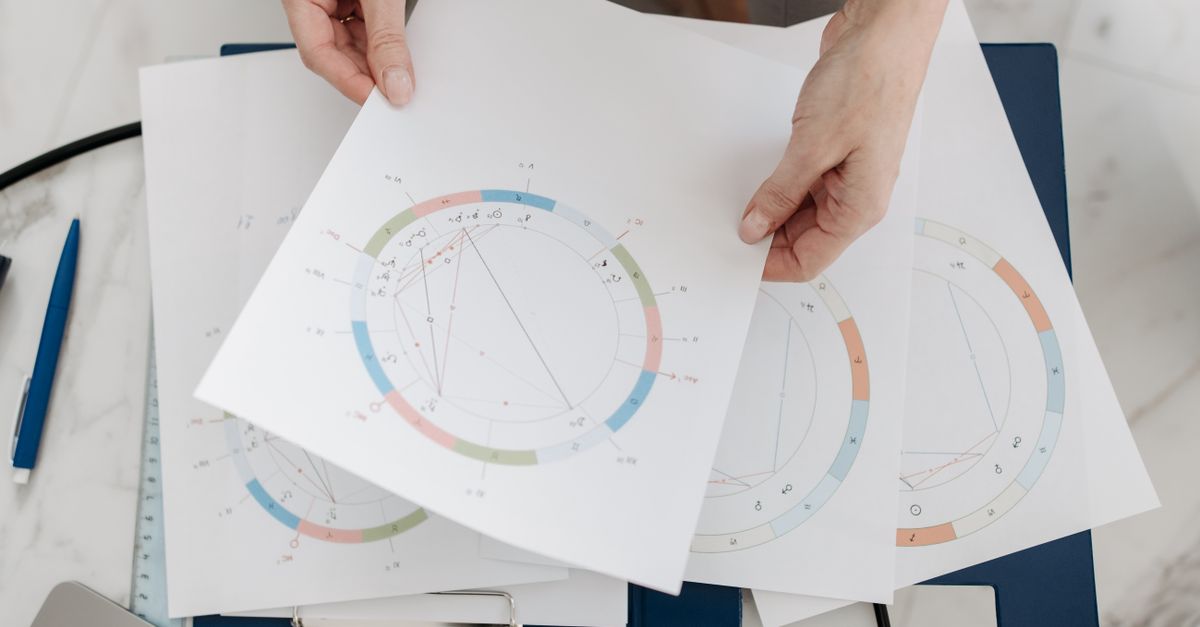
Structural Rules and Definitions in Zodiac Modality Charts
In traditional Western astrology, the twelve zodiac signs are divided into two primary categorical frameworks: triplicities (the four elements of Fire, Earth, Air, and Water) and quadruplicities (the three modalities of Cardinal, Fixed, and Mutable). According to Astrodienst Astrowiki, each modality contains four signs spaced ninety degrees apart, forming a cross within the zodiac wheel. Understanding this four-fold symmetry prevents users from misplacing signs or generating inconsistent groupings.
Modalities reflect structural positions relative to the astronomical turning points of the year in the conventional Northern Hemisphere seasonal sequence framework. Cardinal signs initiate the four seasons, Fixed signs maintain the middle period, and Mutable signs transition into the following season. When learning when a zodiac modality chart is a lookup, not a calculation, it becomes clear that sign identity dictates modality quality directly without requiring mathematical manipulation.
Six Errors People Make When Reading Modality Charts
Even though modality classification follows a fixed 12-entry table, practical lookup errors remain common when users skip reference steps or misinterpret astrological terminology. Reviewing these six friction points helps keep chart analysis structured and repeatable.
- Attempting to calculate a sun sign from a birth date near a cusp: Sun sign boundaries fluctuate depending on leap years and exact time zone offsets. Inputting a date near the 20th to 23rd of a month without astronomical time tracking leads to selecting the wrong sign, which guarantees an inaccurate modality result.
- Confusing modalities (quadruplicities) with elements (triplicities): Elements group signs into four sets of three based on natural broad traits, whereas modalities group signs into three sets of four based on seasonal sequence positions. Mixing up these terms distorts structural analysis.
- Treating sun sign modality as chart-wide dominant quality: A individual's sun sign represents only one placement. If a person has a Cardinal sun sign but six placements in Fixed signs, their overall chart balance leans heavily Fixed.
- Over-interpreting neutral seasonal labels as psychological scores: Modality charts classify signs into beginning, middle, and ending seasonal positions. Transforming structural labels into rigid claims about personal worth or guaranteed behavioral traits misuses the system's intent.
- Misapplying Southern Hemisphere seasonal inversions: Western astrology maintains a traditional sign sequence linked to Northern Hemisphere seasonal starts. Trying to manually flip modality labels to reflect local weather conditions breaks standard quadruplicity definitions published by reference sources like The Old Farmer’s Almanac.
- Unweighted placement double-counting: When analyzing multiple chart factors, counting the same planetary point twice or inventing variable scoring rules without a standard method produces contradictory dominant modality tallies.
Quadruplicity versus Triplicity Classifications
To avoid confusing elements with modalities, it helps to compare how the twelve Western zodiac signs are categorized under both systems. Every sign holds exactly one modality assignment and one element assignment.
| Zodiac Sign | Modality (Quadruplicity) | Seasonal Position | Element (Triplicity) |
|---|---|---|---|
| Aries | Cardinal | Begin (Spring Equinox) | Fire |
| Taurus | Fixed | Middle | Earth |
| Gemini | Mutable | End | Air |
| Cancer | Cardinal | Begin (Summer Solstice) | Water |
| Leo | Fixed | Middle | Fire |
| Virgo | Mutable | End | Earth |
| Libra | Cardinal | Begin (Autumn Equinox) | Air |
| Scorpio | Fixed | Middle | Water |
| Sagittarius | Mutable | End | Fire |
| Capricorn | Cardinal | Begin (Winter Solstice) | Earth |
| Aquarius | Fixed | Middle | Air |
| Pisces | Mutable | End | Water |
When you cross-reference both structures, you notice that each modality group contains exactly one sign of each element. For example, the Cardinal modality includes Aries (Fire), Cancer (Water), Libra (Air), and Capricorn (Earth). If you want to isolate elemental groupings specifically, you can consult a dedicated Zodiac Element Calculator alongside your modality lookup.
Lookup Steps on the Zodiac Modality Calculator
To inspect a sign's quadruplicity without manual lookup errors, use the browser-based Zodiac Modality Calculator. The tool does not calculate a zodiac sign from a calendar birth date, so ensure you already know the specific placement sign before beginning.
- Choose a Western zodiac sign you already know from the available selection control.
- Read its Cardinal, Fixed, or Mutable classification, seasonal sequence position label, and the complete four-sign modality group returned by the system.
- Use the visible twelve-sign reference matrix on screen to double-check your sign placement, or click Reset to clear the selection without saving any local data.
Because all logic runs strictly within your browser, no personal data, names, or birth dates are requested or stored. Following this explicit workflow helps users avoid mistakes when you read a zodiac modality chart in general practice.
Evaluating Modality Distribution Across a Birth Chart
A frequent error when working with astrology charts is assuming that one placement defines a person's entire modality profile. Astrologers evaluate chart emphasis by counting the number of major planetary placements (Sun, Moon, Mercury, Venus, Mars, Jupiter, Saturn, Uranus, Neptune, Pluto) in each quadruplicity group.
Consider a sample natal profile with ten documented planetary placements:
- Sun: Aries (Cardinal)
- Moon: Taurus (Fixed)
- Mercury: Aries (Cardinal)
- Venus: Gemini (Mutable)
- Mars: Capricorn (Cardinal)
- Jupiter: Leo (Fixed)
- Saturn: Libra (Cardinal)
- Uranus: Scorpio (Fixed)
- Neptune: Sagittarius (Mutable)
- Pluto: Virgo (Mutable)
To find the overall modality distribution, we tally the placements across the three categories:
Cardinal total = 4 placements (Sun, Mercury, Mars, Saturn)
Fixed total = 3 placements (Moon, Jupiter, Uranus)
Mutable total = 3 placements (Venus, Neptune, Pluto)
Total verified placements: 4 + 3 + 3 = 10 placements.
In this example, despite having placements distributed across all three categories, the chart shows a slight Cardinal emphasis (4 out of 10 placements). Relying solely on a single sun sign without auditing the full table leads to incomplete or skewed conclusions.