The Monkey occupies two precise positions in the two-rule Chinese zodiac compatibility model: it sits inside the Rat–Dragon–Monkey San He trine, and it forms one of the six direct Liu Chong oppositions with the Tiger. That framing means the Monkey's relationship table under this narrow model has exactly 11 unique pairs: 2 trine partners, 1 direct opposition, and 8 pairs that fall outside the two sourced rules. The Chinese Zodiac Compatibility browser keeps this taxonomy visible by labelling every pair as Traditional trine (San He), Direct opposition (Liu Chong), or Not classified by this limited two-rule model, without inventing a percentage, score, or overall verdict. You pick the Monkey on one side and any known animal on the other, then read the literal classification. The 11 figures are deterministic: they come from the same two reference fixtures every time, regardless of which selector the Monkey sits in. The result is symmetric: swapping which animal is first does not change the classification, only the display order, because the underlying rule set is order-independent.
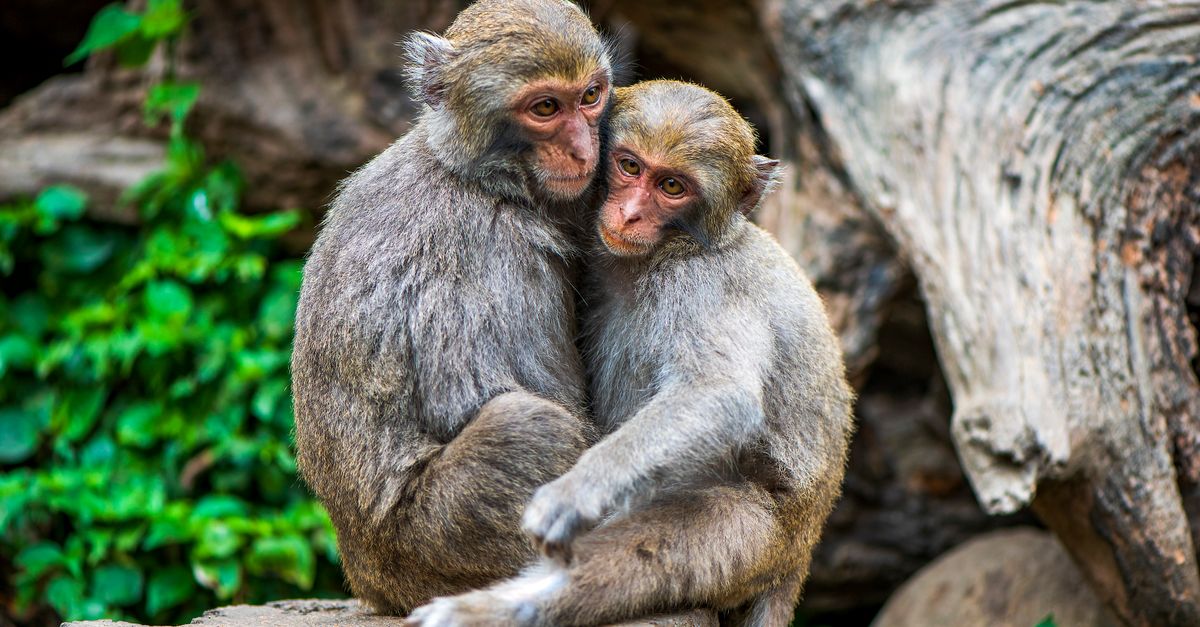
The Monkey's Place in the San He Trines and Liu Chong Oppositions
The Chinese zodiac cycle places twelve animals in a fixed order: Rat, Ox, Tiger, Rabbit, Dragon, Snake, Horse, Goat, Monkey, Rooster, Dog, Pig. According to the Hong Kong Observatory's twelve-year animal cycle reference, that order is the same cycle used by Chinese New Year dating, but the compatibility browser treats the cycle as a static reference table rather than a calendar. The two-rule model layers two relationship patterns on top of that cycle. The first is the San He trine, which groups the twelve animals into four fixed three-member sets. The second is the Liu Chong opposition, which pairs six animals with one opposite each.
The Monkey sits inside the Rat–Dragon–Monkey San He trine, the first of the four fixed groups. That gives the Monkey exactly two trine partners in this model: Rat and Dragon. Each trine member also carries one opposite from the Liu Chong table. The Monkey's opposite is the Tiger, drawn from the Tiger–Horse–Dog trine. Together these two rules mean the Monkey's compatibility footprint in the narrow two-rule model is short and predictable: two trine labels, one opposition label, and eight pairs that simply do not match either rule. The four literal trines, per the National Folk Museum of Korea's zodiac harmony reference, are Rat-Dragon-Monkey, Ox-Snake-Rooster, Tiger-Horse-Dog, and Rabbit-Goat-Pig.
Two structural facts matter when reading the table. First, the six direct oppositions never overlap the trine pairs, so a Monkey can never simultaneously be a trine partner and an opposition of the same animal. Second, every animal in the twelve-position cycle has exactly one opposite under this model, including the Monkey. If you want to see the same rule set applied to a different animal, the compatibility browser lets you pick any pair on either side and read the same literal classification.
How to Check the Monkey in the Compatibility Browser
The browser is built for direct lookup of two known animals, so it does not ask for a birth year or run a calendar conversion. To see the Monkey's relationship with another sign under the two-rule model, follow these steps in the Chinese Zodiac Compatibility tool:
- Open the compatibility browser on a desktop or mobile screen; both selectors use native controls with a 44-pixel minimum height.
- Choose Monkey in the first selector, drawn from the canonical twelve-position cycle.
- Choose any second animal in the second selector: Rat, Ox, Tiger, Rabbit, Dragon, Snake, Horse, Goat, Rooster, Dog, or Pig.
- Read the classification line beneath the selectors: Traditional trine (San He), Direct opposition (Liu Chong), or Not classified by this limited two-rule model.
- Inspect each animal's full trine group and direct opposite in the profile area below the selectors, so the classification can be checked against the source data without trusting a single badge.
- Tap Swap to exchange the two selector values in one action and confirm the result is symmetric; only the display order changes.
Nothing about the two selections is stored. The widget runs entirely in React page state, so refreshing the page or closing the tab clears everything; no cookie, account, or local storage is involved.
What Each of the Monkey's 11 Pairs Returns
Picking the Monkey and stepping through the eleven other animals produces a fixed classification table, because the two-rule model is a pure classifier over two known reference sets. The breakdown is shown in the table below; each row is a category defined by the sourced rule, not a calculated score.
| Relationship type in the two-rule model | Monkey pairs in this category | Other animals | Browser label |
|---|---|---|---|
| Shared San He trine | 2 | Rat, Dragon | Traditional trine (San He) |
| Direct Liu Chong opposition | 1 | Tiger | Direct opposition (Liu Chong) |
| No rule match | 8 | Ox, Rabbit, Horse, Goat, Rooster, Dog, Snake, Pig | Not classified by this limited two-rule model |
Reading the table row by row: picking Monkey with Rat or Dragon returns Traditional trine (San He) because both pairs come from the same literal Rat–Dragon–Monkey trine. Picking Monkey with Tiger returns Direct opposition (Liu Chong), because Tiger with Monkey is one of the six sourced opposition pairs. Every other pick — Ox, Rabbit, Horse, Goat, Rooster, Dog, Snake, or Pig — returns Not classified by this limited two-rule model. That phrase is intentional and carries no opinion about whether the pair is neutral, safe, ideal, or doomed.
Because the classification is symmetric, picking Rat first and Monkey second returns the same Traditional trine label as Monkey first and Rat second; the browser just flips the display order. The same symmetry holds for the opposition and for every unclassified pair. A Monkey paired with itself is not a two-sign trine pair and produces no classification at all, which keeps the literal reference data consistent with how trine membership is defined.
Why Eight Monkey Pairs Stay Outside the Two-Rule Model
Out of 66 unordered pairs across the twelve animals, exactly 12 fall inside the four trines and 6 fall inside the oppositions, which leaves 48 unordered pairs outside both rule sets. Eight of those 48 land on the Monkey, and they are not a defect: they are the literal output of a deliberately narrow reference model. The browser reads the four trines and six oppositions as independent fixture data, classifies each pair against both rules, and reports whichever rule, if any, applies.
The 48 unclassified pairs are not a hidden bucket of bad matches. They are simply pairs the two sourced rules do not address. Broader traditions also consider Six Harmonies, harms, punishments, the Five Elements, and relationships between the year, month, day, and hour branches in a full Four Pillars analysis. Each of those layers is a separate classification tradition, and the browser does not merge them into one false universal table. For a fuller treatment of how that broader landscape interacts with the two-rule browser, the Chinese Zodiac Compatibility: Inside the Two-Rule Browser guide walks through the same boundary in more detail.
Where the Two-Rule Browser Stops
Several limits are visible in the product itself and worth restating for anyone using the Monkey's results in context. The browser never derives an animal from a Gregorian year; the Chinese Zodiac Calculator handles the year-to-animal mapping with a Lunar New Year boundary warning, and the compatibility browser handles only direct animal-to-animal lookup. The browser also never turns the rule set into a percentage, a rank, or a prediction about whether a friendship, family tie, or partnership will succeed. Year-animal matching is not a scientific measurement, and the visible limitation statement on the page is explicit that it should not guide consequential relationship decisions or substitute for a complete BaZi or Four Pillars analysis.
Two more limits shape the Monkey's table directly. First, the browser only counts trine and opposition; it does not silently treat Cat, Boar, or other regional substitutions as equivalent to the canonical twelve, because those variants require a separately declared cultural scope. Second, English source labels vary — some sources use Mouse for Rat, Cow for Ox, and Sheep or Ram for Goat — but the canonical selector uses Rat, Ox, and Goat, and the alias scope is applied only to literal fixtures during verification, not to user selections. The twelve-position selector order Rat, Ox, Tiger, Rabbit, Dragon, Snake, Horse, Goat, Monkey, Rooster, Dog, Pig mirrors the cycle the calculator tool already exposes, so a user moving from year lookup to pair lookup does not need to learn a new ordering.
Within those limits the tool is precise. Verification stores the twelve animals, four trines, and six oppositions as independent literal fixtures, and tests confirm each animal appears in exactly one trine and one opposition, count 12 unordered trine pairs and 6 oppositions, check symmetry across the two selectors, confirm the two relation sets do not overlap, and preserve the source-only alias scope. The result is a transparent browser for two named cultural rules — not an objective compatibility test.
For a deeper look, see Compare Approaches to Calculate a Zodiac Element.