No major astronomical body can put the Sun or the Moon into retrograde motion, because retrograde is defined as apparent geocentric ecliptic longitude decreasing over time, and neither the Sun nor the Moon ever satisfies that condition. The Sun is the reference direction itself — its apparent geocentric ecliptic longitude defines the zodiac coordinate system, so it cannot decrease relative to itself by definition. The Moon orbits Earth faster than Earth orbits the Sun and travels in the same direction, which means the Moon's apparent geocentric ecliptic longitude always increases as it sweeps through one sidereal month of about 27.3 days. Retrograde motion is therefore only possible for bodies that Earth overtakes in orbit, or that orbit more slowly than Earth around the Sun — the planets from Mercury out to Pluto. If you searched for "can sun or moon retrograde" looking for confirmation, the short astronomical answer is no, and the practical question becomes which of the eight classical planets are retrograde right now, and how do you check that cleanly?
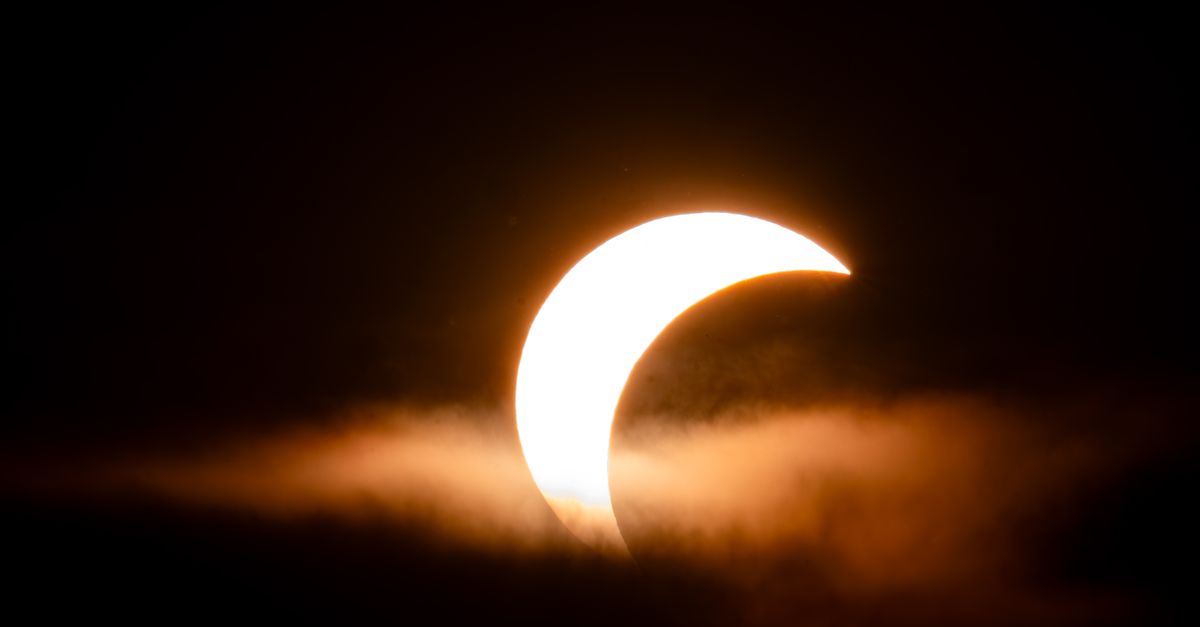
Why the Sun Cannot Appear Retrograde
Astronomers define retrograde as the moment when a body's apparent geocentric ecliptic longitude — its position along the ecliptic measured eastward from the vernal equinox, as seen from the center of Earth — decreases from one day to the next. The Sun sits in a special position in that definition because the apparent ecliptic longitude of the Sun is the reference angle that defines where the equinox is at any given moment. The Sun cannot decrease its longitude relative to itself; it always advances eastward through the year as Earth completes its prograde orbit.
Even when Earth reaches perihelion in early January or aphelion in early July, the Sun's apparent geocentric ecliptic longitude keeps increasing by roughly one degree per day. There is no geometric configuration in which the Sun, viewed geocentrically, can appear to slip backward through the zodiac. That is why every retrograde table published by a major observatory, and every tool that follows the same convention, excludes the Sun from the retrograde list.
It is worth noting that "geocentric" here means Earth-centered. From a hypothetical observer standing on Mars, the Sun's apparent motion against the stars would trace a more complex path because Mars orbits at a different speed. The standard astrological and astronomical definition of retrograde, however, is anchored to the geocentric frame, and within that frame the Sun is fixed in the direct column.
Why the Moon Cannot Appear Retrograde
The Moon is the one body in the sky that moves fastest against the zodiac background, but it never goes retrograde either. Its sidereal orbital period is about 27.3 days, and the Moon orbits Earth in the same direction Earth orbits the Sun. That prograde motion means the Moon's apparent geocentric ecliptic longitude increases by roughly 13.2 degrees per day, completing a full circuit through the twelve tropical sectors every 27 to 29 days depending on how it is measured.
When the Moon is near new phase and between Earth and Sun, or near full phase and on the opposite side of Earth from the Sun, its apparent geocentric longitude still advances. The combined orbital motion of Earth and the Moon never produces a westward swing of the Moon against the stars in the geocentric frame. The Moon's nodes — the points where the lunar orbit crosses the ecliptic — precess westward over an 18.6-year cycle, but that is a separate orbital feature and is not retrograde motion of the Moon itself.
Practically, this means the Moon is excluded from every retrograde status table by the same convention that excludes the Sun. Tools that track planetary motion for entertainment and cultural interest explicitly skip the Sun and Moon, and the Retrograde Planets Tracker is no exception.
Which Bodies Can Actually Go Retrograde
Retrograde motion is a perspective effect caused by the relative orbital speeds of Earth and another planet. When Earth overtakes an outer planet in its orbit, that outer planet appears to slow, stop, and then drift westward against the stars for weeks or months before resuming its normal eastward path. When an inner planet lies between Earth and the Sun at inferior conjunction, it briefly appears to move westward as well, before returning to its direct path.
That is why Mercury and Venus go retrograde more frequently than Mars, Jupiter, or Saturn — Earth overtakes the inner planets several times per Earth year — and why Pluto's retrograde periods last nearly half of its 248-year orbit. The table below compares the eight tracked planets with the Sun and Moon on the question of retrograde possibility.
| Body | Orbital Period | Can Be Retrograde? | Why |
|---|---|---|---|
| Sun | Defines reference | No | Geocentric ecliptic longitude is the reference itself |
| Moon | 27.3 days (sidereal) | No | Orbits Earth in same direction; longitude always increases |
| Mercury | 88 days | Yes | Inner planet; Earth overtakes it roughly three to four times per year |
| Venus | 225 days | Yes | Inner planet; Earth overtakes it about every 19 months |
| Mars | 687 days | Yes | Outer planet; Earth overtakes Mars roughly every 26 months |
| Jupiter | 11.86 years | Yes | Outer planet; Earth overtakes it about every 13 months |
| Saturn | 29.46 years | Yes | Outer planet; Earth overtakes it about every 12.4 months |
| Uranus | 84 years | Yes | Outer planet; retrograde periods last about five months |
| Neptune | 165 years | Yes | Outer planet; retrograde periods last about five months |
| Pluto | 248 years | Yes | Outer dwarf planet; retrograde periods last roughly five to six months |
The classification itself comes from comparing each body's apparent geocentric ecliptic longitude at the requested instant with its longitude twelve hours later. A negative signed delta labels the body retrograde, a positive signed delta labels it direct, and an absolute change below 0.002 degrees labels it stationary.
How to Check Which Planets Are Retrograde
Since neither the Sun nor the Moon can be retrograde, the practical workflow is to check the eight planets that can. The Retrograde Planets Tracker answers that question from a documented local date, clock time, and UTC offset, runs entirely inside the browser, and never makes a live network request. The workflow has three inputs and one output table.
- Enter the local date in the date field using a Gregorian calendar format that the browser can parse.
- Enter the local clock time on that date in 24-hour form so that hours, minutes, and seconds are unambiguous.
- Enter the documented UTC offset for that place and date as a signed value from -12:00 through +14:00, including non-whole-hour offsets such as -03:30 or +05:45.
- Check the status output to read each planet's motion label, tropical sector, and geocentric ecliptic longitude at the converted instant.
The form rejects impossible Gregorian dates, impossible clocks, malformed offsets, and any converted instant that falls outside the supported UTC range of 1700 through 2100. The motion table refreshes each time the inputs change, so the same tool can answer the question for today, a past date, or a future date without reloading the page. For visitors who want to compare what "retrograde" actually looks like in the calculator output, the retrograde versus direct motion comparison walks through the same labels from a different angle.
Reading the Result: Motion Labels, Sectors, and Boundary Warnings
The output table has three columns of interest for the motion question. The first column is the motion label, which can be retrograde, direct, or stationary. The second column is the tropical sector, written as one of the twelve equal thirty-degree signs beginning with Aries at zero. The third column is the apparent geocentric ecliptic longitude itself, expressed in degrees from zero to 360.
| Motion Label | Longitude Change Over 12 Hours | When It Happens |
|---|---|---|
| Retrograde | Decreases (signed delta negative) | Earth overtakes the body in orbit, or the body lies between Earth and Sun |
| Direct | Increases (signed delta positive) | Body moves in its normal eastward path through the zodiac |
| Stationary | Absolute change below 0.002° | Body sits near a directional turning point between retrograde and direct |
A signed-delta worked example makes the rule concrete. At 22:00 UTC on a chosen date, suppose Mars's apparent geocentric ecliptic longitude reads 152.0000°. Twelve hours later, the same body reads 151.9975°. The signed delta is 151.9975 − 152.0000 = −0.0025°. Because the delta is negative, Mars is moving retrograde during that window. The absolute change of 0.0025° also exceeds the 0.002° stationary cutoff, so the printed label is retrograde rather than stationary. The same calculation under the offline Astronomy Engine 2.1.19 implementation that powers this tool, available at the Astronomy Engine release page, is what produces the result in the browser.
One detail to watch is the boundary between two tropical sectors. The twelve sector labels divide three hundred sixty degrees into twelve equal half-open intervals beginning with Aries at zero, so a body at 29.95° Capricorn and the same body at 0.05° Aquarius are only one tenth of a degree apart but sit in different sectors. When the tool reads within five hundredths of a degree of a sector boundary, it raises a small warning that a tiny change in time, offset, or ephemeris can shift the printed label. That warning is most useful near the station points where the motion label itself flips from direct to retrograde or back.
Beyond the Sun and Moon: What People Often Mean
Searches for "sun retrograde" or "moon retrograde" usually come from two places. The first is the casual use of the word retrograde as a synonym for any planet that is "slowed down" or "in a holding pattern," which can include the Sun in poetic descriptions of solstices or near-stationary declination. Astronomically, that is not what retrograde means, and the Sun's geocentric ecliptic longitude never decreases by the standard definition.
The second place is the lunar nodes. The nodes are the points where the Moon's orbit crosses the ecliptic plane, and they precess westward over an 18.6-year cycle. They are sometimes called the Moon's "retrograde" motion, but they describe a regression of the orbital nodes rather than a westward swing of the Moon itself. The Moon's apparent geocentric ecliptic longitude still advances eastward through every sign, every day of every lunar month. The Retrograde Planets Tracker excludes the Sun and Moon by design, so a result that lists only Mercury through Pluto is the expected output for any documented instant you enter.
If you're weighing options, Plan the Steps Needed to Calculate a Sun Number covers this in detail.