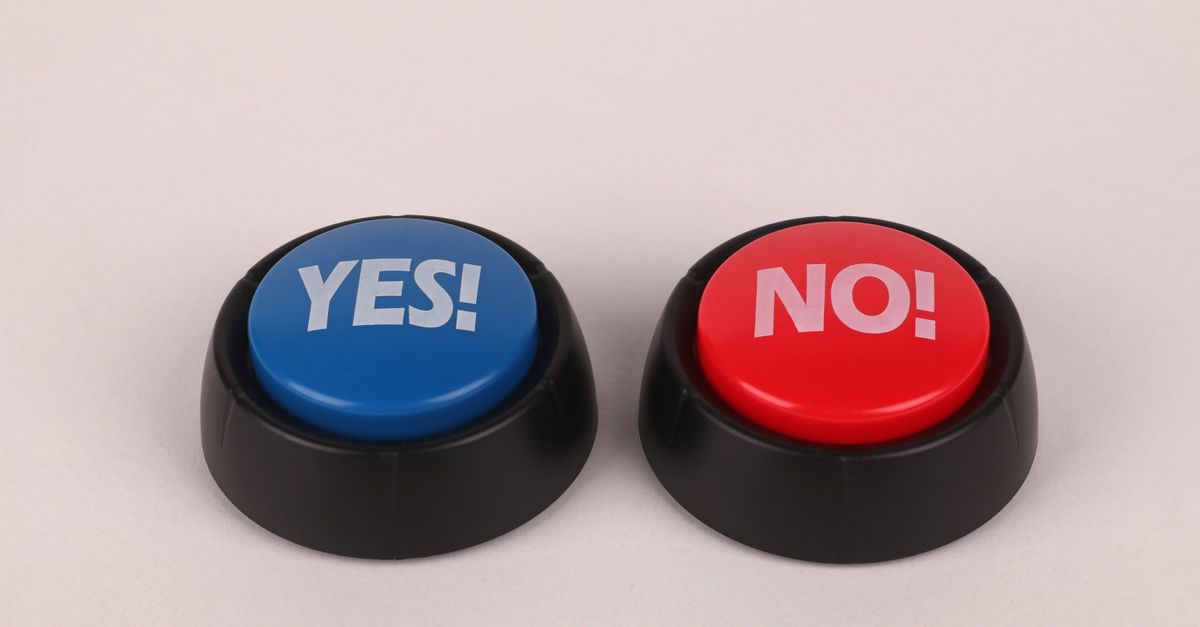
Runes do not return literal yes or no answers in the Rune Reading tool, because the tool is built for self-reflection rather than binary fortune-telling — every draw produces three unique Elder Futhark entries that frame neutral prompts, not verdicts. The tool deliberately refuses to map a single rune onto a yes, no, or maybe category, so the question "can runes answer yes or no" receives an honest structural answer here: not in this layout, and not with these prompts. What the tool offers instead is a three-position reflection draw. The draw assigns each of three randomly selected entries to one of three explicitly modern positions — Notice, Question, and Small step — and presents the historical identity of the rune (character, Unicode code point, common name, transliteration, aett, reconstructed literal gloss) so the visitor can sit with the word-image as a metaphor. No reversed meanings, no blank rune, no future prediction, no decision recommendation. The point is to translate a yes-or-no question into a more useful reflection.
Why a Literal Yes or No Answer Isn't in This Tool
A traditional yes-or-no rune draw, as described in some modern runecasting guides, usually works by pulling a single rune and then assigning it a yes, no, or "wait" verdict based on its symbolic associations. The Rune Reading tool does not follow that path. It is built around a different premise: that the historical Elder Futhark is a writing system, not a single documented fortune-telling manual, and that compressing a one-word image like "wealth" or "hail" into a yes or no strips the metaphor of the texture that makes it useful for thinking. The tool therefore keeps two layers of information clearly apart.
The historical layer — character, Unicode code point, common reconstructed name, transliteration, position in the conventional three-group catalogue, reconstructed literal gloss, and any uncertainty note — is shared with the source-checked 24-entry reference table used elsewhere on the site. The entertainment layer — the draw order, the three position labels, and every reflection prompt — is explicitly a modern Lizely-authored set of rules. This separation is the structural answer to the yes-or-no question. Yes-or-no readings require a fixed mapping from rune to verdict. The tool refuses to define that mapping. Instead it offers three neutral questions that invite the visitor to do their own interpretive work using the rune as a metaphorical anchor. Visitors who arrive expecting a binary answer will instead receive a more thoughtful prompt set, which is the design intent.
What "Three Rune" Actually Means Here
The phrase "three rune reading" can mean several different things depending on which modern system is being followed. Some systems use Past, Present, and Future positions. Others use Situation, Challenge, and Advice. Others use Mind, Body, and Spirit. The Rune Reading tool does not borrow any of those established position sets. Its three positions are named Notice, Question, and Small step, and the names are chosen to signal that the visitor is being asked to do reflective work, not to receive a forecast.
Each draw uses three unique entries from a 24-entry catalogue. Because the draw is a no-replacement shuffle, one rune cannot appear twice in the same reading. The total number of unique three-rune combinations from a 24-entry catalogue is calculated as 24 choose 3, which works out to 24 × 23 × 22 ÷ (3 × 2 × 1) = 12,144 ÷ 6 = 2,024 distinct unordered sets of three runes. Every draw the tool produces is one of those 2,024 sets of three unique entries, and refreshing the page or choosing Draw three runes again starts a fresh independent selection from the full catalogue.
How to Use the Rune Reading Tool
The tool is designed for a single, focused interaction. The page runs entirely in the browser, so no account, upload, or server request is needed.
- Open the Rune Reading page and decide on the situation or question you want to sit with, even if it began as a yes-or-no question.
- Choose Draw three runes to trigger a local Fisher-Yates shuffle of the shared 24-entry Elder Futhark catalogue, using 23 unsigned 32-bit values from the browser's Web Crypto random-number generator.
- Read each card's historical identity fields: rune character, Unicode code point, common name, transliteration, aett, position, and the reconstructed literal gloss, including any displayed uncertainty note.
- Move to the Notice prompt and write down what detail the historical word-image brings to your attention right now.
- Move to the Question prompt and phrase an open question that the word-image helps you articulate.
- Move to the Small step prompt and consider one small, reversible possibility that comes to mind.
- If you want a new reflection, choose Draw three runes again to start a fresh independent shuffle. The previous cards are discarded.
What Each of the Three Positions Asks You
The three position labels are deliberately neutral and reversible. They describe a movement of attention, not a movement of fate.
| Position | Type | What the visitor is asked |
|---|---|---|
| Notice | Modern Lizely-authored prompt | What detail in the historical word-image is drawing your attention? |
| Question | Modern Lizely-authored prompt | What open question does the word-image help you phrase? |
| Small step | Modern Lizely-authored prompt | What small, reversible possibility comes to mind? |
None of these positions assigns a permanent spiritual meaning to the rune, declares an event likely, tells the visitor what decision to make, or claims to reproduce one documented ancient casting practice. The reconstructed literal gloss is used only as a metaphorical word-image. Where the catalogue says a name, sound, or gloss is disputed, that uncertainty remains visible on the card so visitors do not over-read a contested identification as a firm verdict.
Yes or No Draws vs Three-Rune Reflection Prompts
Readers arriving from a yes-or-no search typically expect one of two things: a single rune mapped to a verdict, or a small handful of runes grouped into yes, no, or maybe. The Rune Reading tool does neither. The table below compares the structural difference at a glance.
| Feature | Classic Yes or No Draw | Rune Reading Tool |
|---|---|---|
| Number of runes drawn | One | Three, no replacement |
| Source of the verdict | Fixed mapping from rune to yes / no / wait | No fixed mapping; visitor assigns meaning |
| Reversed positions | Sometimes used | Not used |
| Blank rune | Sometimes used in modern decks | Not used |
| Reflection prompts | Usually absent | Notice, Question, Small step |
| Predictive claims | Often implied | Explicitly excluded |
| Decision advice | Often implied | Explicitly excluded |
If a visitor is specifically weighing a single-rune approach against this three-rune layout, the comparison of single-rune and three-rune spreads spells out the trade-offs in more depth, including how the yes-or-no format compresses interpretation compared with a three-position reflection spread.
Honest Limits of the Tool
The Rune Reading tool is intentionally bounded. It does not predict the future, discover hidden facts, read another person's mind, establish supernatural causes, or provide medical, mental-health, legal, financial, safety, relationship, employment, or crisis guidance. Each draw is ephemeral: it is not stored, uploaded, tied to an account, or sent to an outside service. Closing or refreshing the page discards the displayed cards. The tool uses no paid API, runtime dictionary lookup, external script, location permission, file upload, localStorage, sessionStorage, or server processing. If the browser's secure randomness is unavailable, the tool reports an error instead of silently falling back to a weaker source.
Eight historical anchor entries — Fehu, Thurisaz, Wunjo, Hagalaz, Pertho, Algiz, Tiwaz, and Othala or Othalan — are independently verified in the underlying shared catalogue, and the entire table is checked for exactly 24 entries, three groups of eight, unique characters and code points, and positions one through eight in every group. The Penn State reference on runic alphabets describes the Elder Futhark as a historical writing system rather than a single universal divination manual, which is the same framing the tool preserves. For entertainment and self-reflection only.
The honest answer to the search question is therefore structural: the Rune Reading tool cannot give you a yes or no, because that is not the kind of answer it is built to produce. It can give you three historical word-images and three open prompts, which is often a more useful place to start than a single binary verdict.
For a deeper look, see Jupiter House Without Birth Time: The Sign Answer.