A lunar phase boundary is the exact instant when the geocentric Moon–Sun ecliptic-longitude difference crosses one of four angular values — 0°, 90°, 180°, or 270° — marking New Moon, First Quarter, Full Moon, or Last Quarter respectively. When a birthday lands within a few hours of that crossing, the answer to "what phase was the Moon in when I was born?" depends on the birth time, not just the date. This is why the Birthday Moon Phase Calculator treats boundary cases differently from ordinary mid-band birthdays: it converts your local clock time with a documented UTC or UTC-equivalent offset into one auditable proleptic instant, then checks whether a primary event fell inside your local day. If the time is unknown, the tool deliberately marks the result as a Phase-boundary approximation, may list both neighboring labels, and warns that the birth moment could sit before or after the event. Understanding what that output actually means is the difference between a confident answer and a guess that quietly flipped phases.
What "near a lunar phase boundary" actually means
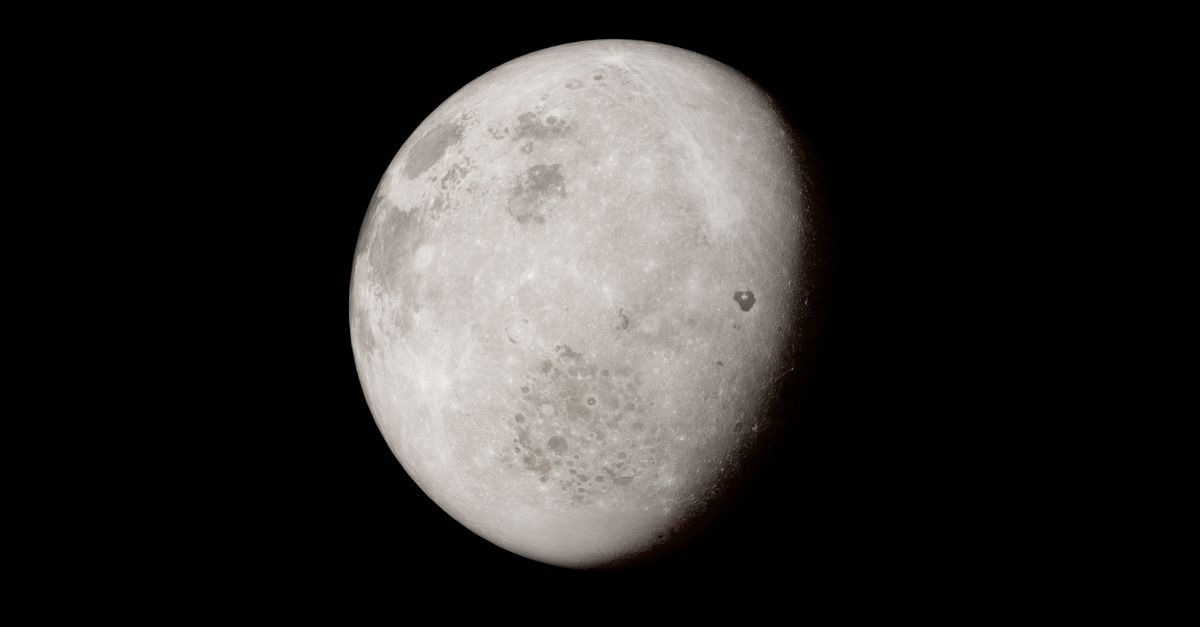
The four primary phases are instantaneous angular events, not durations. New Moon occurs when the geocentric Moon–Sun ecliptic-longitude difference reaches 0°, First Quarter at 90°, Full Moon at 180°, and Last Quarter at 270°. These are not "moments of the day" in any local sense — they happen at one specific instant, often in the middle of an afternoon or a predawn morning somewhere on Earth. A birthday within roughly six hours of such a crossing is, by definition, "near" the boundary, because that is the typical range across which a single calendar date can straddle the event.
The eight-stage display bands are a separate convention. Lizely's equal-width bands place New Moon across 337.5° to 22.5°, then 45°-wide sectors for Waxing Crescent, First Quarter, Waxing Gibbous, Full Moon, Waning Gibbous, Last Quarter, and Waning Crescent. Those band edges — at 22.5°, 67.5°, 112.5°, 157.5°, 202.5°, 247.5°, 292.5°, and 337.5° — are also boundaries, but they are display boundaries rather than the primary events that the USNO Astronomical Applications service defines. The calculator carries both layers, so a result can sit near either kind of boundary at the same time.
Why boundary birthdays are inherently uncertain
Two reasons drive the uncertainty. First, the angular crossing is fast: around New Moon, the Moon–Sun difference moves through 0° in roughly half a day, so a birth time three or four hours off the official instant lands on the wrong side of the event. Second, time-zone math is a frequent source of silent errors. The calculator makes the conversion explicit by requiring a documented UTC or UTC-equivalent offset rather than guessing from the browser. If you only know the calendar date and a rough time of day, even a precise offset cannot recover the missing hours — and the tool's unknown-time mode is built precisely for this case.
For a useful comparison of phase versus the Moon's zodiac sign, which uses a different angular division and a separate boundary rule, see Birthday Moon Phase vs Moon Sign: What's the Difference?
Run the calculation when you know the birth time
- Enter the local birth date, the local clock time, and the documented UTC or UTC-equivalent offset that applied at that place and moment.
- Submit to compute the instant estimate. The tool resolves the civil fields plus the signed offset into one proleptic UTC-like instant and runs the local Astronomy Engine 2.1.19 calculation offline.
- Read the result set together: normalized UTC instant, geocentric Moon–Sun angle, illuminated fraction, the eight-stage Lizely display band, and the nearby primary events — the previous and next 0°, 90°, 180°, or 270° crossing times.
- If the normalized instant sits within minutes of a primary event, treat the band label as conditional and pay more attention to the angle and the "nearby primary events" rows than to the single broad label.
- Both the entered local time and the normalized calculation time are shown side by side, so you can verify the offset conversion before trusting the result.
Read the Phase-boundary approximation when the time is unknown
When you do not know the birth time, choose the approximation mode deliberately. The calculator then computes local noon as the central estimate and labels the entire result Phase-boundary approximation. It also compares the start and end of your local day: if the broad eight-stage label differs between those two endpoints, both possibilities are shown instead of pretending noon is definitive. It additionally checks whether New Moon, First Quarter, Full Moon, or Last Quarter occurred during your local day; if so, the warning explains that an unknown birth time may fall before or after the event.
This is one case where the unknown-time mode is more informative, not less. The local-day scan tells you that a primary event crossed your calendar date, which a single noon estimate cannot capture on its own. The trade-off is precision: local noon is a stand-in, not a measurement, and the visible warning is what keeps the output honest.
Boundary output at a glance: exact vs. approximation
| Condition | Exact mode | Unknown-time approximation |
|---|---|---|
| Primary event inside local day | Angle and nearby events bracket the instant precisely; label flips only if the instant sits past the crossing | Both possibilities listed; warning that the birth may sit before or after the event |
| Primary event on neighboring day | Single label with the previous and next event times shown | Phase-boundary approximation label; both day-end labels shown if they differ |
| Mid-band, well away from any event | Single stable label for the full local day | Phase-boundary approximation label at noon; day-end labels typically agree |
The third row is the only case where the two modes tend to agree, because the band label does not change between the start and end of the day. The first two rows are the ones that matter for boundary birthdays, and they are also the rows where the unknown-time mode must be read as a warning rather than a definitive answer.
Limits that change what "boundary" can mean
The calculator accepts input only between 1700 and 2100, and rejects invalid dates, clocks, or offsets before running any astronomy calculation. Before standard time zones, the documented offset you enter is treated as a UTC-equivalent offset for arithmetic purposes, and the output is a proleptic UTC-like estimate — a label that is preserved in the result so you cannot mistake the calculation for a modern civil-time-zone answer. Local mean time may not map to a reliable modern offset, which is why early-date results carry that visible caveat.
The tool does not request a birthplace or location permission, does not call the USNO API or NASA at runtime, does not store or upload any input, and works without a network connection once the page assets are loaded. It also does not infer personality, compatibility, luck, fate, or life advice from the birth phase. The output is an astronomical estimate only and is not framed as time-critical guidance for navigation, tides, religious observance, or local visibility.
For a wider view of what the birth phase reading does and does not claim, the article on Waxing vs Waning Birth Moon covers the same boundary language with a different framing. None of those caveats change the underlying number — the angle and the illumination at the normalized instant are still the auditable quantities — but they do change how the band label should be quoted.