Your US bra size is calculated from two body measurements — a band number from your underbust and a cup letter from the difference between your bust and band. The modern US method rounds your underbust to the nearest even number to set the band, then assigns one cup letter for roughly every inch of difference between the bust and band: 1 inch is an A, 2 inches a B, 3 a C, 4 a D, 5 a DD, and 6 a DDD. So an underbust of about 32 inches with a bust of about 36 inches reads as a 32D in US sizing. The full US size is just those two pieces of information combined — a band number plus a cup letter — and the same convention applies whether you measure in inches or centimeters. Getting an accurate number depends less on the formula and more on how you take the two tape measurements, so the measuring technique matters as much as the calculation itself.
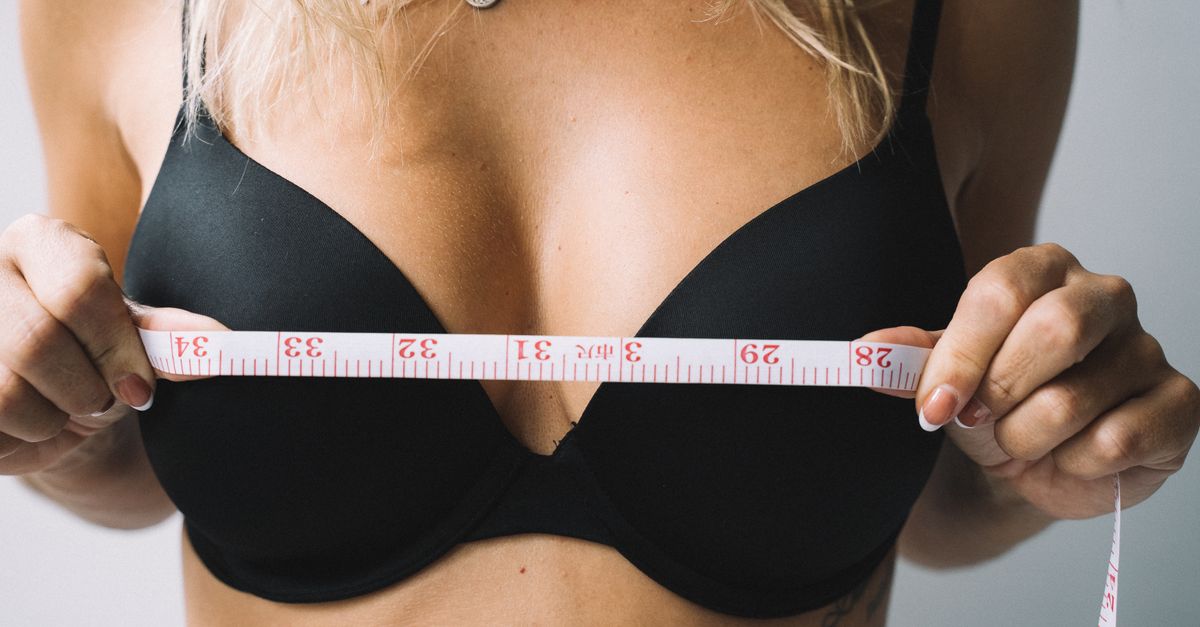
How US Bra Sizing Works
A US bra size is written as a band number and a cup letter, like 34C, 36DD, or 32G. The band number is the size of the ribcage strap, and the cup letter is the breast volume relative to that band. Both come from tape measurements, not from clothing sizes or guesswork. Knowing how those two pieces are derived makes the whole system easier to interpret when you are shopping, comparing brands, or reading a size chart on a US retailer's site.
The band is set by your underbust, which is the snug measurement around the ribcage directly under the breasts. In the modern US method, that measurement is rounded to the nearest even number, so a 31-inch underbust becomes a 32 band and a 32.4-inch underbust also becomes a 32 band. Odd band numbers like 31 or 33 are unusual in standard US sizing because the rounding snaps everything to an even number.
The cup is set by the difference between your bust and your band. The bust is the looser measurement across the fullest part of the chest with the tape parallel to the floor. Each roughly one-inch difference between bust and band moves you up one cup letter, starting at A. The cup is therefore not an absolute volume — it is a volume relative to the band you are wearing. The same bust can sit in a different cup on different band sizes, which is why the band number and cup letter have to be considered together.
How to Measure for an Accurate US Bra Size
Take both tape measurements braless or in a thin, non-padded bra so the numbers reflect your body rather than the shape of an existing bra. A soft fabric tape is best, but a rigid tape can be used if you remember to read it without pulling the tape into the skin.
- Underbust (band): Wrap the tape snug and level around your ribcage directly under your bust, where the bra band usually sits. The tape should be even front and back and not ride up at the back. Exhale normally before reading the number.
- Bust (cup): Stand sideways to a mirror and wrap the tape loosely around the fullest part of your bust, which is usually the nipple line. Keep the tape parallel to the floor and do not compress the breast. The number you read is the bust measurement.
- Units: Decide in advance whether you are working in inches or centimeters, and stick to one unit for both measurements. Mixing inches and centimeters gives nonsense results.
- Recheck: Take both measurements twice. If the two readings are off by more than about half an inch, take a third and use the average.
Posture and breathing matter more than people expect. Slouching pulls the underbust reading downward, while holding a deep breath inflates the ribcage and pushes the band reading upward. Stand relaxed with your weight even on both feet for the most consistent tape readings.
How to Calculate Your US Bra Size Step by Step
The fastest path to a US bra size is to plug your two measurements into the Bra Size Calculator, which does the rounding and cup conversion for you and shows the result in US, UK and EU at the same time. To use it for a US size:
- Pick inches or centimeters at the top of the tool.
- Measure your underbust snug and level around your ribcage directly under your bust, then type that number into the underbust field.
- Measure your bust across the fullest part with the tape level and parallel to the floor, then enter that number into the bust field.
- Read your estimated size instantly in US, UK and EU — band number plus cup letter. The result updates as you type, so you can try a half inch in either direction and see the size change.
Once you have a US band and cup, that is your starting size. Use it to filter listings on US retailer sites, then verify fit by trying the bra on before committing to it.
The Math Behind US Bra Sizes
The US band is the underbust measurement rounded to the nearest even number. The US cup letter is the difference between the bust and the band, where about one inch of difference is one cup letter. The mapping used by most modern calculators is:
| Bust − Band (inches) | US Cup Letter |
|---|---|
| 1 | A |
| 2 | B |
| 3 | C |
| 4 | D |
| 5 | DD |
| 6 | DDD |
To see the formula at work, take an underbust of 32 inches and a bust of 36 inches. The band is 32, already even. The cup is 36 − 32 = 4 inches of difference, which the table maps to D. So a 32-inch underbust with a 36-inch bust reads as 32D in US sizing. Change the underbust to 33 inches and the band rounds up to 34, while a 37-inch bust now reads as 34C — the same breast sitting in a smaller cup on a larger band.
Older US store charts add 4 or 5 inches to the underbust before assigning a band, which produces a much larger band number and a correspondingly smaller cup. That older method is one of the main reasons bra calculators seem to disagree with the size on a hand-me-down label, and the modern rounding approach above is what most current US calculators use.
US vs UK vs EU Bra Sizes
US, UK and EU sizes all use the same underlying two-measurement idea but they express it differently, which is why a label that says "size 34E" can mean very different bras depending on the country it was tagged in. Comparing them before ordering from an international retailer saves a lot of returns.
Band numbers match between the US and the UK because both use inches. EU bands are simply the underbust in centimeters, so a US/UK 32 equals an EU 70 and a US/UK 34 equals an EU 75. Cup letters agree up to D and then diverge:
| US Cup | UK Cup | EU Cup |
|---|---|---|
| A | A | A |
| B | B | B |
| C | C | C |
| D | D | D |
| DD | DD | E |
| DDD | E | F |
| G | F | G |
The same letter can mean a different volume across regions. A US G is actually closer to a UK F in volume, which is one reason a "size up" conversion from US to UK often goes wrong. When in doubt, convert by cup volume, not by letter. The Bra Size Calculator shows all three side by side, which makes cross-border shopping much easier.
Between Sizes and Sister Sizes in the US System
US bands come in even numbers, so anything that lands on an odd underbust is rounded. A 31-inch underbust rounds up to 32, and an underbust that lands between two even bands is snapped to the closer one. If your underbust falls right between two even bands, the calculator gives one of them but the other is often a better fit. That second option is called a sister size.
Sister sizing works like this: go down a band and up a cup for a snugger fit, or up a band and down a cup for a looser one. A 34C sister-sizes down to a 32D (tighter band, fuller cup) and up to a 36B (looser band, shallower cup). The breast volume is roughly the same in each pair; what changes is how the band tension and cup proportion sit on your body. This trick is useful when a calculated size is hard to find in stock or when one band feels too tight while the cups fit perfectly.
For people whose bust sits between two cup letters — say a 3.5-inch difference — the modern US rounding rule still snaps to a single letter. In that case, trying the cup above and the cup below the calculated one is reasonable, especially across brands that cut cups slightly differently.
Why US Bra Size Estimates Are Only a Starting Point
Any calculator result, including this one, is a starting point. Real cup and band sizing varies widely between brands, styles and materials, and your own measurements shift with weight change, exercise, hormonal cycles and even the time of day. A US size from a tape-and-calculator method assumes an "average" cup shape that no actual bra is built around.
To turn the number into a working bra, the band should sit level and snug around the ribcage without riding up at the back, and the cups should fully contain the breast with no spillage at the top or sides and no empty fabric in the center gore. The straps should not be doing the work of holding the band up — if they are, the band is too loose and you usually want to drop a band and raise a cup, the same sister-size move described above.
Use the calculated US size to narrow the field when you shop, then confirm with a real try-on. A calculator that gives you 36DD in one brand may fit best as a 34DDD or a 38D in another, which is normal rather than a measurement error. For more on the underlying cup math, see the step-by-step guide on how to calculate bra size and cup step by step.
If you're weighing options, How to Change Clothing Size on Vinted covers this in detail.