Band and cup are calculated from two body measurements: your underbust becomes the band number (rounded to the nearest even inch) and the gap between your bust and your underbust becomes the cup letter, at roughly one inch of difference per cup. The modern formula turns a single tape measurement into a complete size such as 34C or 32D without any fitting room. Understanding the math behind the letters means you can sanity-check any result you see on a label and quickly translate between US, UK and EU labels without a chart in front of you. The two inputs — an underbust reading and a bust reading — feed both halves of the size: the underbust determines the band number, and the difference between the bust and the underbust sets the cup letter. Once you know how the formula works, a bra size calculator just becomes a fast version of what you can do by hand in about a minute, and the result you see matches what the labels in any region actually mean.
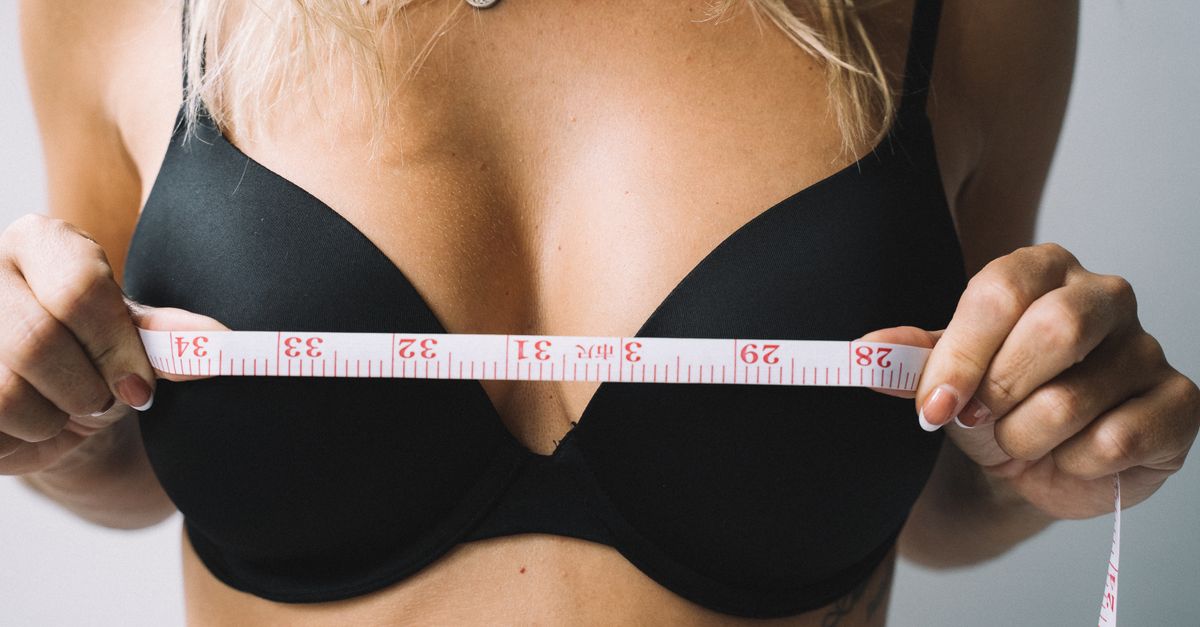
The Band Number Formula
The band number is the simpler half of the calculation. Wrap a tape snug and level around your ribcage directly under your bust, read the number to the nearest quarter inch or half centimetre, then round that value to the nearest even integer. A 31-inch underbust rounds up to 32; a 32.4-inch underbust stays at 32; a 33-inch underbust rounds up to 34. Anything between an even and the next even falls to the closer one, which is why the band on most labels only comes in even numbers like 30, 32, 34, 36 and 38.
Modern sizing uses the underbust raw. Older US in-store charts used to add four or five inches to the underbust before picking the band — a 28-inch underbust would become a 32 or 34 band under that older method. That is the main reason an online calculator can return a smaller band number than a fitter in a department store would have told you twenty years ago. Both methods are mathematically valid for the system they belong to, but the raw-underbust method matches how most contemporary brands cut their bands, so it is the one used in current calculators.
The Cup Letter Formula
The cup letter comes from a single subtraction: bust minus band. Each inch of difference maps to roughly one cup letter, with the standard ladder starting at A and stepping up about one letter per inch:
| Bust − Band (inches) | Cup Letter |
|---|---|
| 1 | A |
| 2 | B |
| 3 | C |
| 4 | D |
| 5 | DD |
| 6 | DDD |
Working through one example with the formula: an underbust of 32 inches rounded to the nearest even number stays at 32, and a bust of 36 inches leaves a difference of 36 − 32 = 4 inches. Four inches on the ladder above is a D, so the size is 32D. That same arithmetic — band first, then bust minus band, then map the gap to a letter — gives every size a calculator can return.
For centimetre users, the ladder compresses: roughly 2.5 cm of difference maps to one cup letter, because the inch-based cup scale is being expressed in a smaller unit. Most calculators do the centimetre conversion internally and show you the same cup letter you would get in inches, so you do not need to convert the cup scale by hand.
The one-inch-per-cup mapping is approximate rather than exact. Different brands and different styles can call the same actual cup volume a slightly different letter, especially in the larger sizes where the ladder has to cover more volume per step. Treat the cup letter from the formula as a confident starting point, not a precise measurement.
How to Calculate Your Bra Size in 3 Steps
This is the shortest path from a tape measure to a usable size in US, UK and EU at once.
- Measure and enter your underbust. Pick inches or centimetres, wrap the tape snug and level around your ribcage right under your bust, and type the number in. The calculator reads this as the basis for the band.
- Measure and enter your bust. Stand relaxed, breathe out normally, and measure loosely around the fullest part of your bust with the tape parallel to the floor. The calculator subtracts the underbust from this number to pick the cup.
- Read your size in US, UK and EU. The tool returns your band number and cup letter in all three systems side by side as you type, so you can compare a US 34C, a UK 34C and an EU 75C on the same line.
Measure braless or in a thin, non-padded bra for the truest numbers — push-up padding and moulded cups will inflate the bust reading. The underbust should always be measured snug, and the bust should always be measured loose; a tight bust tape understates the cup and a loose underbust tape inflates the band.
Why the Same Letter Means Different Things in the US, UK and EU
Band numbers line up cleanly between the US and the UK because both use inches. The EU labels the same bands in centimetres, so a US or UK 34 is an EU 75 and a US or UK 32 is an EU 70. Cup letters agree through D and then split. The table below shows the standard crosswalk between the three systems for cup letters beyond D:
| US | UK | EU |
|---|---|---|
| A | A | A |
| B | B | B |
| C | C | C |
| D | D | D |
| DD | DD | E |
| DDD | E | F |
| G | F | G |
The same letter can mean a different cup volume across regions, so always check which system a brand is using before comparing sizes on a label. A US G and a UK F sit at the same cup volume, but a US G and an EU G do not. For broader size translation across clothing categories, the clothing size conversion guide walks through how the US, UK and EU split plays out across other clothing labels too.
What to Do If You Fall Between Sizes
Because the band rounds to the nearest even number, half-inch measurements fold into the closest standard band automatically — there is no such thing as a 33 band on a label. If your calculated size feels borderline, the standard trick is to try the sister size: go down one band and up one cup for a snugger fit, or go up one band and down one cup for a looser one. A 34C and a 36B hold the same cup volume on paper, but the 34 will sit firmer around the ribcage while the 36 will sit looser, and the right choice depends on whether the band or the cup was driving the borderline feel.
Your calculated size is also a starting point rather than a final answer. Real cup and band sizing varies widely between brands, styles and materials, and bodies change over time with weight shifts, exercise, hormonal cycles and pregnancy. Use the formula or the bra size calculator as a confident starting point, then try a bra on before committing: the band should sit level and snug with no riding up, the cups should fully contain the breast without gaps or spillage, and the straps should sit comfortably without digging in or sliding off.
Tips for a Measurement You Can Trust
The math only works if the inputs are clean. A few habits make the difference between a reliable size and a frustrating one:
- Wear a thin, non-padded bra or measure braless — moulded cups add inches you do not actually have.
- Keep the tape level all the way around. Letting it sag in the back pulls the bust reading down.
- Pull the underbust snug, the bust loose. A tight bust tape understates the cup; a loose underbust tape inflates the band.
- Measure at the same time of day for repeat checks; bodies shift slightly from morning to evening.
- If you are between cups, round up — an overly small cup is what causes spillage and quad-boob, the most common fit complaint.
Pair those habits with the two-number formula and the calculator above gives you a reliable starting size in all three regions in seconds, instead of guessing at the rack.
Related reading: US Bra Size Explained: Band Number and Cup Letter.