Rated pressure is a standardized nominal classification that labels what pressure level a piece of equipment belongs to, while design pressure is the calculated maximum pressure that equipment must safely withstand in its specific service. Rated pressure — often written as PN (Pressure Nominale) in Europe or as a pressure class (Class 150, Class 300) under ASME — is essentially a category label chosen from a table, the same way a size 10 shoe denotes a range of feet. Design pressure, on the other hand, is engineered for the job: an engineer takes the expected operating pressure, adds a margin for surges, transients, and temperature derating, and arrives at the value the vessel or pipe must be built to survive. That is why a PN16 valve might still carry a design pressure of only 12 bar when it is full of hot steam, and why a Class 150 flange rated for a certain psi can have a different allowable pressure at 400 °F than at 100 °F. Understanding which number you are looking at is the first step in any pressure-vessel, piping, or valve specification, because mixing the two leads to undersized — or wastefully oversized — equipment.
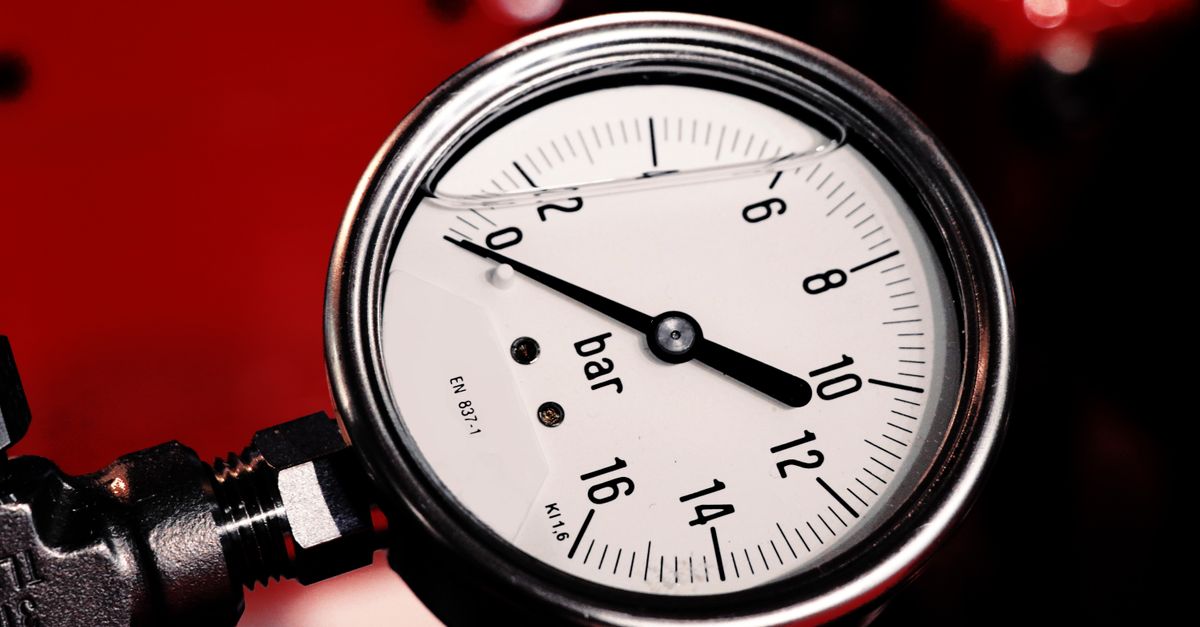
What Rated Pressure Actually Means
Pressure rating is a shorthand label. In European and ISO standards it appears as PN followed by a number — PN10, PN16, PN25, PN40 — where the number is the maximum allowable working pressure in bar at a reference temperature, usually 20 °C for water-based systems or around 100 °C for steam. In the United States and many ASME-coded industries, the same idea is expressed as a pressure class — Class 150, Class 300, Class 600 — where the number is not a direct pressure value but an index that maps to a table of allowable pressures at given temperatures.
The key point is that a pressure rating is not a precise engineering number for your specific job. It is a catalog entry. A valve stamped PN16 is one of a family of valves designed to handle pressures in that ballpark; the actual maximum allowable pressure depends on the material, the temperature of the fluid, and the standard being followed. Two PN16 valves from different manufacturers, in different services, can have genuinely different safe working pressures — both are still PN16.
This is also why pressure ratings often use round numbers and convenient units. PN16 means 16 bar at room temperature; Class 150 means a class 150 flange in ASME B16.5. The rating exists so you can quickly pick equipment from a catalog without performing detailed stress calculations every time.
What Design Pressure Means in Practice
Design pressure is the engineered answer to a specific question: what is the maximum gauge pressure this vessel, pipe, or component is expected to see in normal and abnormal operation, with a built-in margin? The calculation starts with the maximum expected operating pressure and then adds:
- A safety margin, often 10% or as required by the governing code.
- Allowance for surges, water hammer, or pump shut-off head.
- The effect of temperature on material strength, since most metals weaken as temperature rises.
- Vacuum conditions if the equipment could experience them.
- Static head from the liquid column above the point in question.
Codes like ASME BPVC Section VIII for pressure vessels and ASME B31.3 for process piping give explicit rules for picking design pressure. For non-fire scenarios the common rule is to take the maximum sustained operating pressure and add 10% or 10 psi, whichever is greater. For fire scenarios the calculation can be much higher, because the design must assume relief valves have failed open and the equipment is being heated externally.
Design pressure is what actually governs wall thickness, flange rating selection, and relief-valve sizing. It is rarely a round number, because real processes do not run at round numbers.
Rated Pressure vs Design Pressure: Core Differences
Here is a side-by-side view of the two concepts. They look similar on a datasheet, but they answer different questions.
| Aspect | Rated Pressure (PN / Class) | Design Pressure |
|---|---|---|
| Purpose | Catalog label to group equipment into a family | Engineered maximum pressure for a specific service |
| Defined by | Standards bodies (ISO, EN, ASME) | The engineer, using the governing code |
| Typical form | PN16, PN40, Class 150, Class 300 | A specific value such as 12.4 bar or 178 psi |
| Temperature reference | Quoted at a reference temperature like 20 °C or 38 °C | Set for the actual operating temperature of the service |
| Changes with service? | No — same rating applies regardless of use | Yes — different fluids, temperatures, and safety factors give different design pressures |
| Used for | Picking equipment from a catalog | Sizing wall thickness, flanges, and relief devices |
| Common units | bar (PN), psi or class index (ASME) | bar, psi, kPa, MPa — whatever the spec uses |
Rated pressure tells you what family the equipment belongs to. Design pressure tells you what the equipment must actually survive in your plant. Conflating them is a common specification mistake.
How to Convert Pressure Ratings Between Units
Pressure ratings and design pressures are quoted in different units around the world — bar in Europe, psi in North America, kPa or MPa in metric datasheets. Converting between them correctly is essential when comparing a PN16 valve against a Class 150 flange, or when reading a compressor data sheet in mixed units. A free Pressure Converter handles all of this in your browser.
- Enter the pressure value you want to convert (for example, 16 for a PN16 valve).
- Choose the unit to convert from and the unit to convert to, such as bar to psi.
- Read the converted result instantly below, or tick 'Show all units at once' to see every unit together.
Worked example: a PN16 valve rating is 16 bar. Converting to psi gives 16 × 14.5038 = 232.06 psi, which sits inside the Class 150 envelope at moderate temperatures. This is the kind of cross-check you can do without leaving the datasheet.
Quick Reference: Common Pressure Conversion Factors
These are the exact conversion factors a trustworthy pressure converter uses, all traceable to NIST Special Publication 811 or to an exact SI definition.
| From | To | Factor |
|---|---|---|
| 1 bar | psi | 14.5038 psi |
| 1 bar | Pa | 100,000 Pa (exact) |
| 1 bar | kPa | 100 kPa (exact) |
| 1 atm | psi | 14.6959 psi |
| 1 atm | bar | 1.01325 bar |
| 1 atm | Pa | 101,325 Pa (exact) |
| 1 atm | torr | 760 torr (exact) |
| 1 psi | Pa | 6,894.76 Pa |
| 1 psi | bar | ≈ 0.0689476 bar |
When you need to compare a Class 150 rating against a PN10 valve, apply the 0.0689476 factor above to convert the psi rating to bar and check whether both numbers point at the same pressure ballpark before approving the substitution.
When Rated Pressure and Design Pressure Diverge
Several situations make the two numbers diverge in real engineering work:
Temperature derating. Almost every pressure rating is tied to a reference temperature. A PN16 valve is rated 16 bar at 20 °C, but at 200 °C the same valve may only be rated for around 11.2 bar because the metal is weaker when hot. ASME Class ratings behave the same way — Class 150 at 100 °F allows more pressure than Class 150 at 800 °F.
Safety factor. Design pressure typically sits below the equipment's maximum allowable working pressure to leave headroom for unexpected surges, corrosion, and future operating changes. Codes like ASME BPVC Section VIII require this margin explicitly. For a closer look at how MAWP sits next to design pressure in ASME work, see Maximum Allowable Pressure vs Design Pressure.
Different governing codes. A valve rated PN25 under EN 13397 may not have the same allowable pressure as a Class 150 valve under ASME B16.34 at the same temperature, even though the numbers sound similar. Cross-standard comparisons should always be done on the allowable-pressure table, not on the rating label.
Process upsets. Relief device set pressures, pump dead-head pressures, and thermal expansion in blocked systems can all push the design pressure above the normal operating pressure. Rated pressure must still cover these transient peaks, which is one reason design pressure is kept below the rating in the first place.
For all of these situations, the underlying arithmetic — converting bar to psi, kPa to bar, or any other combination — is the same. The free Pressure Converter keeps every factor traceable to its SI or NIST definition and lets you switch between any two of twelve supported units without rounding shortcuts, entirely in your browser.