To measure curtain fabric, record the track or pole width, finished drop, actual fabric width, fullness ratio, and hem-and-heading allowance, then calculate required widths × (finished drop + allowance).
Here, measuring curtain fabric means collecting the dimensions needed to estimate how much cloth to buy, not calculating the surface area of the fabric. The track or pole width determines how much flat fabric must gather across the window, while the finished drop determines the length of each hanging panel.
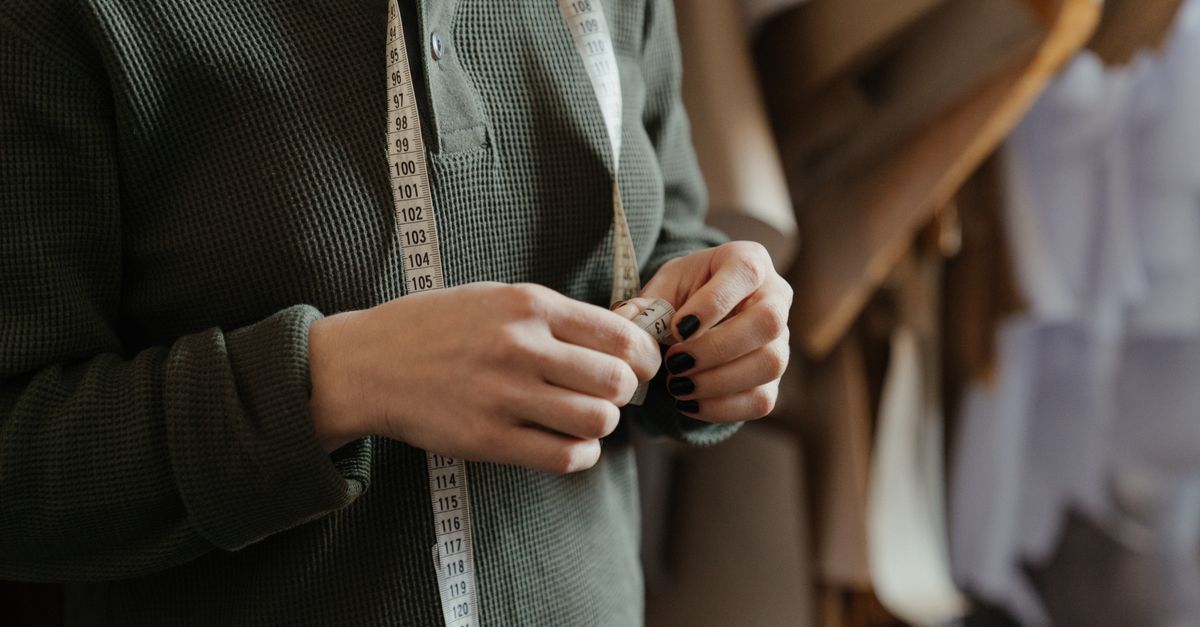
The measurements you need
Take each measurement in the same unit, then enter everything in that unit in the calculator. This avoids the common mistake of mixing centimetres with inches or treating the window width as the finished curtain width.
| Input | What to measure or choose | Why it affects the result |
|---|---|---|
| Track or pole width | The full width the curtain must cover | Sets the amount of flat fabric that must be gathered |
| Finished curtain drop | The distance from the hook or track down to where the hem should sit | Forms the base length of each fabric width |
| Fabric width | The width of the fabric as sold on the roll | Determines how many widths are needed |
| Fullness ratio | The gathered width relative to the track width | Controls how full the curtain will look |
| Hem and heading allowance | The extra length needed for turnings and hemming | Increases the cut length of every width |
The finished drop is not necessarily the distance from the ceiling to the floor. It ends where you want the bottom hem to sit, so it can include a deliberate gap above the floor. The fabric width, meanwhile, is the roll width rather than the length of fabric you need. These measurements answer different parts of the calculation.
Turn the measurements into a fabric estimate
Curtain fabric is estimated in three stages: calculate the number of full-width drops, calculate the cut length for each drop, and multiply those two results.
Calculate the required widths
Multiply the track or pole width by the fullness ratio, divide that result by the fabric width, and round up to the next whole number. This gives the number of fabric widths, also called drops, that must be cut. Rounding up is essential because a curtain needs extra fabric to gather into folds and pleats.
Calculate the cut length
Add the hem-and-heading allowance to the finished drop. The allowance covers the turnings at the heading and the extra fabric needed for the bottom hem. A common combined allowance is 20–25 cm (8–10 in), but use a value that suits your heading tape and hem style.
Calculate the total and buying quantity
Multiply the number of widths by the cut length to obtain the base amount of fabric. The Curtain Fabric Calculator performs these calculations live as you type and also shows a buying figure with a 10% margin added to the base total.
Measure curtain fabric step by step
- Pick your units. Select centimetres or inches before entering any measurements. The results remain in the selected unit, with a rough metre or yard total for shopping at the fabric roll.
- Measure the track or pole width. Measure across the full span that the curtain needs to cover, rather than using the window width as a substitute.
- Measure the finished drop. Start at the hook or track and measure down to the intended position of the bottom hem. Keep this figure separate from the allowance for heading turnings and hemming.
- Choose the fullness ratio. Select a ratio that suits the heading style and the fullness you want. Pencil and pinch pleats generally need more fabric than eyelet headings.
- Enter the width of the fabric. Use the width of the roll you plan to buy. The calculator uses this figure to determine how many complete widths are required.
- Set the hem and heading allowance. Use 20–25 cm (8–10 in) as a typical starting point, then adjust it for the construction details of your chosen heading and hem.
- Read the live results. Check the number of fabric widths, the cut length per width, the base fabric total and the recommended quantity with the 10% margin.
- Check how a pair will be divided. The calculated widths cover the whole track. For a pair, split them between the two sides and add one width to one side if the total is odd.
Choose fullness for the heading
Fullness is part of the measurement process because it converts the track width into the width of flat fabric that must be gathered. The appropriate ratio depends on the heading and the look you want.
| Heading or fullness choice | Typical ratio | Expected appearance |
|---|---|---|
| Pencil pleat or pinch pleat | 2× to 2.5× the track width | A full, gathered appearance |
| Eyelet heading | 1.5× to 2× the track width | Full without the greatest amount of extra fabric |
| Below 1.5× fullness | Less than 1.5× | Tends to look flat |
| Above 2.5× fullness | More than 2.5× | Generous and heavy |
A ratio between 1.5 and 2.5 is the usual working range, but the heading is the deciding factor. The ratio is also why the required number of widths must be rounded up: fabric that is merely sufficient in area may still be too flat to gather properly.
One measurement worked through
Consider a 240 cm track with 2× fullness, 137 cm-wide plain fabric, a 160 cm finished drop and a 25 cm combined hem-and-heading allowance.
The gathered width is 240 × 2 = 480 cm. Dividing by the fabric width gives 480 ÷ 137 = 3.5 widths, which must be rounded up to 4 complete widths.
The cut length is 160 + 25 = 185 cm per width. The base fabric total is therefore 4 × 185 = 740 cm, or 7.4 metres. Adding the recommended margin gives 740 × 1.10 = 814 cm, or 8.14 metres to buy.
Use the widths and cut length correctly
The first output—the number of fabric widths—is the figure most likely to be underestimated. It represents complete lengths from heading to hem, not short pieces added around the window. Once the widths are known, each one needs the same cut length.
For a pair of curtains, the width total applies to the entire track. Divide the widths between the two panels as evenly as the result allows. If there is an odd number, give the extra width to one side. Also check that both panels can use the heading and hem style you selected.
The base total is an estimate for buying, not a cutting plan. The recommended 10% extra provides room for pattern matching, shrinkage after washing and cutting mistakes. Keep that margin in your purchasing decision rather than treating the base total as the exact amount the roll must contain.
The calculator runs entirely in your browser. Results update live, which makes it practical to compare heading choices or fabric widths before ordering.
Account for patterned fabric
The calculator assumes plain fabric with no pattern repeat. That limitation matters because patterned material may require every cut length to be rounded up to a whole repeat so the design lines up correctly across the widths. Large repeats can add a considerable amount of fabric.
Do not assume the standard 10% margin replaces this adjustment. For a repeat-based estimate, use the detailed guide on how to calculate curtain fabric with pattern repeat, then add the extra material required by your selected fabric to the plain-fabric result.
Final checks before ordering
- Confirm that the track or pole width covers the full installation area.
- Measure the intended hem position to establish the finished drop.
- Match the fullness ratio to the heading style and desired fullness.
- Use the actual fabric-roll width rather than an estimate from the product listing.
- Adjust the allowance for the heading tape, turnings and bottom hem construction.
- Add any pattern-repeat requirement separately when using patterned cloth.
- Measure the window twice before ordering and retain the calculator’s 10% buying margin.
Taking these measurements carefully gives a practical fabric estimate for plain or patterned curtains. The result gives you a clear buying quantity while leaving room for the final checks that only you can make before ordering.
Related reading: How to Measure Oval Area from Two Widths.